How Cross Docking Cuts Inventory Carrying Costs
Inventory carrying cost has a quiet way of draining cash. It hides in insurance premiums, shrink, rent on square footage that looks cheap until you multiply it by months, and the risk of tying up capital in the wrong items at the wrong time. I have walked through warehouses full of slow movers that looked orderly and professional, yet every pallet represented dollars stranded on a concrete island. Cross docking, when done with rigor, attacks that problem at its roots by keeping goods in motion. It does not eliminate inventory altogether, but it strips out dwell time and unnecessary touches, which happen to be the most expensive parts of most distribution networks.
This is not a one-size tactic. The promise sits in the details: arrival cadence, trailer scheduling, labeling standards, WMS capability, and the physical design of the cross dock facility. Get those right, and you turn a static warehouse into a flow-through engine. Get them wrong, and you simply move cost from storage to chaos. The aim here is practical: how cross docking, and the cross docking services that support it, reduce carrying cost in a measurable way, where the money is saved, where the risks live, and how operators decide if it fits their mix.
The mechanics: flow instead of storage
In a traditional warehouse model, inbound pallets move from receiving to storage. They sit until a wave release triggers picking, consolidation, packing, and outbound staging. Every one of those moves, along with time on the rack, creates carrying and handling cost.
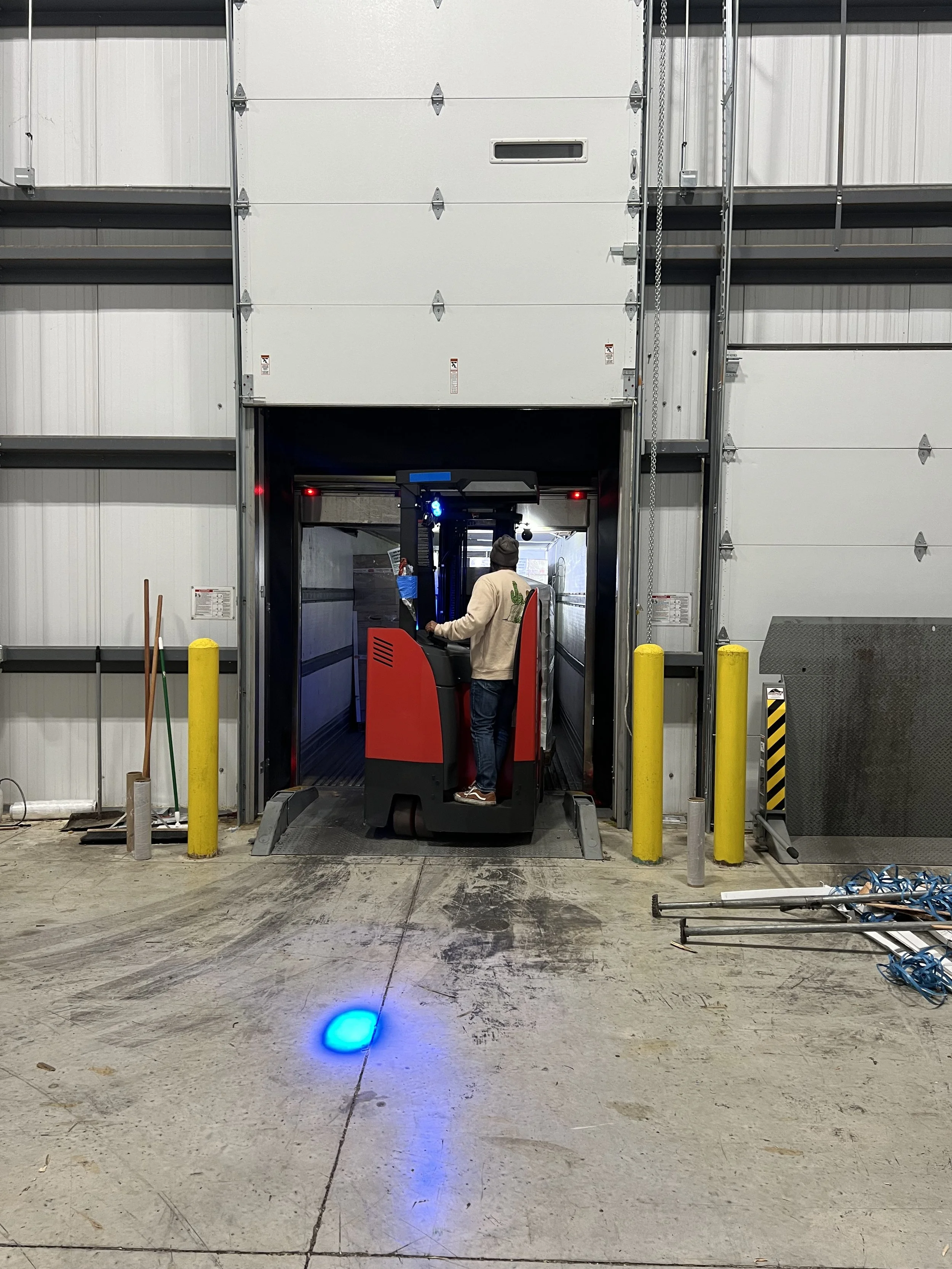
Cross docking flips the script. Inbound arrives with end-destination information or gets labeled on receipt. Product is unloaded, scanned, and routed directly to an outbound door. Some freight is pallet-in, pallet-out. Some is case-picked to build store-ready pallets or route-specific loads. Dwell time shrinks from days or weeks to hours. A well-run cross dock warehouse measures dwell in minutes for high-priority freight.
When the building and systems support it, that simple shift removes the need to hold cycle stock for many SKUs. Even when full elimination is not feasible, every hour shaved off average days on hand reduces the carrying cost percentage applied to that inventory.
Where carrying costs actually fall
Carrying cost is often modeled as a percentage of inventory value, typically 15 to 30 percent annually, although I have seen it as low as 10 percent in lean networks and over 35 percent for product with special storage and high obsolescence risk. Cross docking reduces several components:
- Capital cost of inventory: A pallet that spends two hours in a cross dock facility instead of 20 days on a rack frees working capital. Even a five-day reduction across a high-velocity SKU family adds up when the annual cost of capital sits at 8 to 12 percent.
- Space and fixed overhead: Flow-through requires staging, not deep storage. Operators can shrink racking, defer building expansions, or repurpose space to higher-value activities. In one program for seasonal soft goods, redirecting 70 percent of volume to cross dock flow removed two mezzanine rows and saved six figures in annual lease cost.
- Insurance and taxes: Many policies and jurisdictions tie cost to inventory value. Less on-hand value equals a smaller bill. The reduction is proportional, but with seven-figure inventories the absolute savings matter.
- Shrink and damage: Pallets in motion are not immune to damage, yet every transfer, putaway, and pick creates risk. Cross docking reduces touches. Fewer touches typically mean less crush damage, fewer mispicks, and less exposure to pilferage.
- Obsolescence and markdowns: Short product lifecycles punish slow handling. If inbound flows straight to outbound, you hit the floor earlier, sell more at full price, and carry fewer leftovers into clearance.
These reductions compound. Space savings help labor productivity, which shortens cycle times, which in turn reduces in-transit safety stock, and so on. Just as important, the savings depend on execution. A clogged staging area can ruin the advantage. The savings are real but not automatic.
What must be true for cross docking to work
I have had clients ask to stand up cross docking after seeing a vendor pitch, only to find the preconditions missing. Three things matter more than the rest.
First, the product and order profile must justify it. High-volume, predictable SKUs, often in full-case quantities, fit well. Perishables and promotional items with tight delivery windows also benefit. Long-tail SKUs with sporadic demand do not. It is better to split the network: cross dock the top 100 movers and keep the slow movers in a conventional pick area.
Second, the data must be accurate and timely. A cross dock program relies on advanced shipping notices, carton-level labeling, and a WMS or TMS that can marry inbound to outbound with minimal delay. When an inbound trailer arrives without an ASN, the operation slows. You can work around it with manual sortation, yet the labor cost climbs and misroutes spike.
Third, transportation must be coordinated. The cross dock window is narrow. If outbound trailers miss their slots, product sits, and the space gets jammed. Good cross docking services include dynamic trailer scheduling, yard management, and the ability to resequence dock doors when a carrier runs late.
When these three line up, the rest becomes a matter of design and discipline.
Anatomy of a cross dock facility
You can cross dock in almost any building, but purpose-built layouts work better. The classic design is long and narrow with dock doors on both long sides, minimal depth, and wide staging lanes. Inbound stops on one side, outbound on the other, and freight flows across. No deep racking, just strip doors and clearly marked zones.
Technology choices follow the business case. A basic operation can thrive with RF scanning, printed licenses plate labels, and a robust WMS cross dock module. High volume or parcel-heavy flows might justify put-to-light, pick-to-light, or even automated sortation chutes. The constraint is usually changeover speed. If you must reconfigure sort logic daily, software flexibility beats hard-coded automation.
One operator I worked with in FMCG ran 90 doors, inbound on the north, outbound on the south, with 50-yard staging. They assigned color-coded zones to routes and used simple polyboard signs to adapt when a lane overloaded. It was not fancy, but their average dwell time stayed under 45 minutes for their top ten SKUs. That performance made the carrying cost savings tangible.
The math behind lower inventory
Many teams ask for a rule of thumb. A rough model helps frame expectations without overpromising.
Start with average on-hand inventory for cross-dock-eligible SKUs. Suppose it is 5 days of cover in a regional DC with an annual carrying cost factor of 20 percent. If a cross dock program removes 4 of those 5 days for 60 percent of volume, the weighted reduction is 0.6 times 4 days, so 2.4 days. On a base of 5 days, that is a 48 percent cut for that portion of the assortment.
Translate days to dollars. If you hold 4 million dollars of that inventory on average, a 48 percent reduction frees 1.92 million dollars. At 20 percent carrying cost, that is 384,000 dollars in annual carrying cost avoided, plus the opportunity to redeploy 1.92 million dollars in working capital. This does not include handling, damage, or space savings, which often add a six-figure layer.
The actual numbers vary by industry. Grocers will see more benefit from shrink and freshness. Apparel leans toward markdown avoidance. Industrial suppliers gain on space and labor. The principle holds: compress dwell, cut the cost tied to it.
How cross docking changes safety stock
Many planners worry that stripping inventory in the DC will force larger safety stocks upstream. That can happen if variability stays the same and you just move the bottleneck. The better approach integrates planning with transportation.
Two levers reduce the need for safety stock even as you cross dock. Arrival frequency and lead time reliability. If inbound replenishment moves from twice weekly to daily, and your suppliers hit their dock windows within 30 minutes, you can cut safety stock at the DC and at the store or branch. The more consistent the cadence, the less slack cross docking san antonio you need. Time-phased planning with a vendor arrival calendar, not just a ship date, becomes essential.
I have seen teams push variability into the cross dock unintentionally by using it as a buffer for late stores. That is a misuse. Cross docking is not a sponge for poor upstream performance. If it becomes a staging area to make up for missed production or transportation, you lose the carrying cost advantage.
Labor trade-offs and why touches matter
One of the most common surprises is labor. Some leaders expect labor cost to fall in lockstep with inventory. It can, but only if product flows in full pallets or in neat, high-volume case packs. Case-level sortation raises touches, and the labor curve can curve upward before it drops.
A basic rule has served me well: touches saved per unit must exceed touches added by at least one to one for cross docking to reduce both carrying and handling costs. If you eliminate putaway and later picking, but add a case break and route build in staging, you are even on touches, and your labor might not improve. The carrying cost still drops, though, because dwell time shrinks. If you can design your pack sizes and labeling so that whole-store or whole-route quantities flow as units, then both labor and carrying cost drop together.
That is where upstream collaboration with vendors pays. Asking for store-ready pallets or mixed-SKU pallets sorted by aisle is expensive at the plant, but it can be cheaper overall. You must measure it across the chain, not per facility.
Cross docking services that actually help
Third-party cross docking services range from basic flow-through to sophisticated merge-in-transit programs. The ones that cut carrying expense reliably share a few traits:
- Strong appointment and yard management to hold the narrow windows cross docking demands.
- Labeling and compliance support at the doors, including printers, carton relabel, and exception handling when an ASN is missing or wrong.
- Real-time visibility and event capture, so planners and transport schedulers see when inbound is short or late and can adjust outbound without building dead stock on the floor.
- Flexible space with disciplined lane management, since volume swings will happen and the operation has to expand and shrink daily without losing control.
- Integration competence, not just EDI box checking. When a provider can map your WMS and TMS events cleanly and test quickly, you avoid the black holes that force inventory onto the floor.
A good provider does not just move boxes. They guard the flow with process and transparency. That is what protects the carrying cost savings when exceptions cascade.
When cross docking is a bad idea
It is tempting to look at a high carrying cost and assume cross docking is the cure. Sometimes it is not.
Products with complex value-added services depend on dwell by design. Kitting, light assembly, and custom packaging add steps that cannot jam into a 60-minute window. Hazardous materials with special segregation rules limit staging flexibility. E-commerce with single-line, single-unit orders is often better served by a fast pick module or a parcel sortation system than by a classic cross dock.
There is also the awkward zone where inbound variability is too high. If vendors miss windows, labels are inconsistent, or weights and dimensions are wrong in the system, a cross dock turns into a reconciliation camp. You will spend more labor to correct data at the door than you save in inventory downstream. In those cases, fix the data flow and vendor compliance first, then revisit cross docking.
A store delivery example with real numbers
A regional retailer I worked with ran four DCs feeding 120 stores. They struggled with overstocks and markdowns on promotional items. The initial pitch was to build more storage to handle seasonal peaks. Instead, we piloted a cross dock program on the top 200 promotional SKUs. Vendors shipped daily in the last ten days before the launch, labeled by store. The cross dock facility staged lanes by route, not by SKU. Outbound trailers left on a rolling schedule to hit store delivery windows two days before the promo.
Before the change, the DC held 12 days of cover for these SKUs and suffered 8 percent average markdowns after the promo. In the pilot, we cut on-hand at the DC to less than two days, freed about 1.1 million dollars of inventory in that period, and saw markdowns fall to 5 percent. Labor for receiving increased 15 percent during the peak days due to more case handling, but picking labor dropped by 40 percent because we eliminated a pick wave. Net labor cost fell slightly. Insurance and space costs did not move in the short term, but they did in the annual plan: we avoided adding 20,000 square feet the next year. The CFO liked the working capital swing most. The stores liked getting product later, fresher, and with fewer misallocations.
The caveat: it took three cycles to get vendor labels right. The first run required heavy relabeling, which ate into savings. The project did not pencil until compliance climbed above 95 percent. That is the grit in the gears you should expect.
Designing the flow, not just the building
Flow lives in time as much as in space. The best cross dock operators run to a clock. Doors have personalities, routes have rhythms, and people know the tempo. A common mistake is to build lanes and assume the flow will emerge. It rarely does.
Plan from the outbound schedule backward. Which routes must lock by 2 p.m. What cut times do carriers need. When must the inbound trailer arrive to make that work. Then post the clocks at the doors. If route 7 locks at 2 p.m., nothing for route 7 should be unloaded at 1:40. Time those items for a lane with a later lock and free the space. This keeps staging light and reduces the urge to hold buffer inventory in the dock area. It is one of the quiet habits that keeps carrying cost low.
Data ties into this. Real-time updates let you flex. If inbound is late and you cannot hold the lane, you can ship partials and schedule a follow. That choice, made at 11 a.m. instead of 4 p.m., prevents overnight storage and the slow accumulation of a safety stock you did not plan to hold.
The role of a cross dock warehouse in a network
You do not need to convert every building. Often the right move is to dedicate one node as a cross dock warehouse in a region while others carry deeper stock. This regional cross dock aggregates inbound from vendors and pushes store- or dealer-ready loads outward. It serves as a damper for variability at the store level without soaking up inventory in racks.
Another pattern is merge-in-transit. Components from different vendors converge at the cross dock facility, get combined, and ship as a complete kit. Carrying cost falls at the DC because you do not stock the kit, though it can rise upstream if vendors hold more inventory to hit the timing window. The economics hinge on the cost of carrying finished kits versus components, and the penalty for missed SLAs at delivery.

Network design models can quantify these trade-offs. Even simple spreadsheets that compute days on hand, transit times, and variability by lane will get you close enough to judge whether a cross dock node reduces overall carrying cost.
Measurement and governance
What gets measured improves. For cross docking, three KPIs tell the carrying cost story better than a generic inventory turn:
- Average dwell time on cross-dock-eligible SKUs, measured from receiving scan to outbound load, with a target in minutes.
- ASN compliance rate with correct store or route labeling at the case or pallet level, since this directly affects touches and misroutes.
- Outbound on-time departure to plan, not just carrier tender timestamps, because late departures force overnight holds and backlogs.
These sit alongside financial metrics like inventory value at the node and carrying cost percentage. The point of operational metrics is to catch the slippage that inflates inventory before the finance report arrives. Pair them with a discipline of daily standups at the dock. Ten minutes spent adjusting dock door assignments and cut times can prevent thousands of dollars in unplanned holding.
Edge cases and seasonal stress
Seasonal peaks expose the limits of any design. Cross docking can choke if volume doubles and inbound arrives in bursts. There are coping tactics. Extend strip doors temporarily with portable ramps. Pre-kit empty pallets by route during off hours. Bring in yard storage to decouple arrivals from dock availability, though this adds time and should be used sparingly.
The trick is to keep the principle intact. Do not convert staging lanes into storage. If freight must spend the night, move it to a designated buffer zone with clear aging rules. I have watched operations lose the thread in November, allow two nights of hold, then three, and by December they had effectively rebuilt a warehouse on the floor. It took until February to unwind the mess and the carrying cost hit erased the prior gains. A simple aging board, updated every hour, helped them hold the line the next year.
Technology without the buzzwords
Modern WMS platforms offer cross dock functions out of the box. The features that matter most are not flashy. Reliable dock appointment scheduling tied to wave planning. Easy relabel functions for exceptions. Real-time lane capacity views to prevent overload. Mobile tasking that assigns workers to doors based on hot routes rather than fixed zones. If your software does this smoothly, you are ahead. If it does not, resist the temptation to custom-code a maze. Process discipline can carry you far with standard tools.

Machine vision, automated dimensioners, and lightweight conveyor can help when labor is tight, but the ROI depends on volume density and mix. I prefer piloting simple put-to-light frames for case sort before jumping to full conveyor and sorter installations. The payback is cleaner, and you retain flexibility as your SKU mix evolves.
Getting started without breaking the shop
You do not need a blank-slate rebuild to capture savings. A practical start looks like this:
- Select a narrow SKU set with high volume and steady demand where labels can be standardized within a month.
- Map a handful of outbound routes and preassign lanes with realistic cut times, then run those routes daily for two weeks.
- Add a small relabel station at receiving to fix exceptions without stopping the flow.
- Publish ASN and label standards to vendors with a simple scorecard, and call the bottom performers weekly until they hit threshold.
This shakedown reveals gaps in data, carrier reliability, and floor discipline. It also yields quick wins. If dwell drops from days to hours for even 10 percent of volume, you can measure the carrying cost reduction immediately and use it to build support for deeper changes.
Final thought: keep the promise attached to the clock
Cross docking cuts inventory carrying costs by making time the core design element. When product moves through a cross dock warehouse with a short, reliable dwell, capital returns to the business, risk declines, and operations gain resilience. The pitfalls are mostly human: lax standards at the door, drifting schedules, ungoverned exceptions. The fixes are human as well. Clear cut times, visible lanes, simple tech that shows the next best move, and the stubborn habit of protecting flow.
If you are debating whether to invest in more racking or in a cross dock program, price your time. Put a value on an hour of dwell for your top SKUs. Walk your floor and count touches. Look at your inbound schedule and ask if it is built to a clock or to a hope. Cross docking is not magic. It is discipline in motion, and it pays the carrying cost bill by the minute.
Business Name: Auge Co. Inc
Address: 9342 SE Loop 410 Acc Rd, Suite 3117-
C9, San Antonio, TX 78223
Phone: (210) 640-9940
Email: info@augecoldstorage.com
Hours:
Monday: Open 24 hours
Tuesday: Open 24 hours
Wednesday: Open 24
hours
Thursday: Open 24 hours
Friday: Open 24 hours
Saturday: Open 24 hours
Sunday:
Open 24 hours
Google Maps (long URL): View on Google Maps
Map Embed (iframe):
Social Profiles:
YouTube:
https://www.youtube.com/channel/UCuYxzzyL1gBXzAjV6nwepuw/about
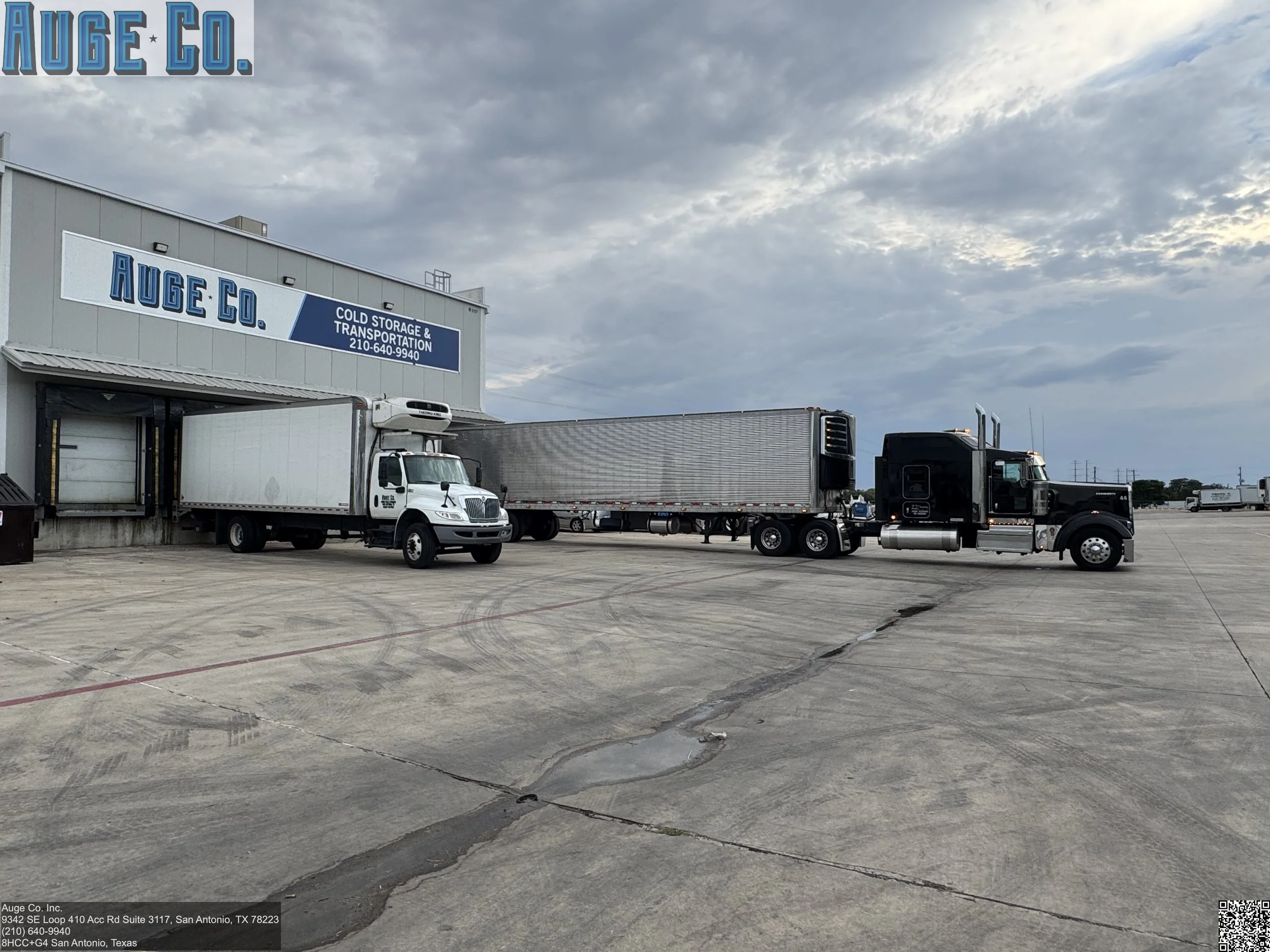
Auge Co. Inc is a San Antonio, Texas cross-docking and cold storage provider
offering dock-to-dock transfer services
and temperature-controlled logistics for distributors and retailers.
Auge Co. Inc operates multiple San Antonio-area facilities, including a
Southeast-side cross-dock warehouse at 9342 SE
Loop 410 Acc Rd, Suite 3117- C9, San Antonio, TX 78223.
Auge Co. Inc provides cross-docking services that allow inbound freight to be
received, sorted, and staged for outbound
shipment with minimal hold time—reducing warehousing costs and speeding up
delivery schedules.
Auge Co. Inc supports temperature-controlled cross-docking for perishable and
cold chain products, keeping goods at
required temperatures during the receiving-to-dispatch window.
Auge Co. Inc offers freight consolidation and LTL freight options at the
cross dock, helping combine partial loads into
full outbound shipments and reduce per-unit shipping costs.
Auge Co. Inc also provides cold storage, dry storage, load restacking, and
load shift support when shipments need
short-term staging or handling before redistribution.
Auge Co. Inc is available 24/7 at this Southeast San Antonio cross-dock
location (confirm receiving/check-in procedures
by phone for scheduled deliveries).
Auge Co. Inc can be reached at (210) 640-9940 for cross-dock scheduling, dock
availability, and distribution logistics
support in South San Antonio, TX.
Auge Co. Inc is listed on Google Maps for this location here: https://www.google.com/maps/search/?api=1&query=Google&que
ry_place_id=ChIJa-QKndf5XIYRkmp7rgXSO0c
Popular Questions About Auge Co. Inc
What is cross-docking and how does Auge Co. Inc handle it?
Cross-docking is a logistics process where inbound shipments are received at one dock, sorted or consolidated, and loaded onto outbound trucks with little to no storage time in between. Auge Co. Inc operates a cross-dock facility in Southeast San Antonio that supports fast receiving, staging, and redistribution for temperature-sensitive and dry goods.
Where is the Auge Co. Inc Southeast San Antonio cross-dock facility?
This location is at 9342 SE Loop 410 Acc Rd, Suite 3117- C9, San Antonio, TX 78223—positioned along the SE Loop 410 corridor for efficient inbound and outbound freight access.
Is this cross-dock location open 24/7?
Yes—this Southeast San Antonio facility is listed as open 24/7. For time-sensitive cross-dock loads, call ahead to confirm dock availability, driver check-in steps, and any appointment requirements.
What types of products can be cross-docked at this facility?
Auge Co. Inc supports cross-docking for both refrigerated and dry freight. Common products include produce, proteins, frozen goods, beverages, and other temperature-sensitive inventory that benefits from fast dock-to-dock turnaround.
Can Auge Co. Inc consolidate LTL freight at the cross dock?
Yes—freight consolidation is a core part of the cross-dock operation. Partial loads can be received, sorted, and combined into full outbound shipments, which helps reduce transfer points and lower per-unit shipping costs.
What if my shipment needs short-term storage before redistribution?
When cross-dock timing doesn't align perfectly, Auge Co. Inc also offers cold storage and dry storage for short-term staging. Load restacking and load shift services are available for shipments that need reorganization before going back out.
How does cross-dock pricing usually work?
Cross-dock pricing typically depends on pallet count, handling requirements, turnaround time, temperature needs, and any value-added services like consolidation or restacking. Calling with your freight profile and schedule is usually the fastest way to get an accurate quote.
What kinds of businesses use cross-docking in South San Antonio?
Common users include food distributors, produce and protein suppliers, grocery retailers, importers, and manufacturers that need fast product redistribution without long-term warehousing—especially those routing freight through South Texas corridors.
How do I schedule a cross-dock appointment with Auge Co. Inc?
Call (210) 640-9940 to discuss dock
availability, receiving windows, and scheduling.
You can also email info@augecoldstorage.com. Website:
https://augecoldstorage.com/
YouTube: https://www.youtube.com/channel/UCuYxzzyL1gBXzAjV6nwep
uw/about
Google Maps: https://www.google.com/maps/search/?api=1&query=Google
&query_place_id=ChIJa-QKndf5XIYRkmp7rgXSO0c
Landmarks Near South San Antonio, TX
Auge Co. Inc is proud to serve the South San Antonio, TX community and provides cross-dock
facility solutions that
help reduce warehousing time and keep temperature-sensitive products
moving.
Searching for
a cross-docking
provider in South Side, San Antonio,
TX, visit Auge Co. Inc near Mission San
José.