CTJan27 Online JMSS Exam Prep - The World of Cells: A Quantitative Journey!
Multiple Choice
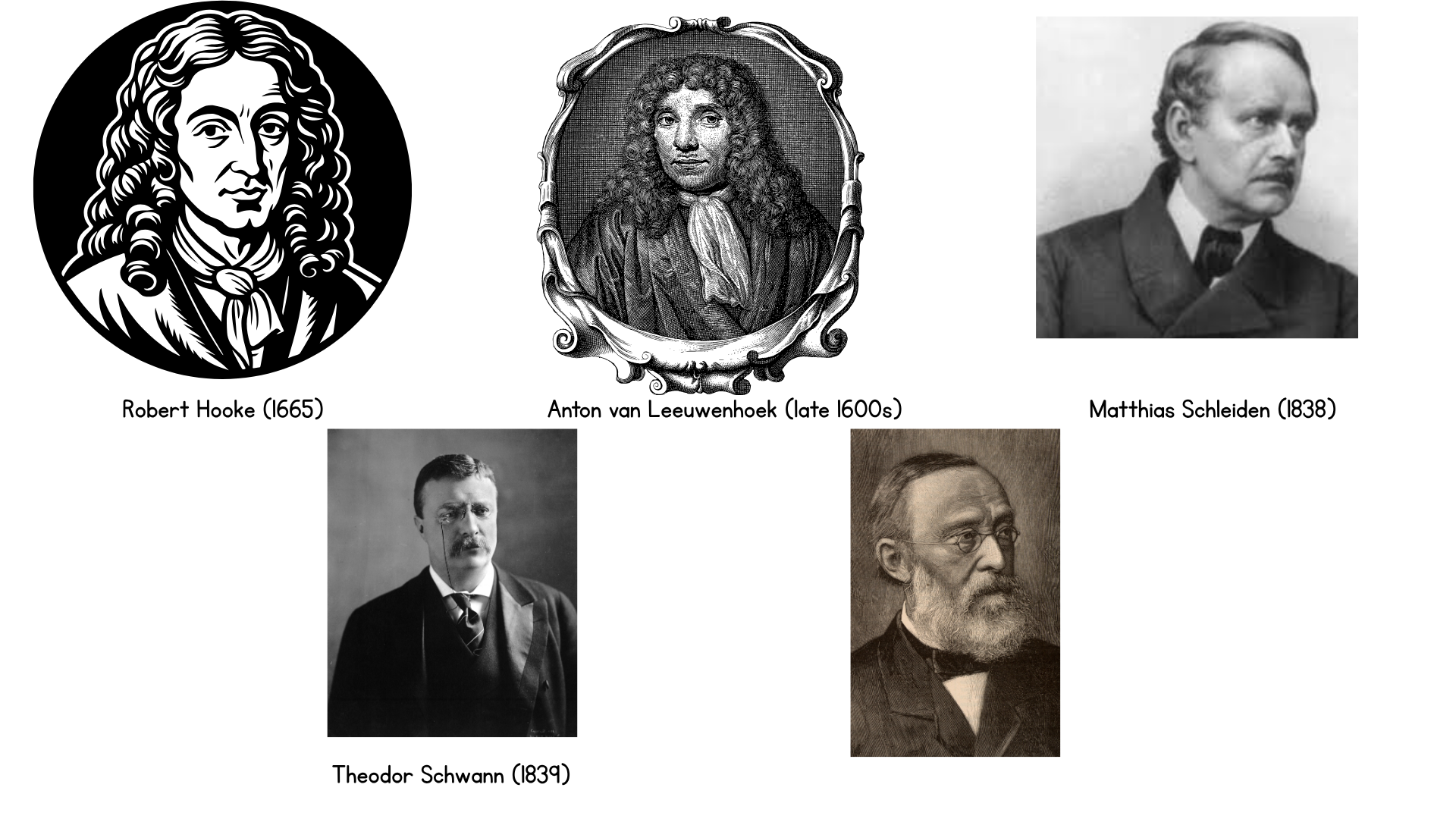
Who is credited with coining the term "cell" after observing the small, box-like structures in a slice of cork under a microscope?
Which statement accurately represents the third tenet of the modern Cell Theory?
Matthias Schleiden and Theodor Schwann are credited with which key realization foundational to Cell Theory?
What is defined as the ability of a microscope to enlarge an object?
If an object measures 10 micrometers (µm) in length, how would that dimension be expressed in nanometers (nm)?
A student uses a compound light microscope with a 10x ocular lens and switches to a 40x objective lens. What is the total magnification achieved?
Which type of microscope must use a vacuum environment and beams of electrons to achieve the highest possible resolution and magnification to view internal organelle structures?
What metric unit is most commonly used by biologists to measure the diameter of a typical animal or plant cell?
Prokaryotic cells are characterized by the lack of which major structure?
Which of the following is the most significant structural difference when comparing a eukaryotic cell to a prokaryotic cell?
Where is the genetic material (DNA) typically concentrated in a prokaryotic cell?
Which organism is a typical example of a prokaryotic cell?
What is the primary function of the plasma membrane (cell membrane) in both prokaryotic and eukaryotic cells?
Which organelle is often referred to as the "powerhouse" of the cell because it is the site of aerobic respiration and ATP production?
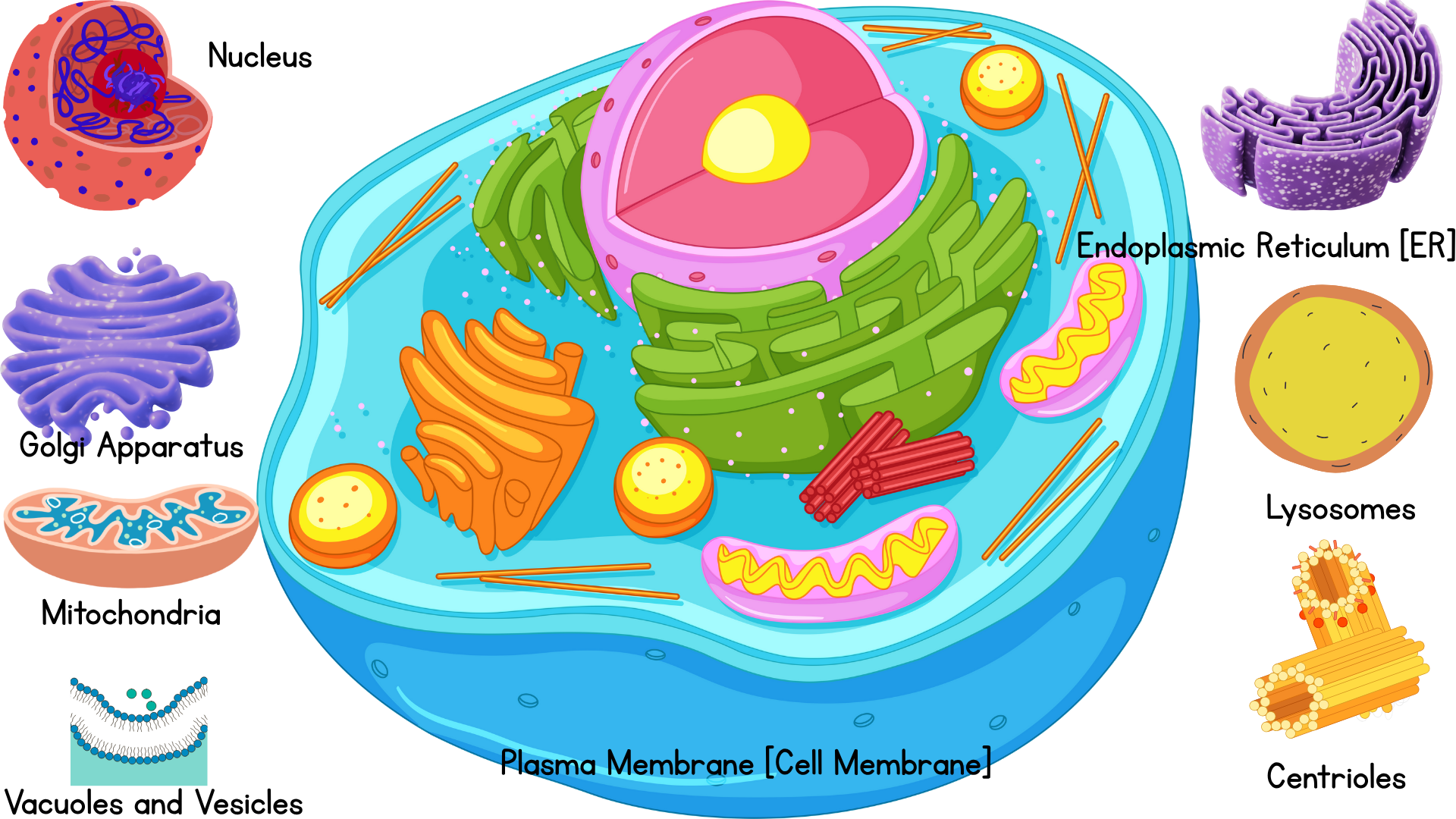
What is the primary role of the ribosomes in both animal and plant cells?
Which organelle is responsible for modifying, sorting, and packaging proteins and lipids into vesicles for transport out of the cell or to other organelles?
The Rough Endoplasmic Reticulum (RER) is distinguished from the Smooth Endoplasmic Reticulum (SER) by the presence of which structures?
What highly acidic, enzyme-filled sac is responsible for breaking down ingested food particles, damaged organelles, and cellular debris in an animal cell?
What structure in the animal cell contains chromatin and controls all of the cell's activities?
What is the jelly-like substance that fills the cell and suspends the organelles?
In animal cells, which pair of structures, composed of microtubules, is involved in organizing cell division (mitosis)?
What is the primary difference in structure when comparing the plasma membrane to the cell wall?
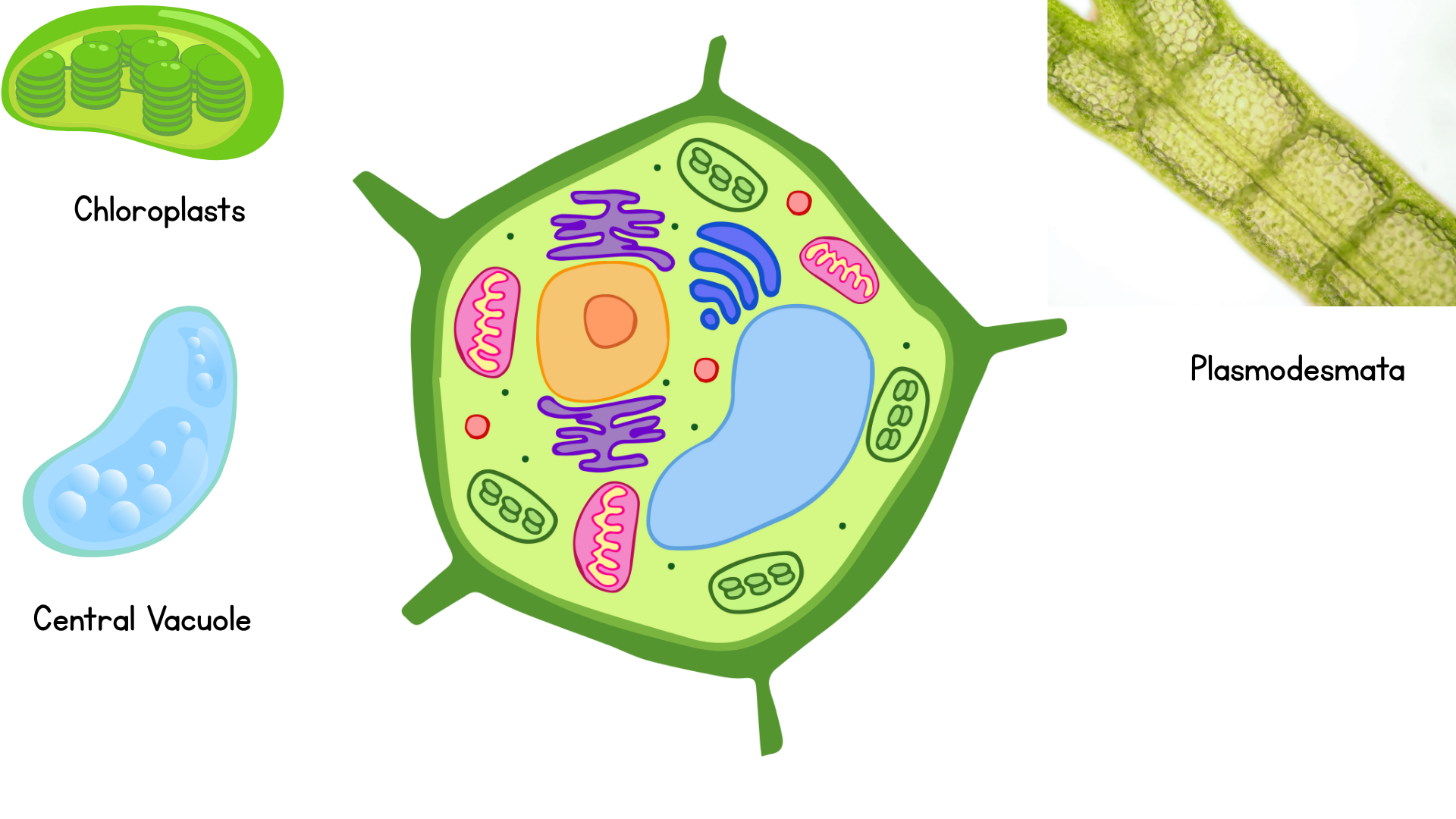
Which organelle is primarily responsible for performing photosynthesis in plant cells?
What substance makes up the majority of the rigid structure of the plant cell wall?
What is the main function of the large central vacuole in a mature plant cell?
The rigid structure that surrounds the plant cell membrane and provides structural support is the:
Plant cells typically possess channels connecting the cytoplasm of adjacent cells, allowing for communication and transport. What are these channels called?
Which organelle is present and fully functional in both animal cells and plant cells, necessary for generating energy from organic molecules?
Which of the following organelles is characteristic of animal cells but is typically absent or plays a significantly different role in mature plant cells?
If a plant cell loses too much water, the cell membrane shrinks away from the cell wall. This condition is a result of the loss of:
What is the term for a type of plastid that stores starch in plant cells (like in potato tubers), distinguishing it from chlorophyll-containing chloroplasts?
How does the size and number of vacuoles in animal cells generally compare to the large central vacuole in mature plant cells?
According to Cell Theory, which statement describes the cell's role in living systems?
Why is staining required when preparing most specimens for viewing under a standard compound light microscope?
Both animal and plant cells are classified as eukaryotic because they both possess:
Easy Questions
What type of cell (prokaryotic or eukaryotic) contains a true nucleus?
What single organelle is responsible for photosynthesis in plant cells?
What is the primary genetic material found in both prokaryotic and eukaryotic cells?
In the animal cell model, which organelle is known as the "powerhouse" and produces ATP?
Do prokaryotic cells possess membrane-bound organelles?