
FOR THE LEAVEN ACTIVATION
• 200 grams white flour
• 200 grams lukewarm water
• 1 teaspoon of dried yeast
• 3 tablespoons of old starter
FOR THE FULL BREAD 1kg
• 200 grams leaven
• 1.8 teaspoon of fresh baking yeast
• 900 grams white-bread flour
• 100 grams whole-wheat flour, plus more for dusting
• 20 grams fine sea salt
STEP 1
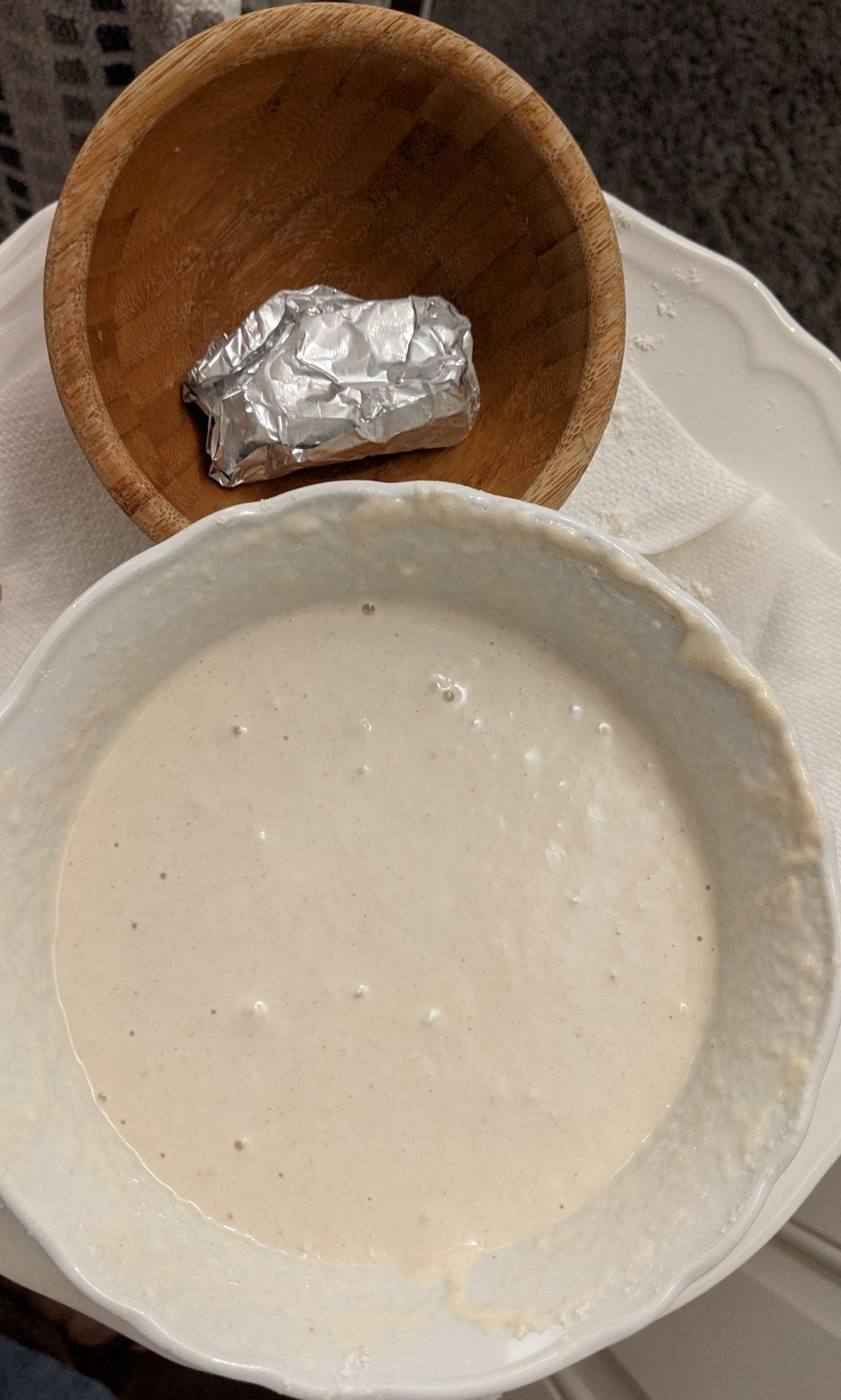
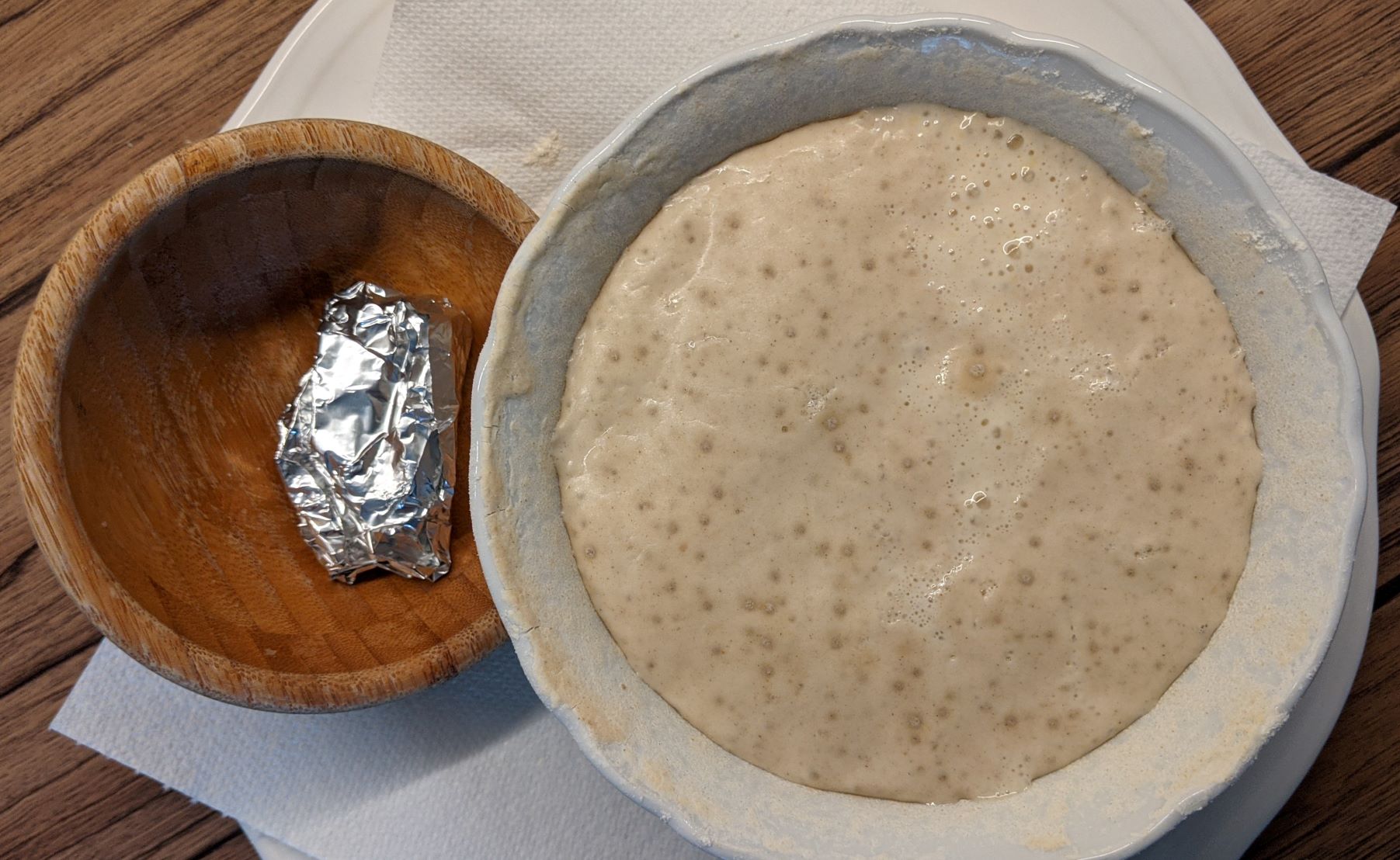
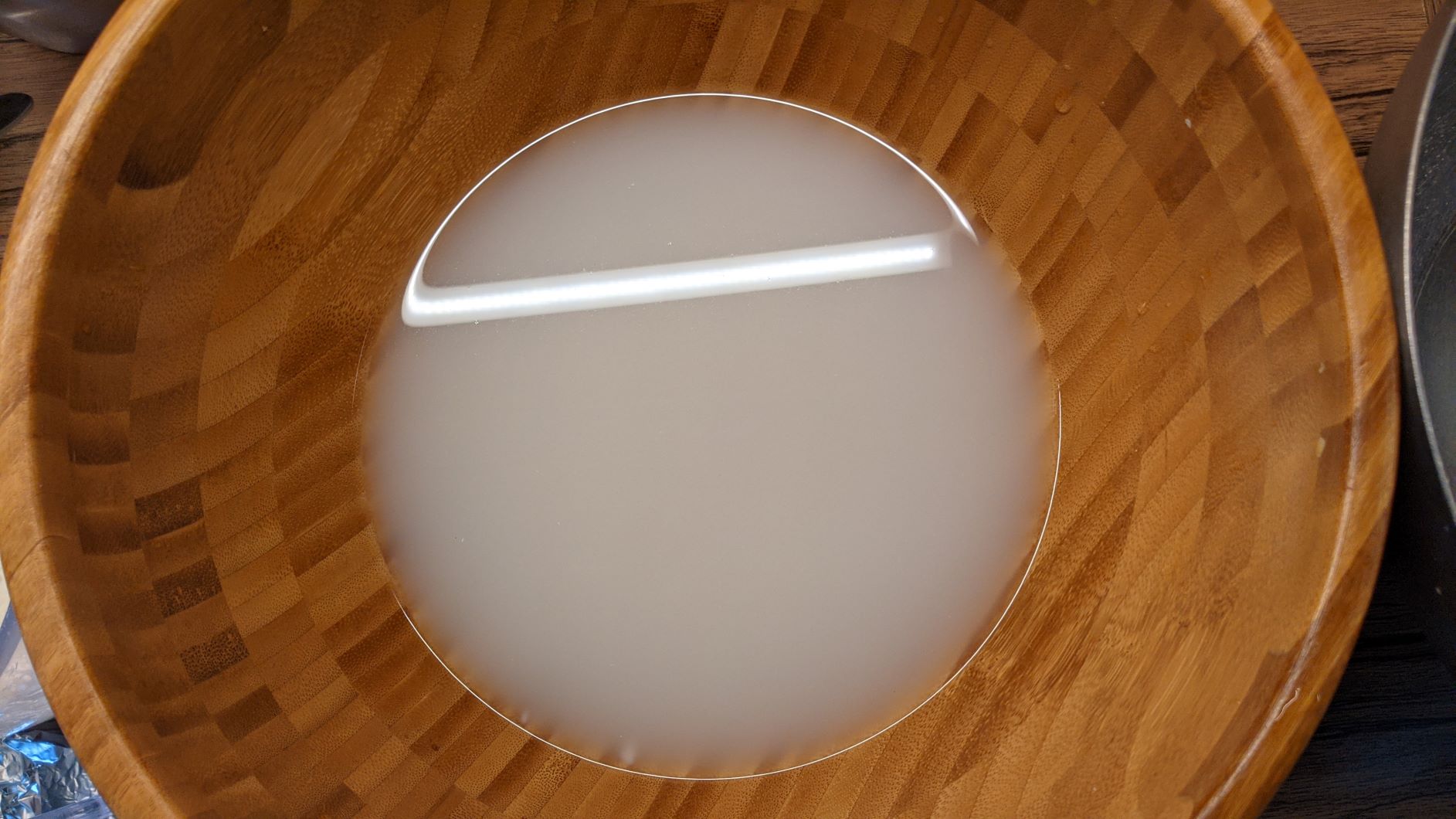
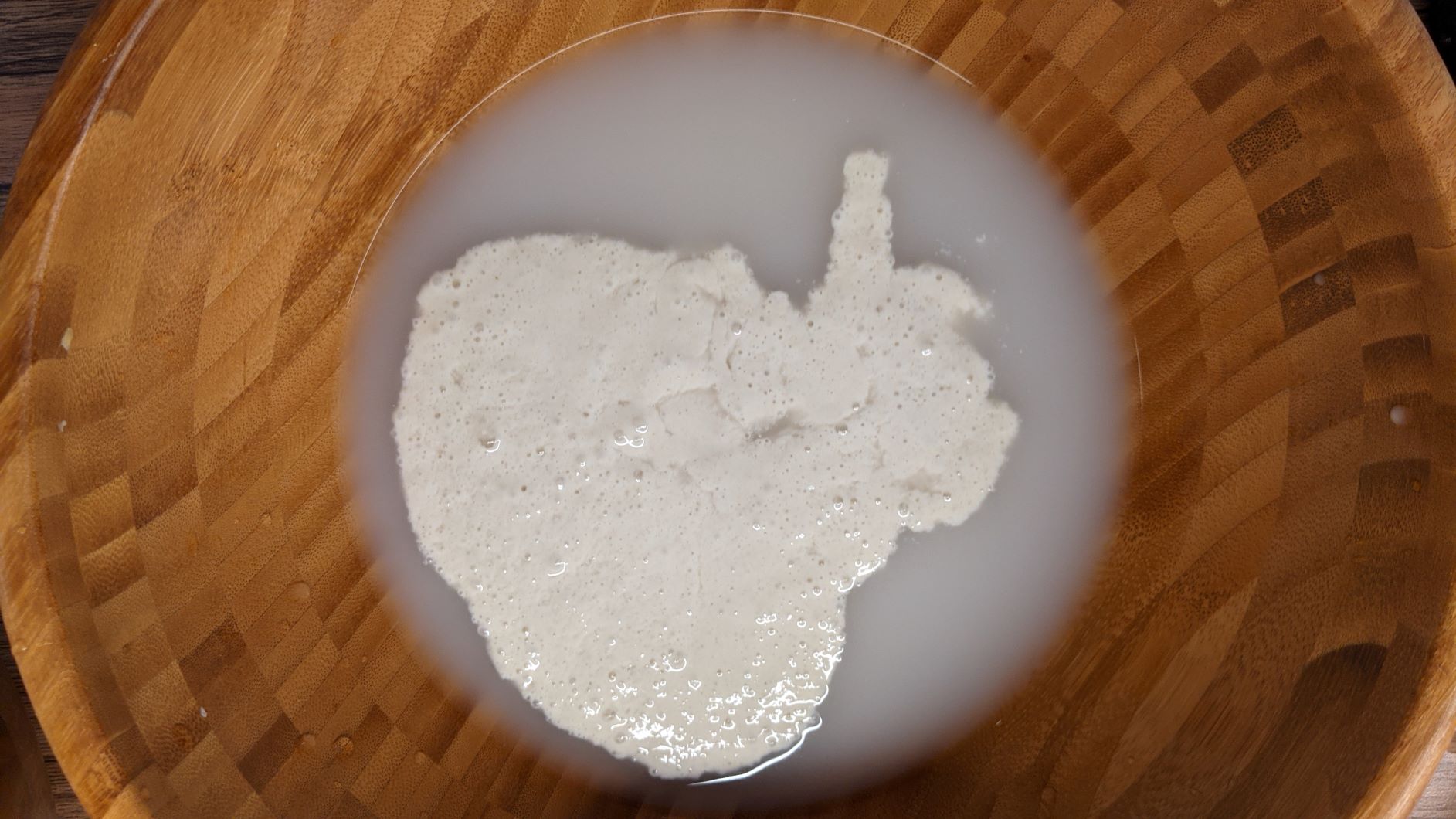
Make the leaven: The night before baking, discard all but 2-3 tablespoon of the mature starter. Mix the remaining starter with 200 grams of warm water and 1 teaspoon of the dried yeast stir with your hand to disperse. Add 200 grams of the white-wheat flour mix and combine well. Cover with a towel and let rest at room temperature for 12 hours or until aerated and puffed in appearance. To test for readiness, drop a tablespoon of leaven into a bowl of room-temperature water; if it floats it is ready to use. If it does not, allow more time to ferment.
STEP 2
Make the dough: In a large bowl, combine 200 grams of leaven and 1.8 teaspoon fresh yeasts with 700 grams of warm water and stir to disperse. (Reserve remaining leaven for future loaves; see note below.)
STEP 3
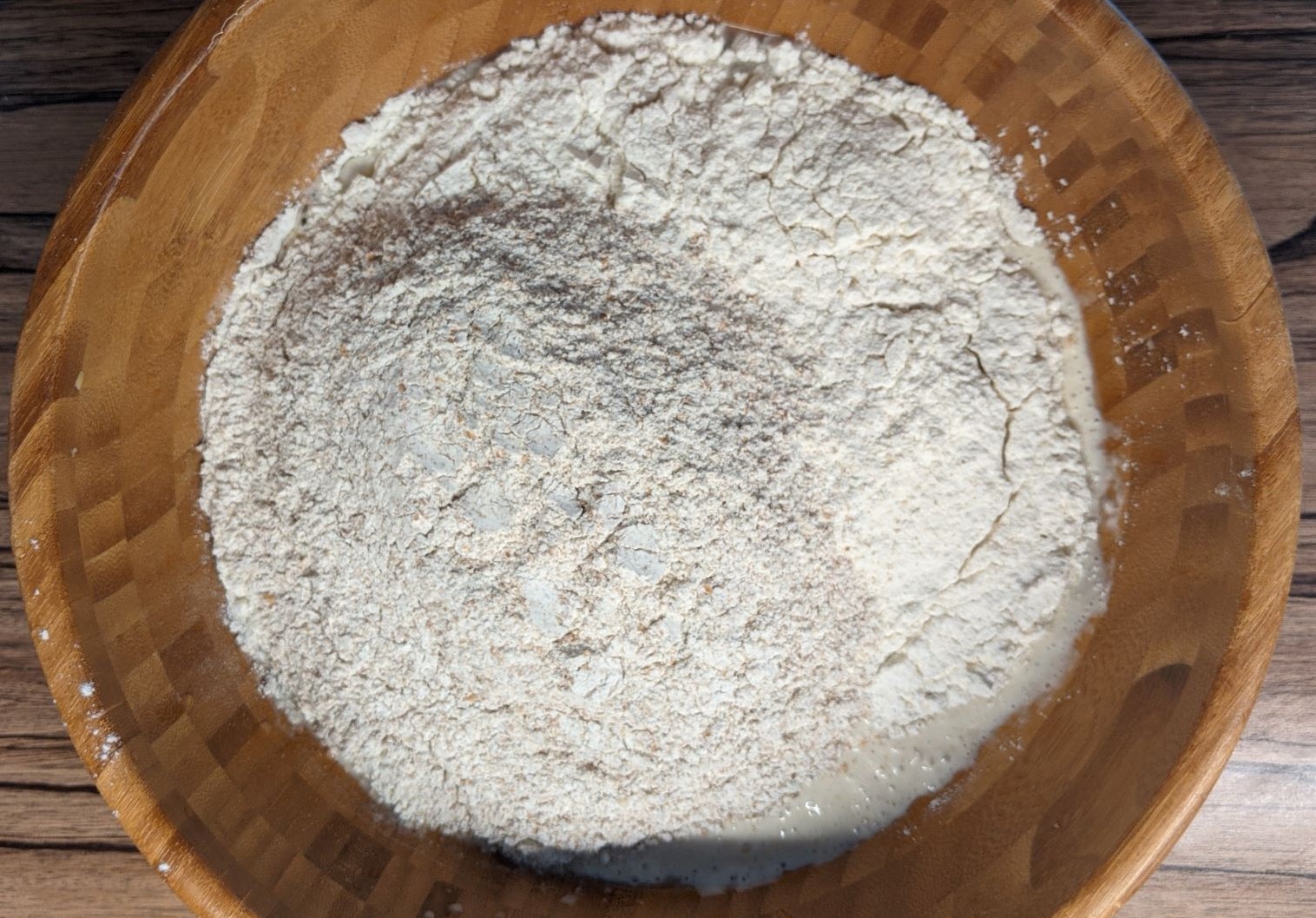
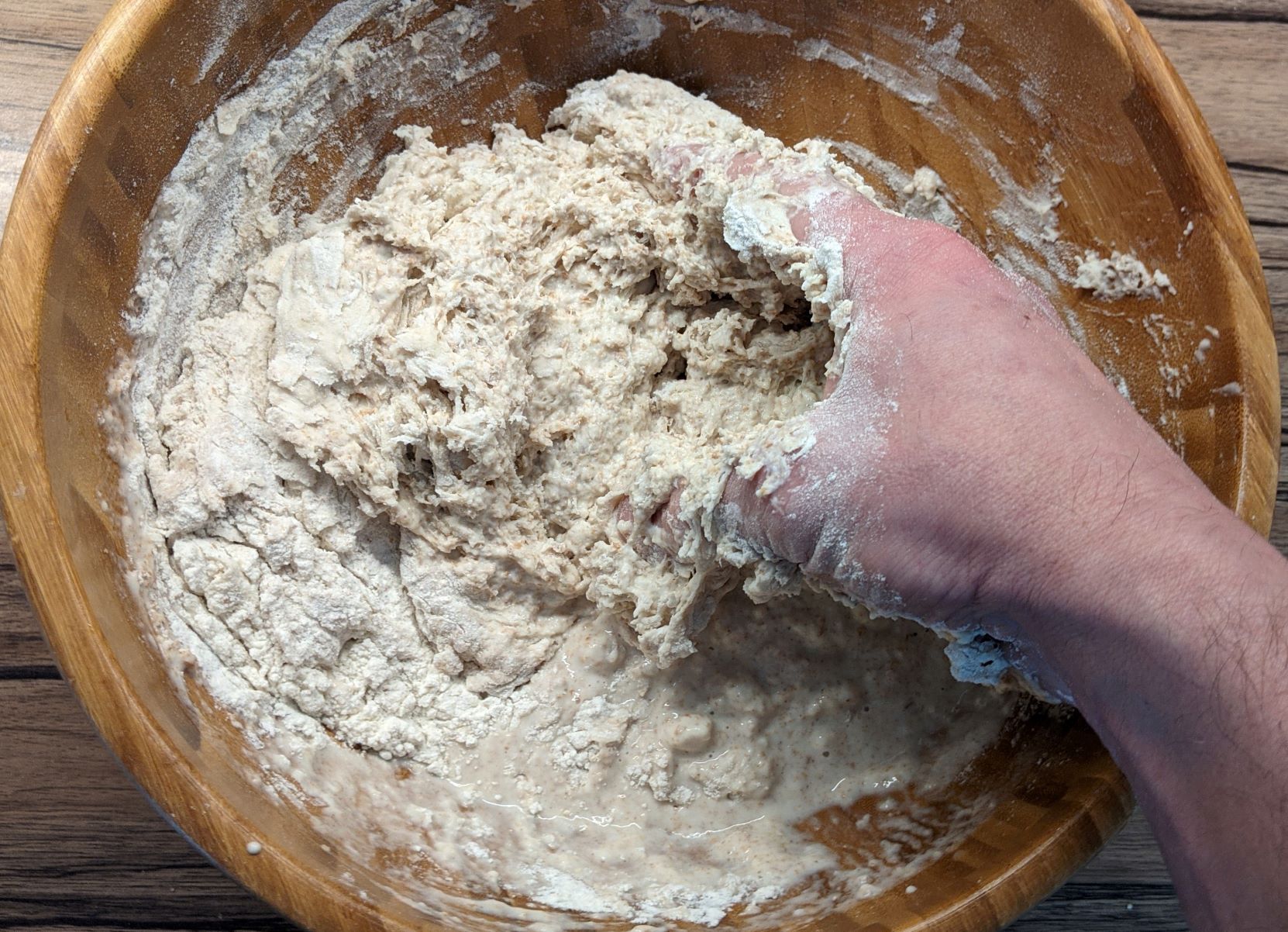
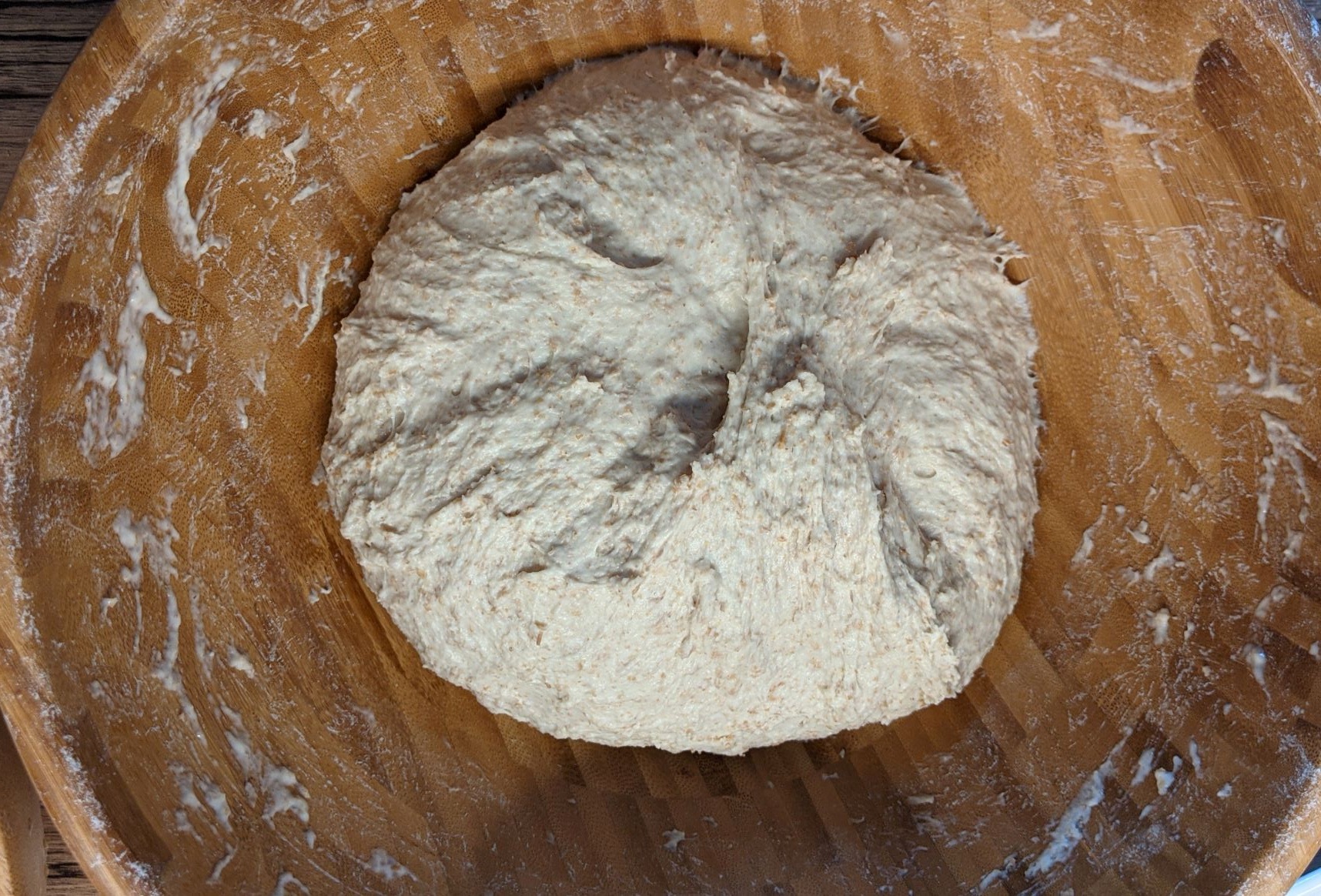
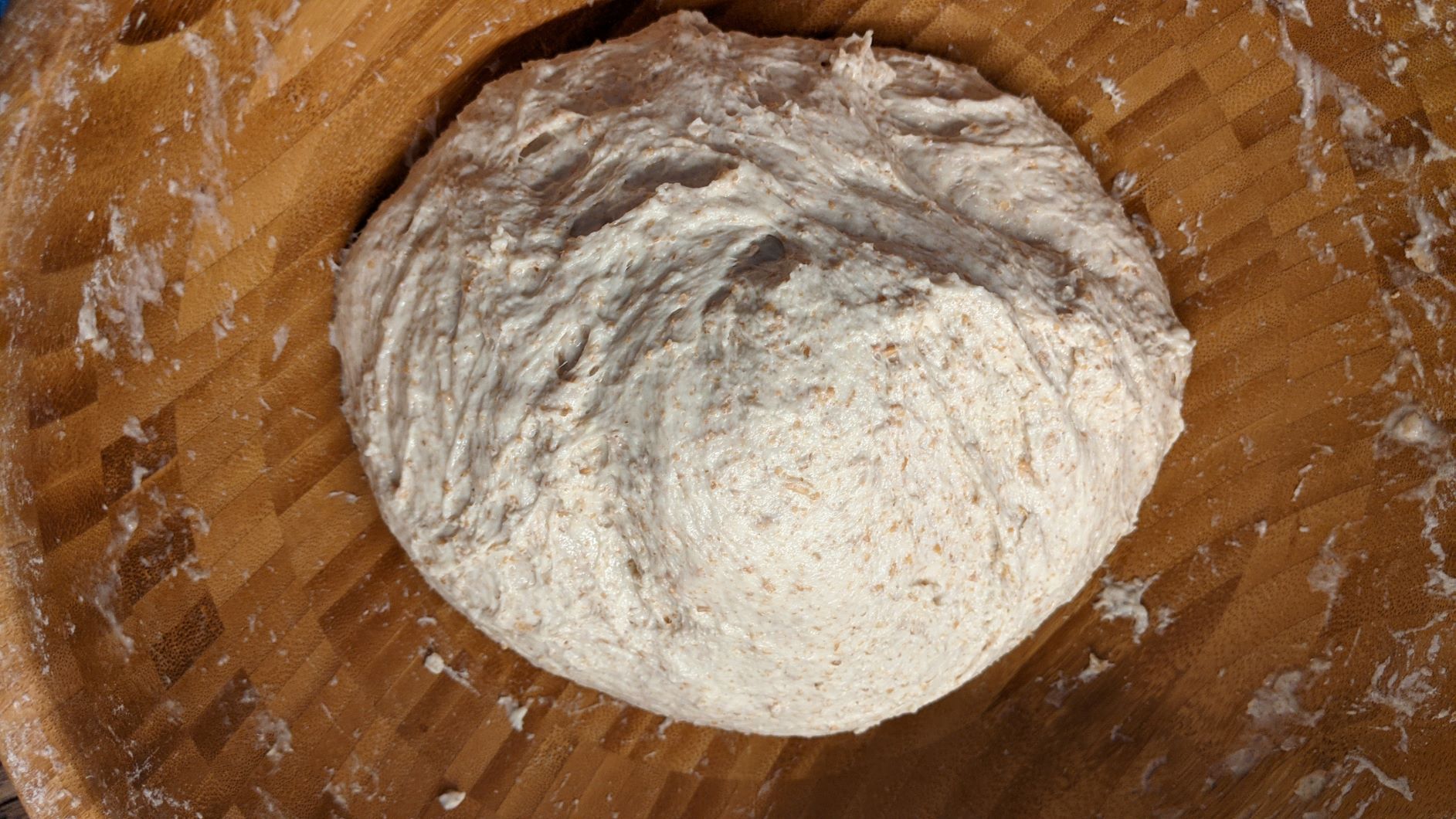
Add 900 grams of white-bread flour and 100 grams of whole-wheat flour (could be different proportions like 70/30 or 80/20 depend on personal preferences) to bowl and use your hands to mix until no traces of dry flour remain. Add flour if is too sticky. The dough will be sticky and ragged. Cover bowl with a towel and let dough rest for 25 to 40 minutes at room temperature

STEP 4
Add 20 grams fine sea salt and 30-40 grams warm water. Use hands to integrate salt and water into dough thoroughly. The dough will begin to pull apart but continue mixing; it will come back together.
STEP 5
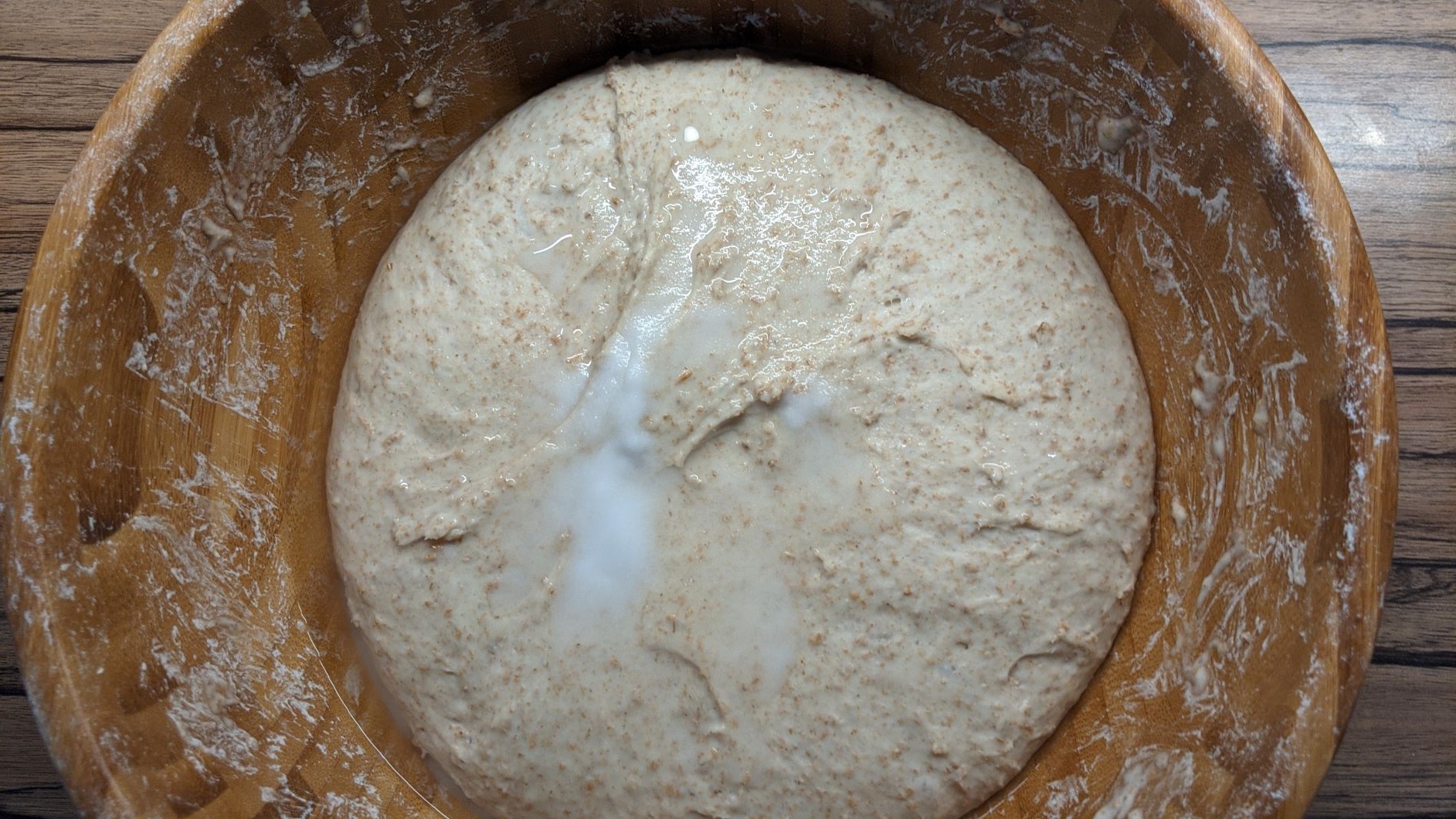
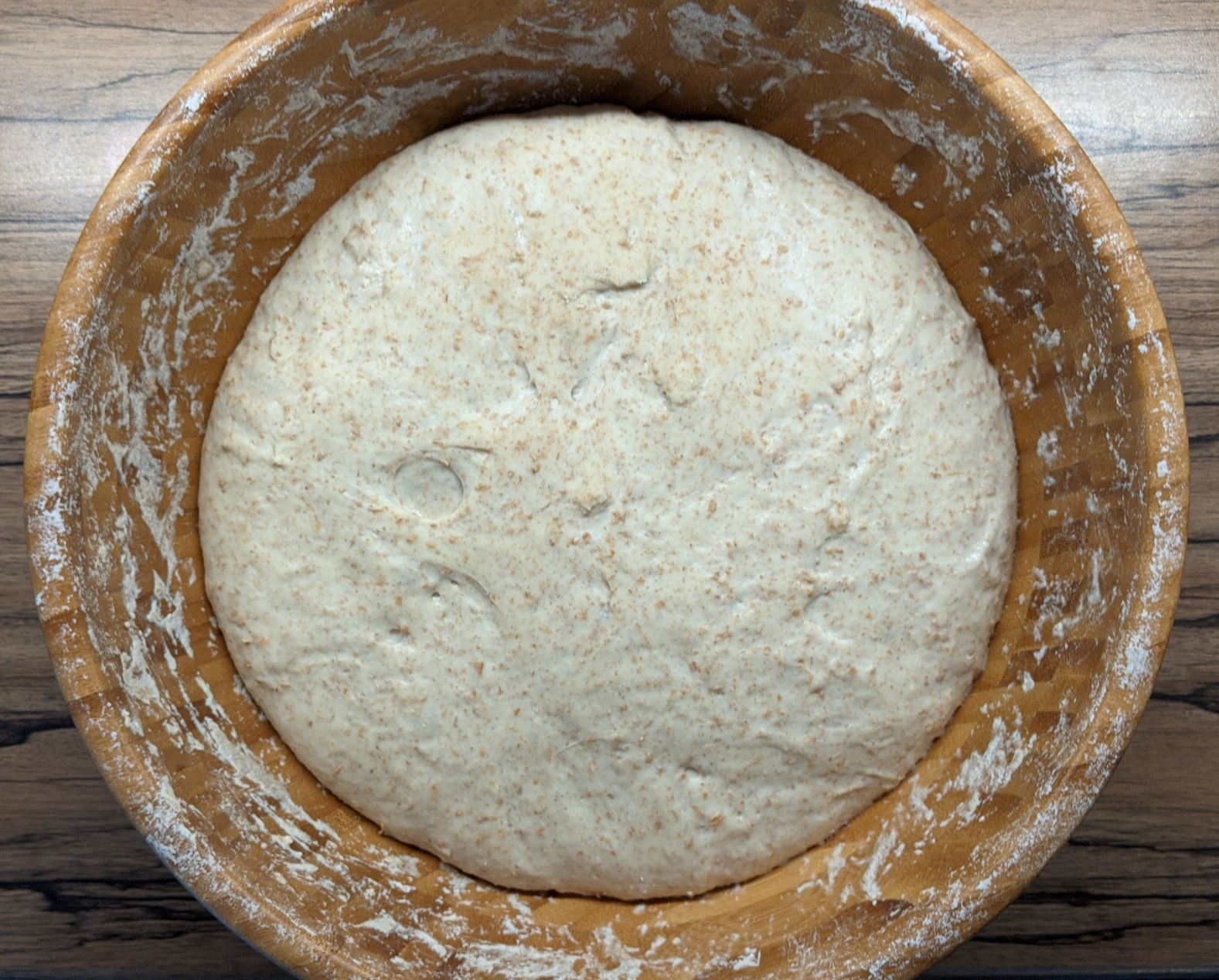
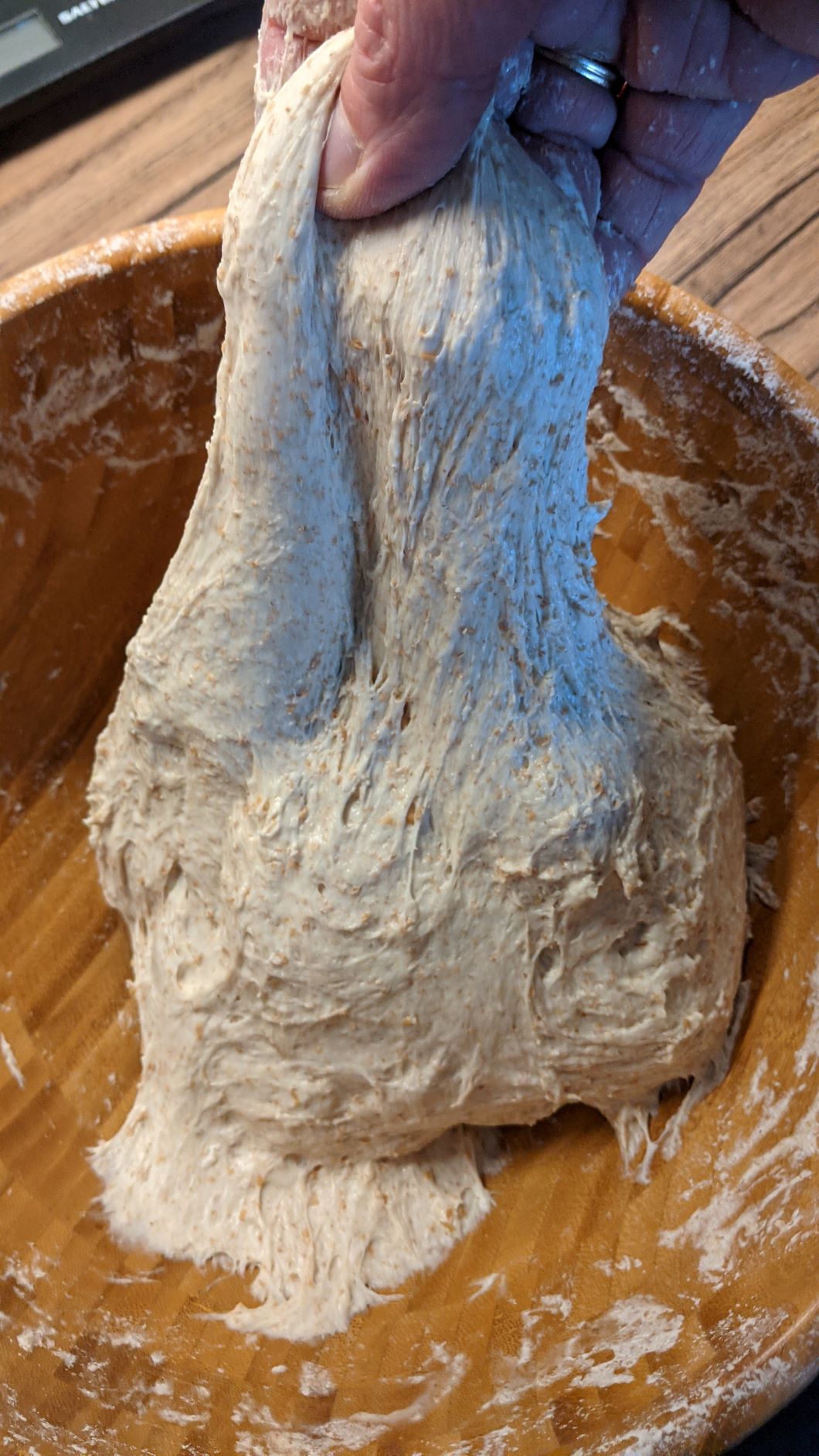
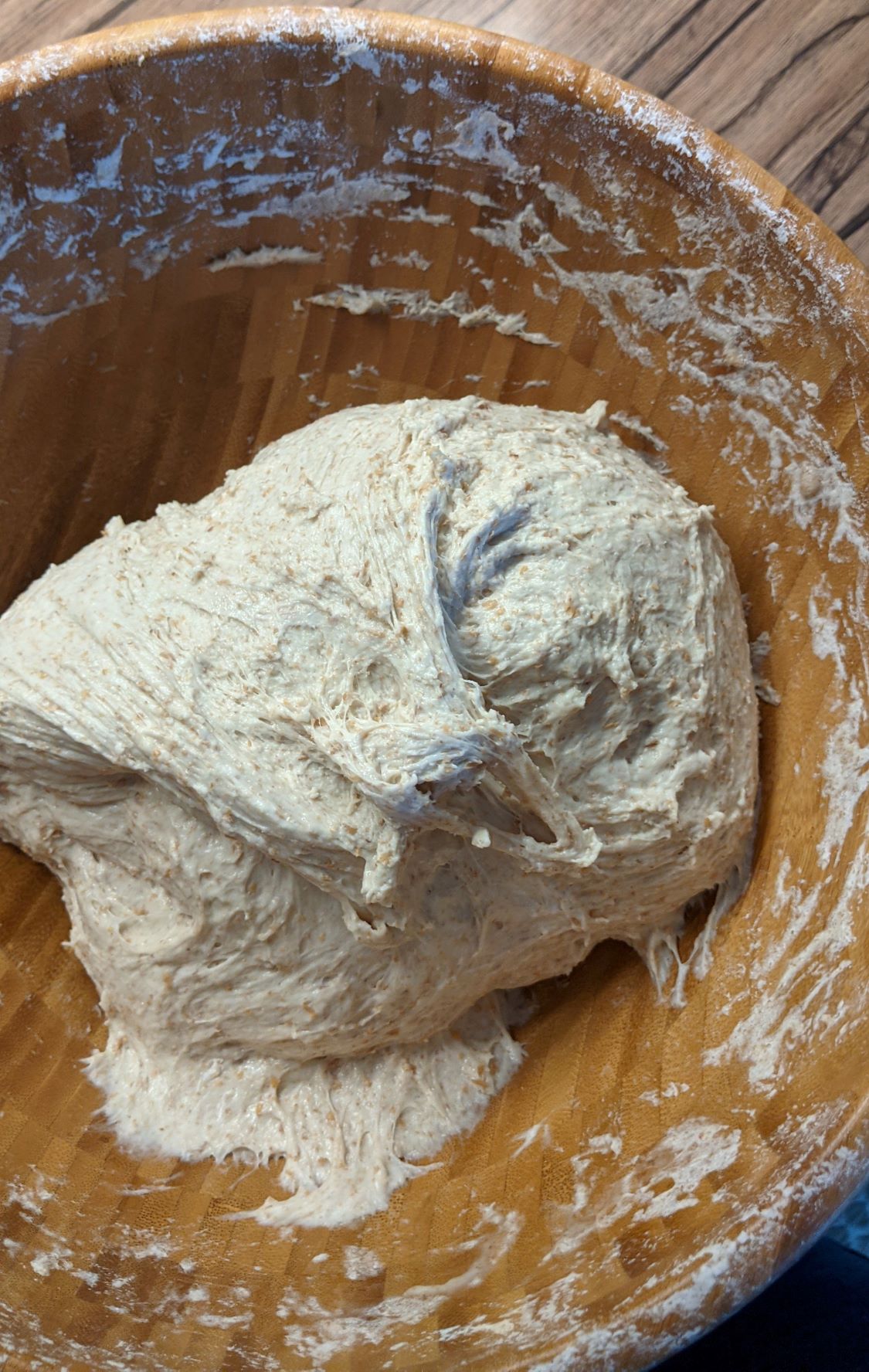
Cover dough with a towel and transfer to a warm environment, 75 to 80 degrees ideally (like near a window in a sunny room, or inside a turned-off oven set for 50 degrees). Let dough rise for 30 minutes. Fold dough by dipping hand in water, taking hold of the underside of the dough at one quadrant and stretching it up over the rest of the dough. Repeat this action 3 more times, rotating bowl a quarter turn for each fold. Do these few times over 30-60 min. The dough should be billowy and increase in volume 20 to 30 percent.
STEP 6
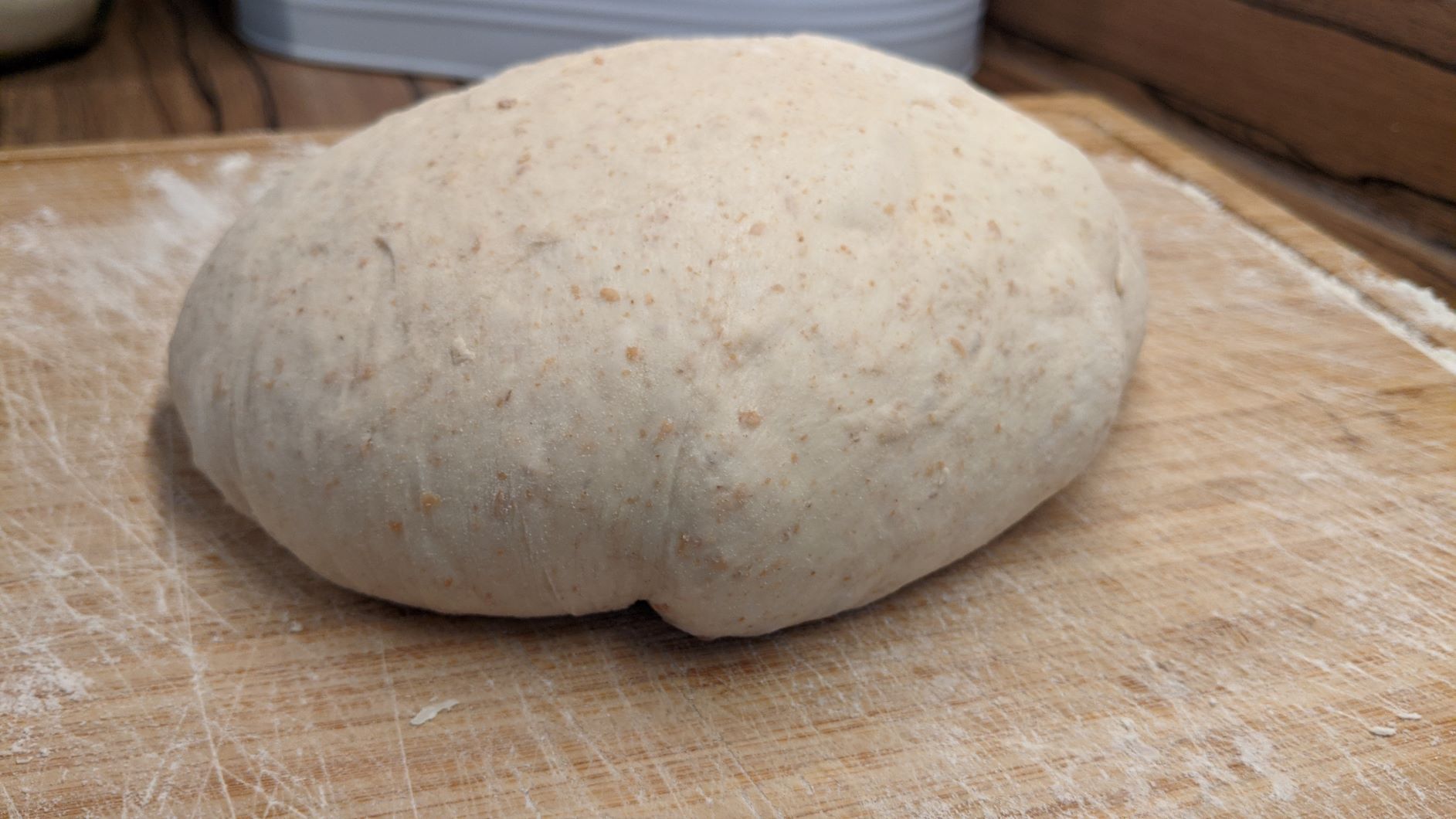
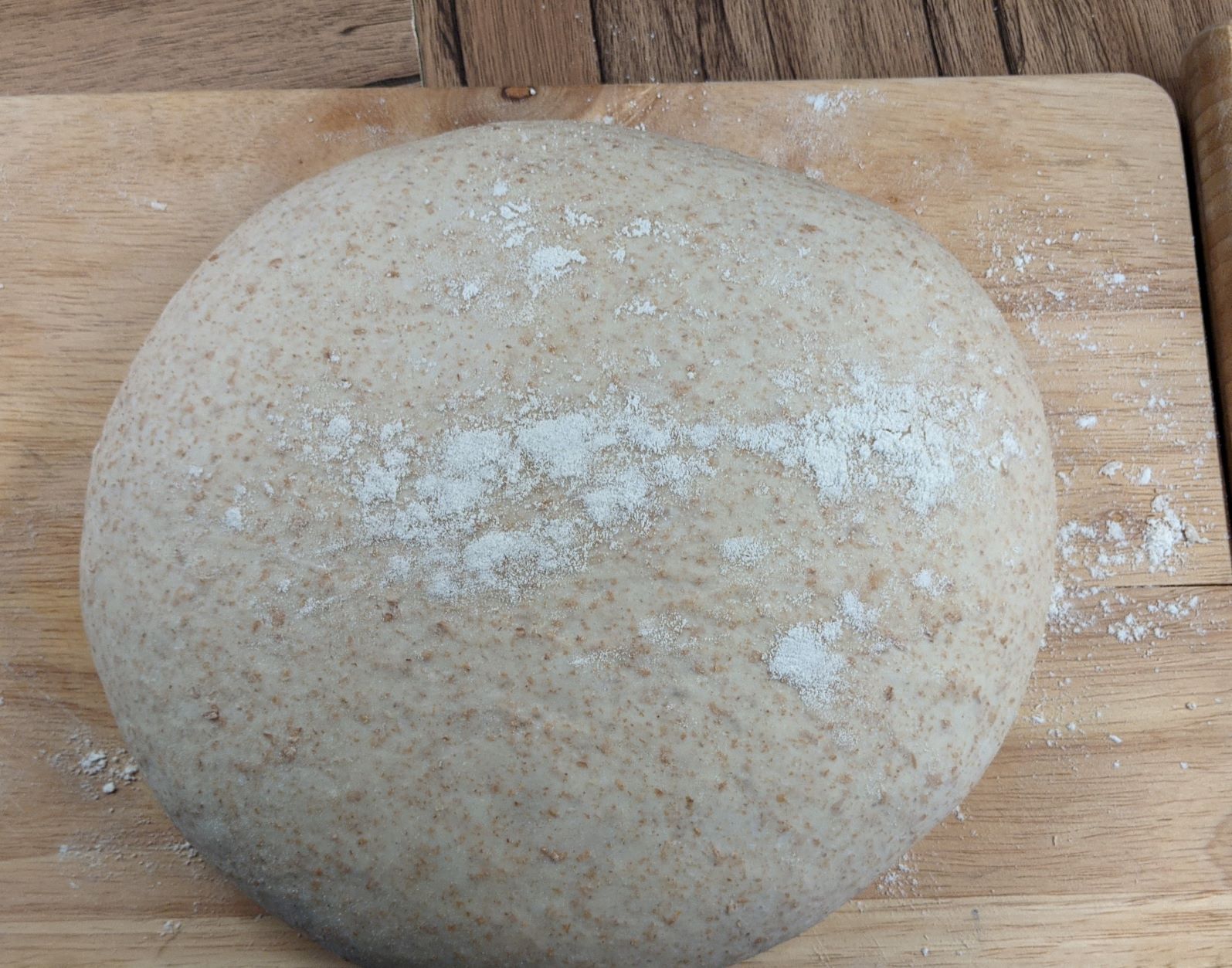
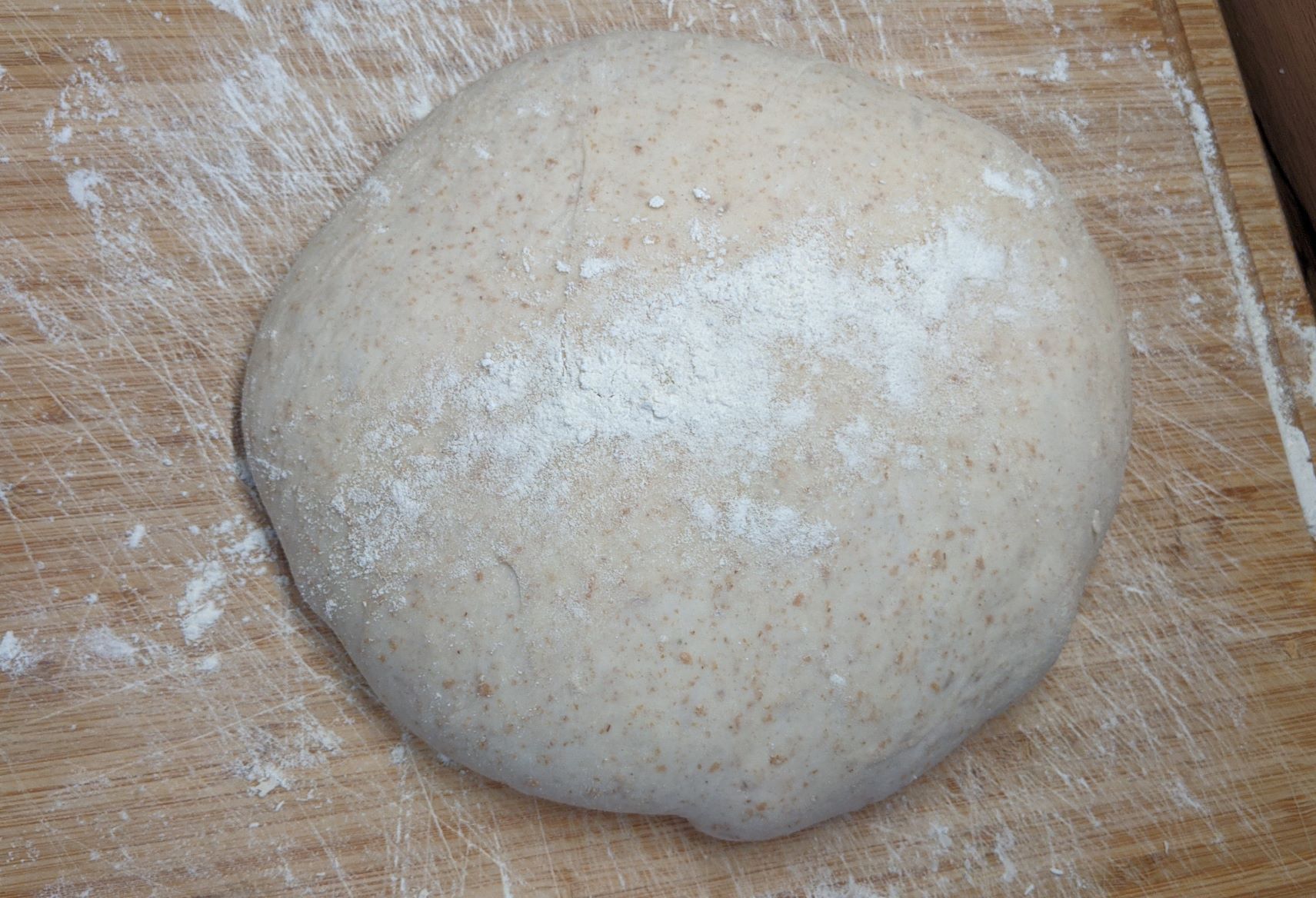
ATransfer dough to a work surface and dust top with flour. Fold the cut side up onto itself so the flour on the surface remains entirely on the outside of the loaf; this will become the crust. Work dough into taut round. Place the dough round on a work surface, cover with a towel, and let rest 30 minutes.
STEP 7
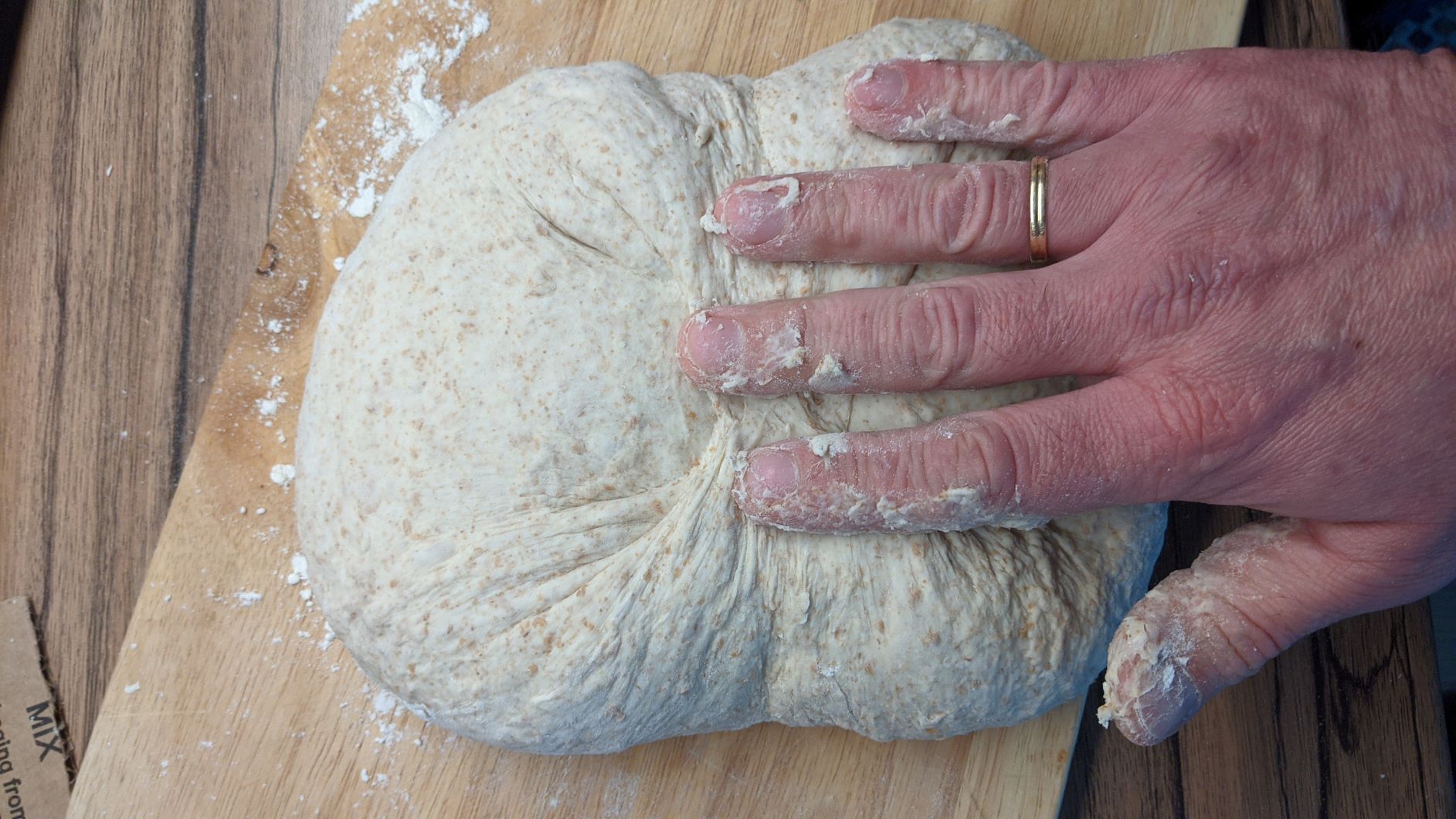
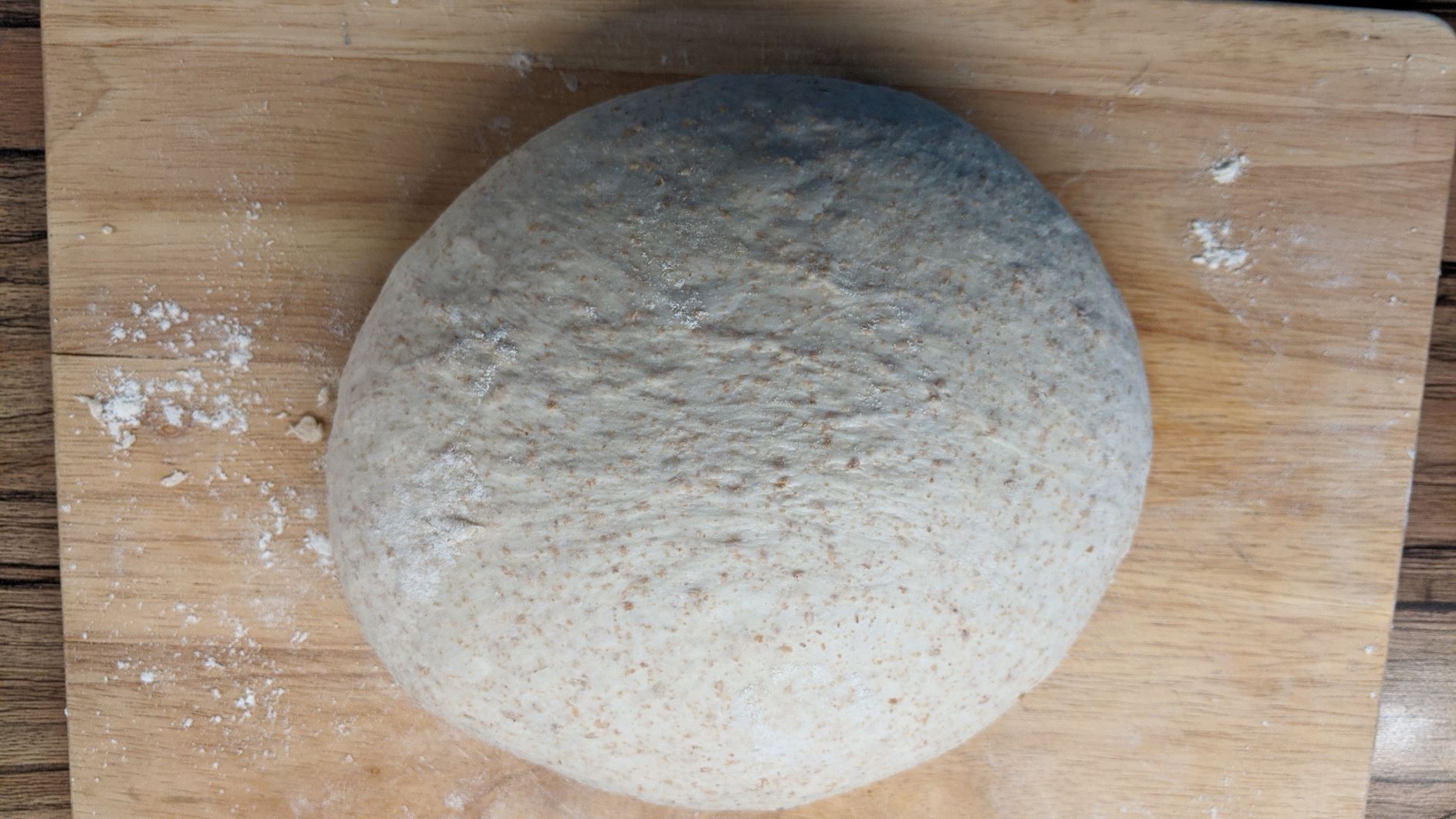
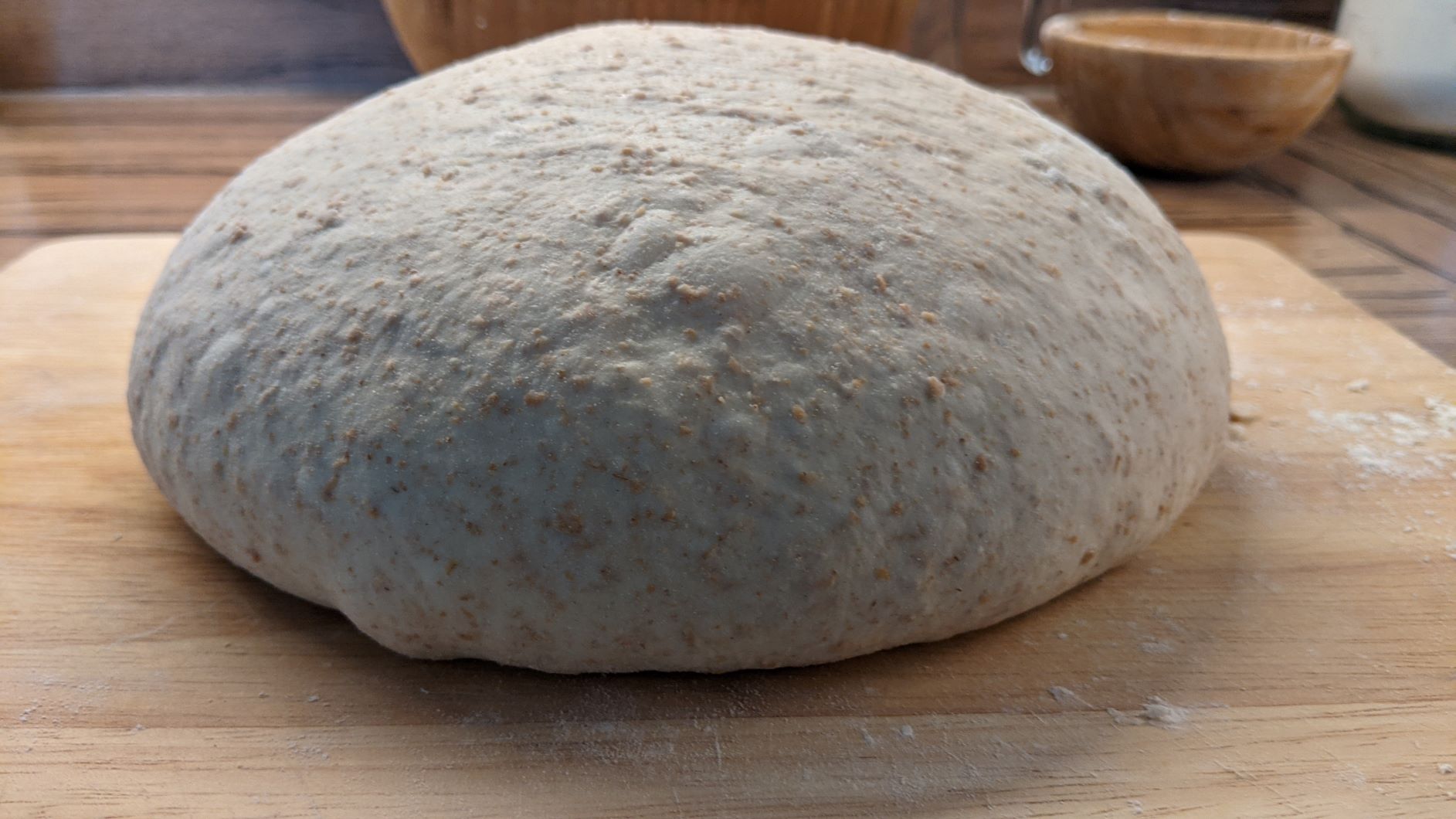
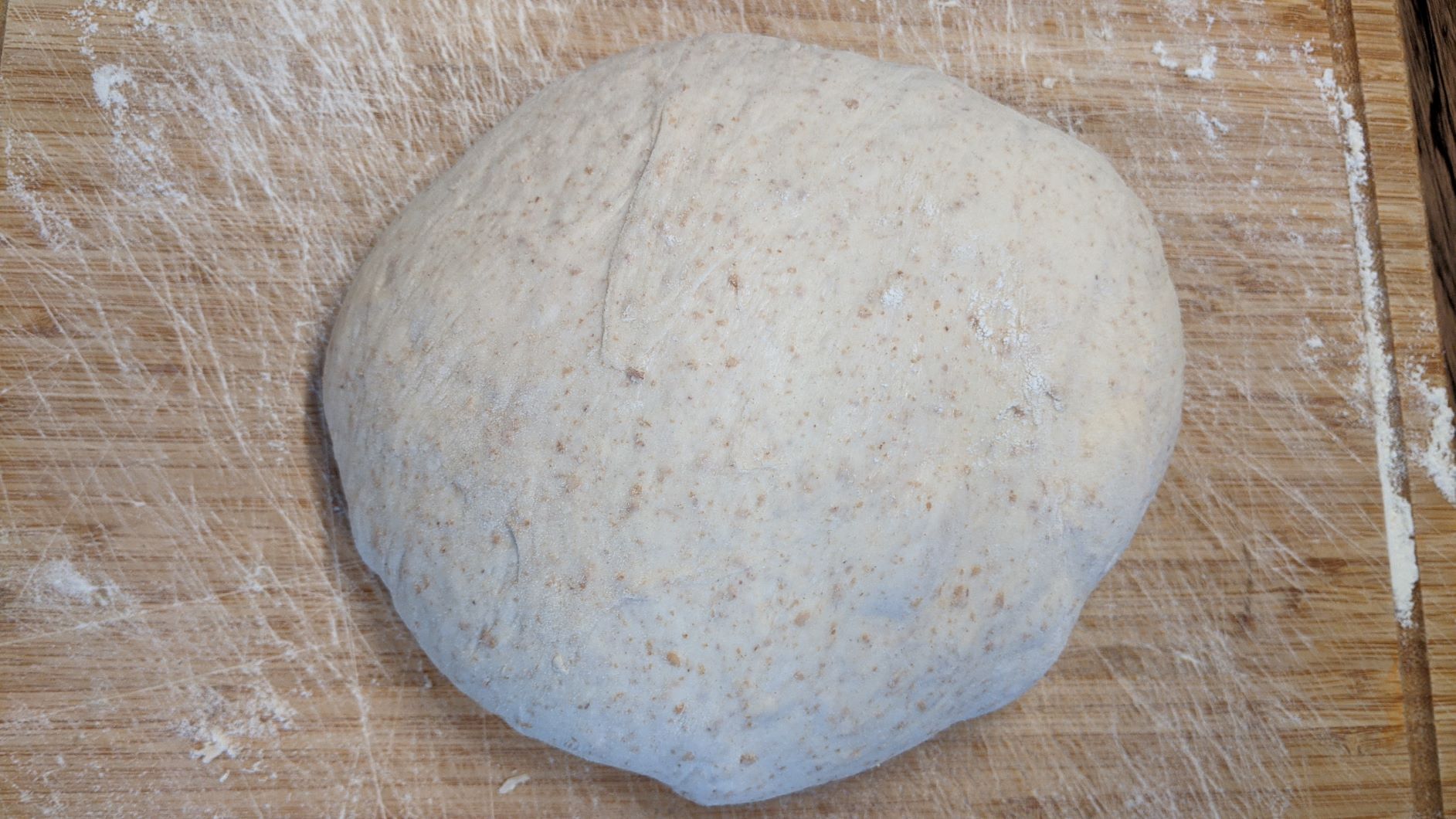
Transfer dough to a work surface and dust top with flour. Fold the cut side up onto itself so the flour on the surface remains entirely on the outside of the loaf; this will become the crust. Work dough into taut round. Place the dough round on a work surface, cover with a towel, and let rest 30 minutes.
STEP 8
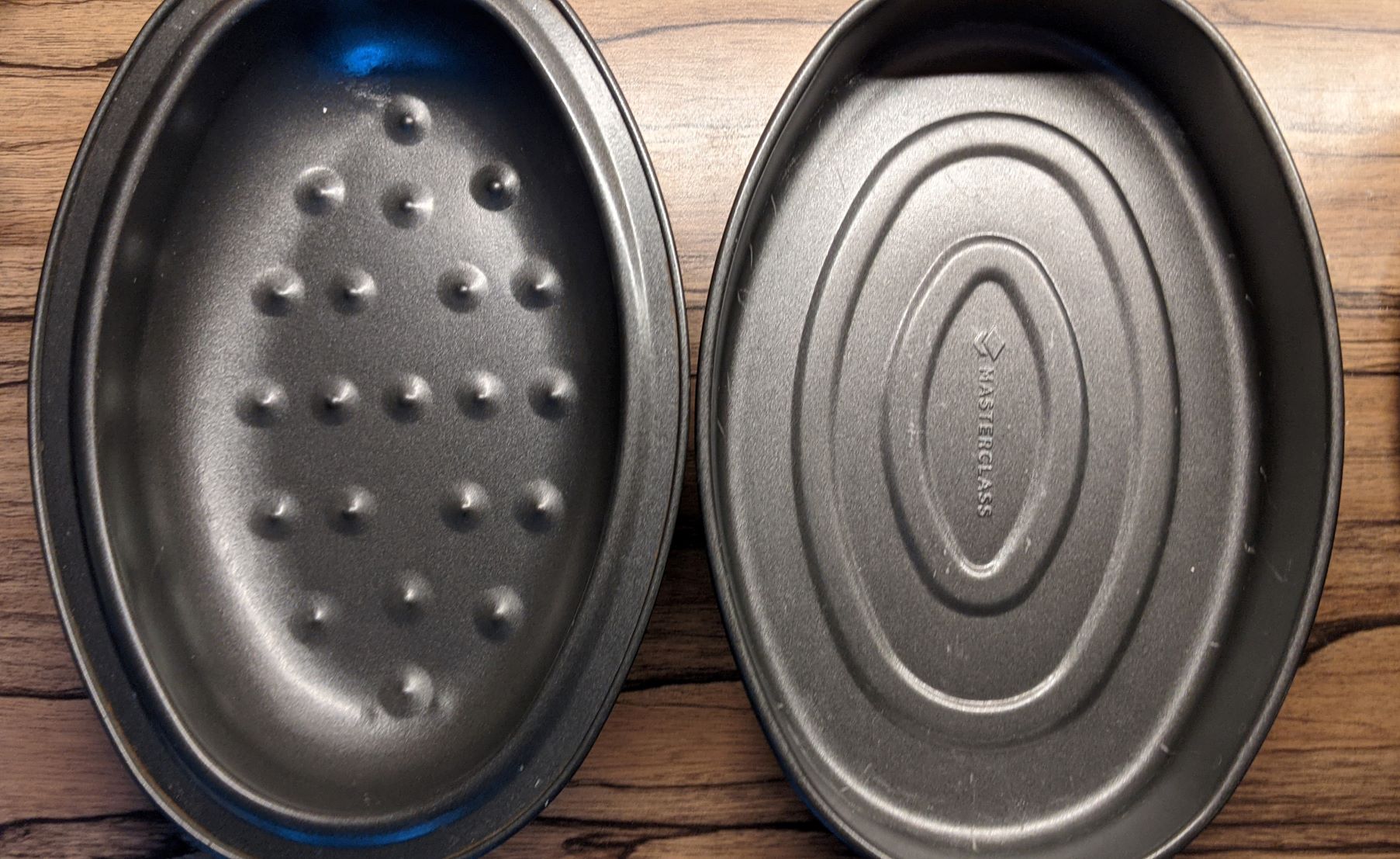
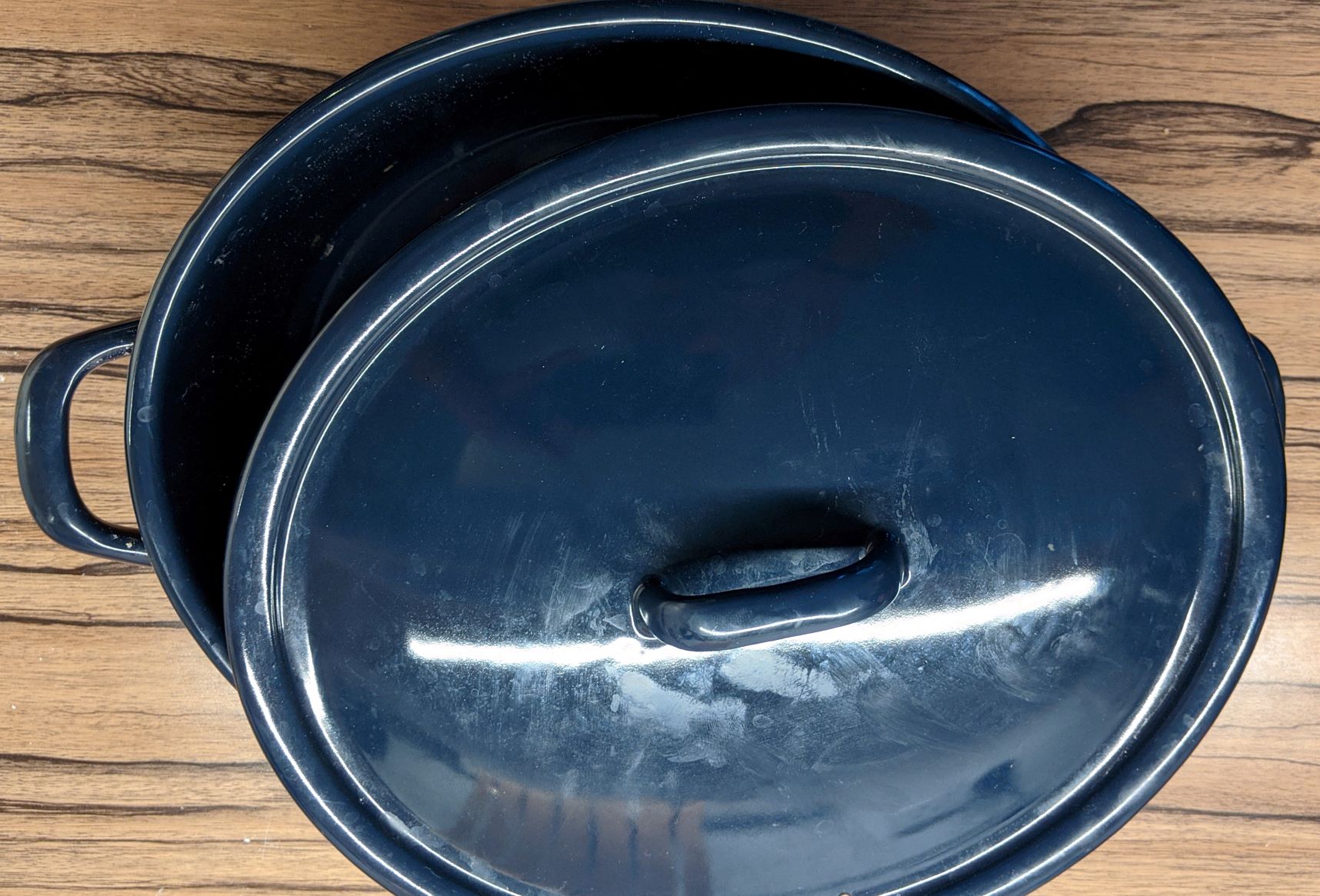
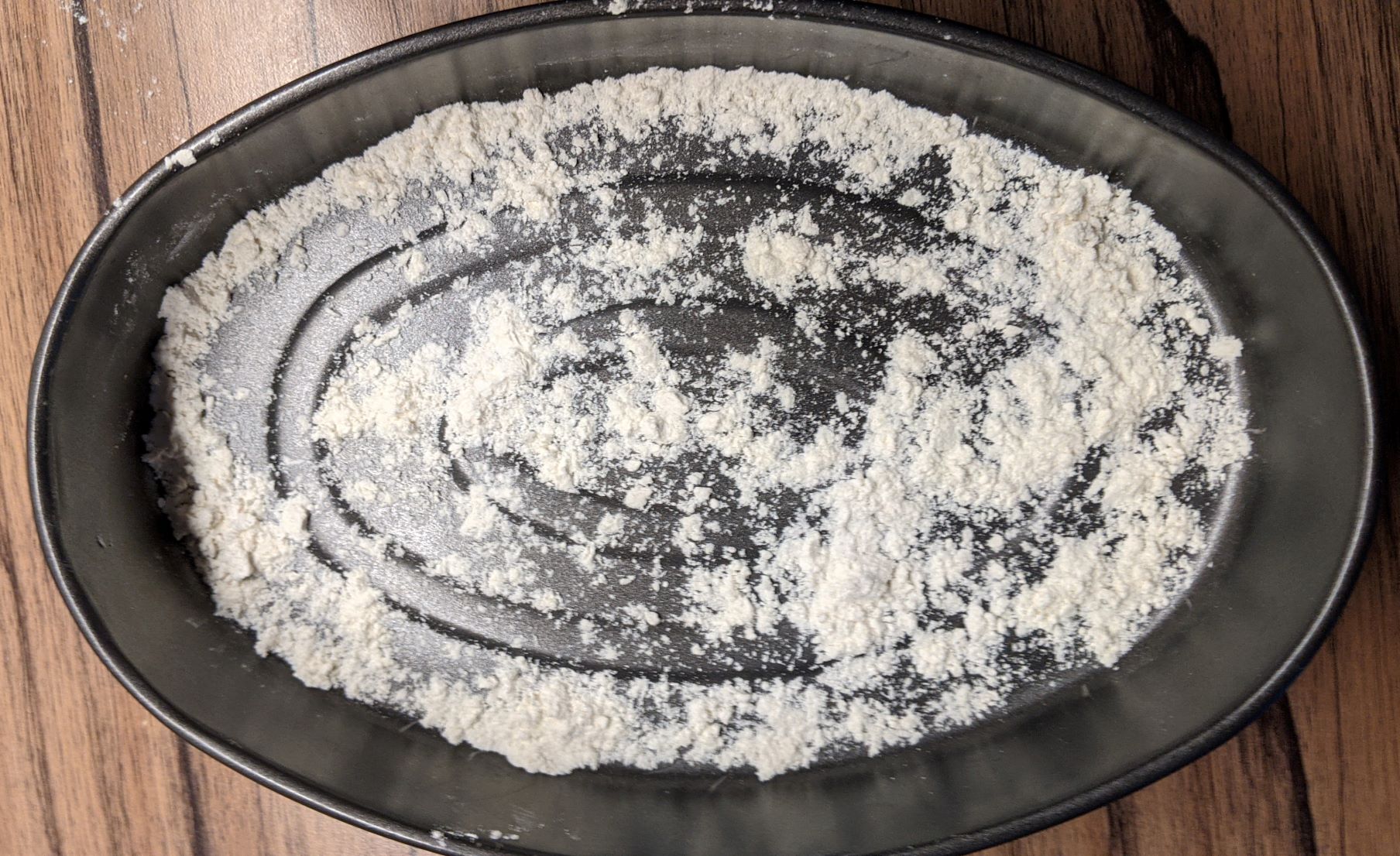
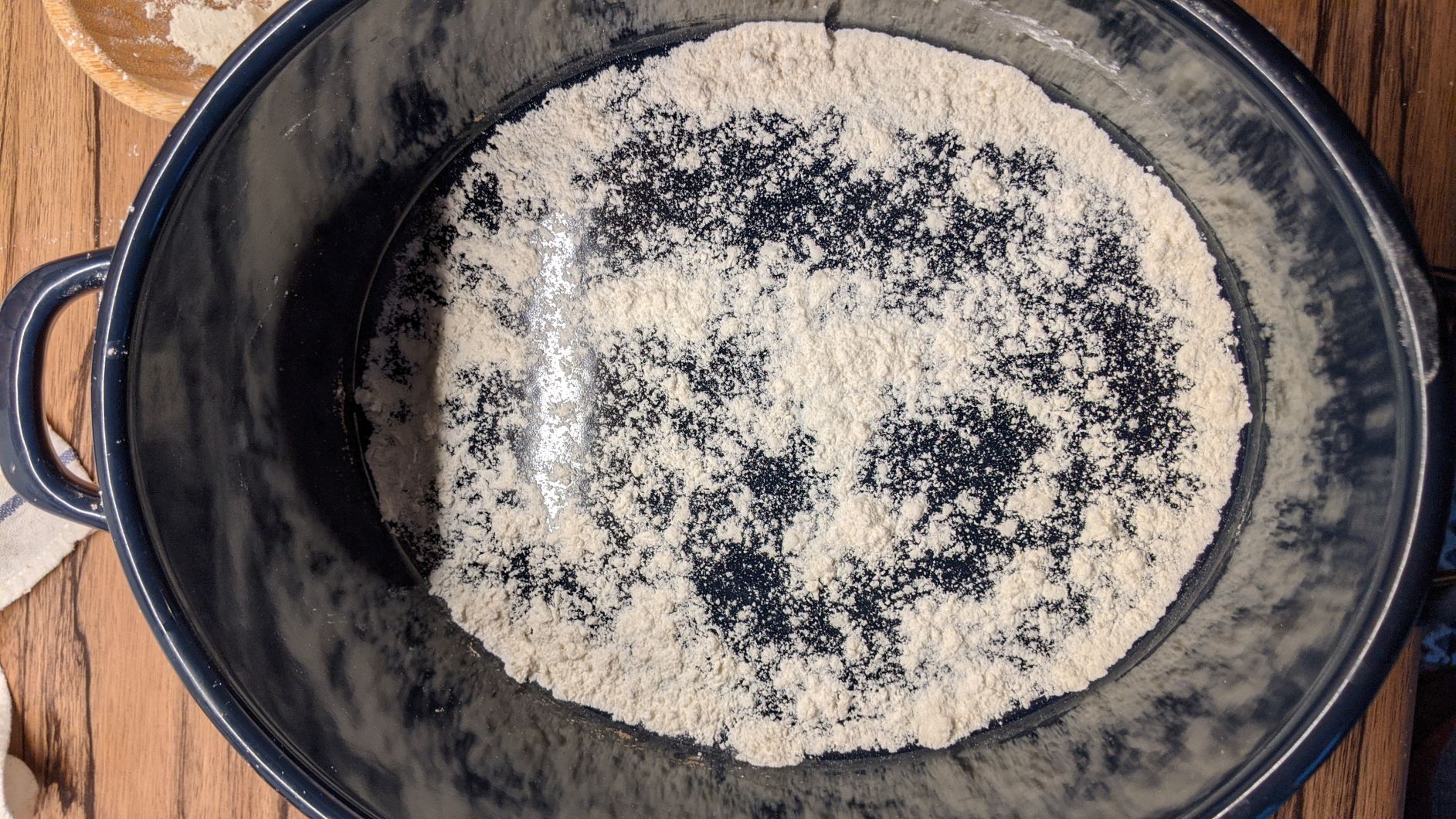
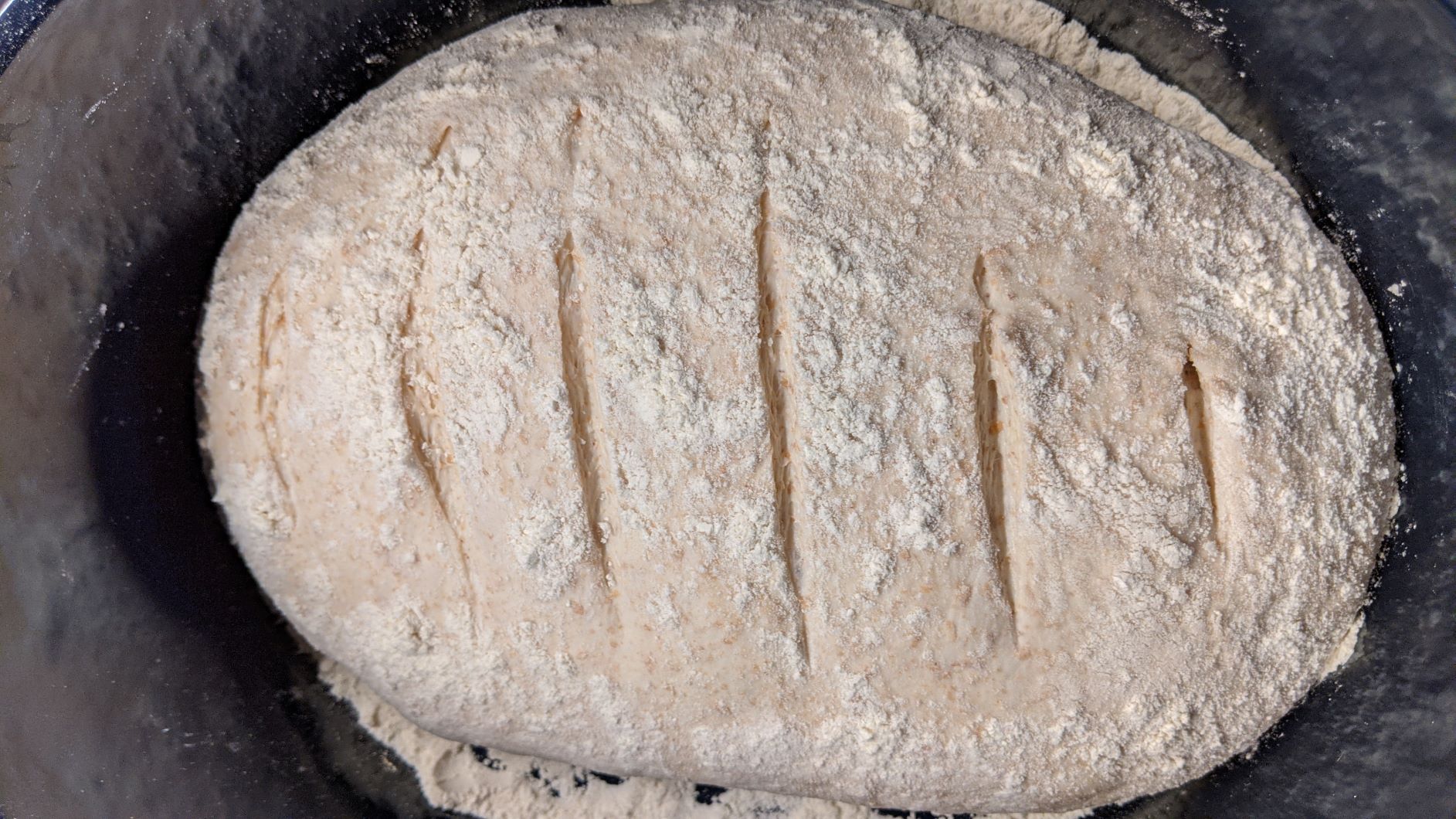
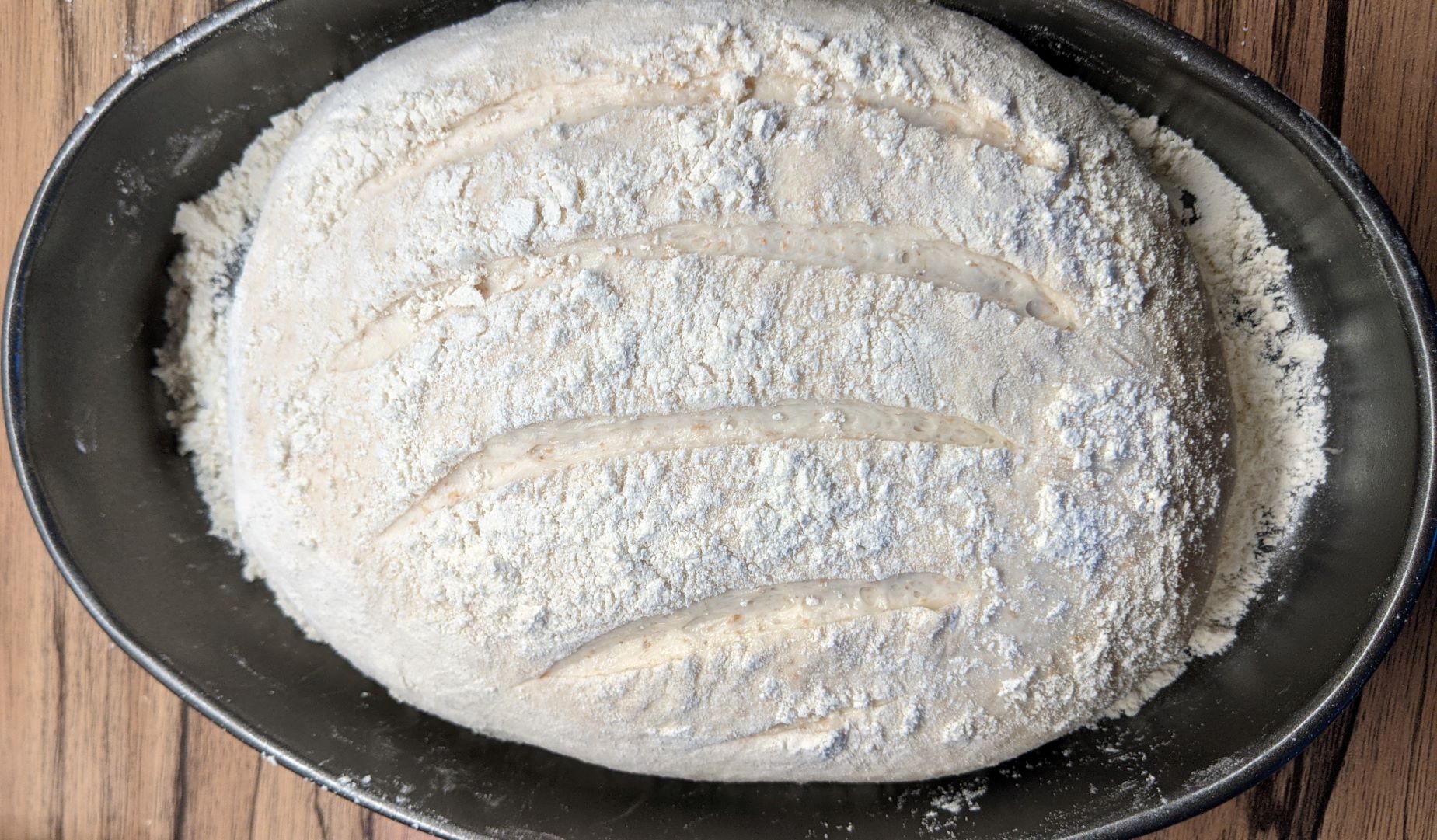
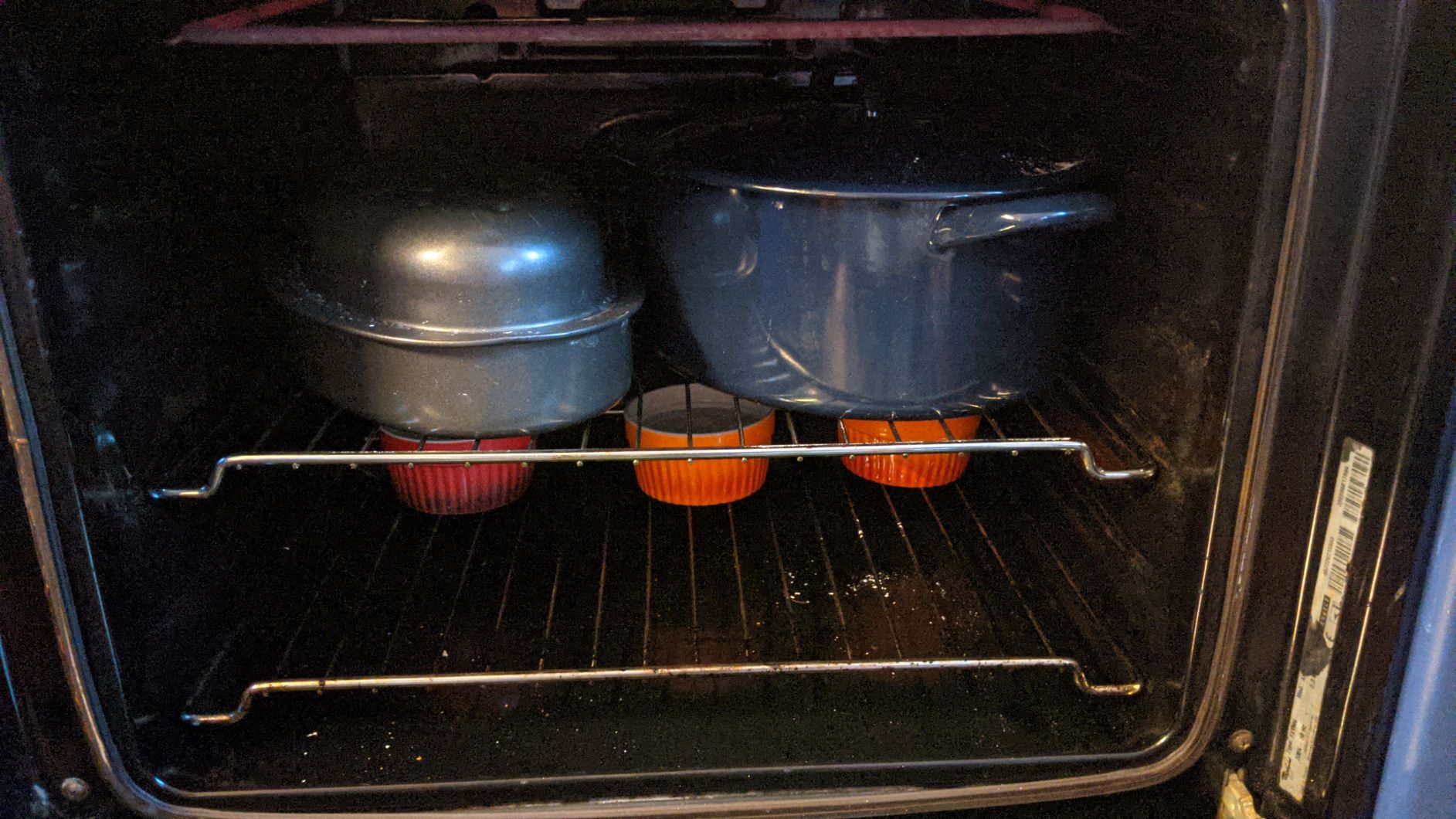
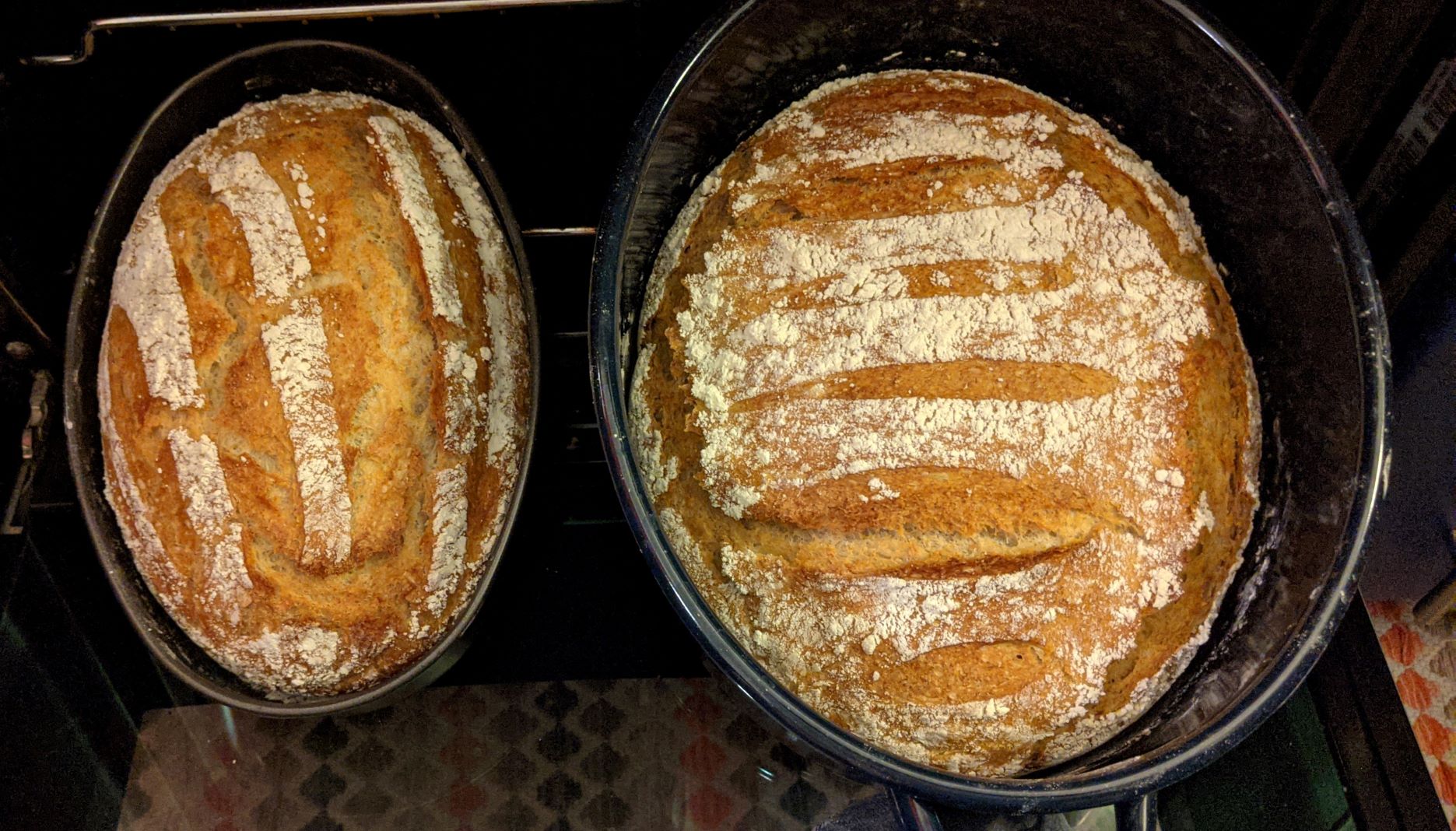
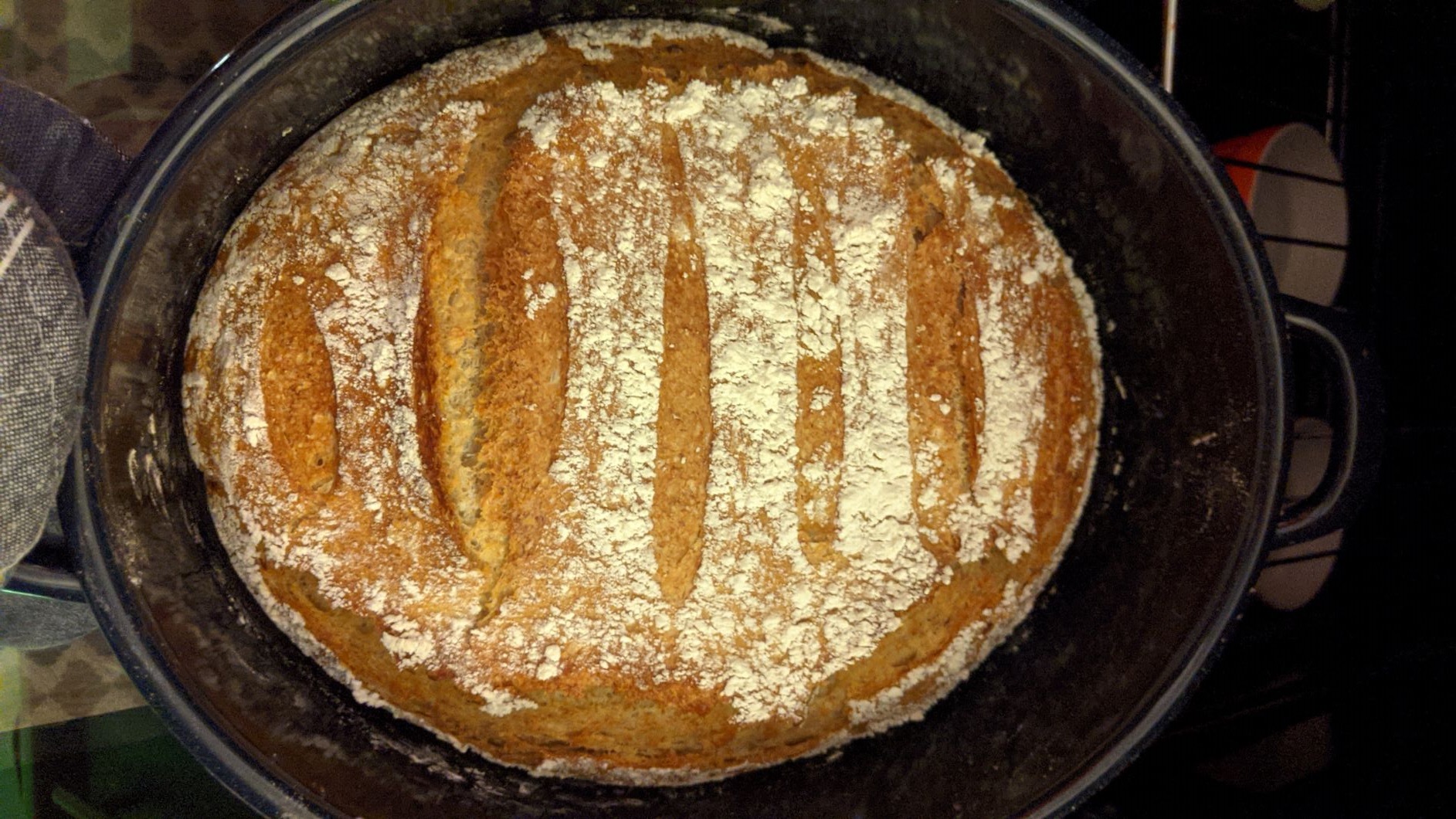
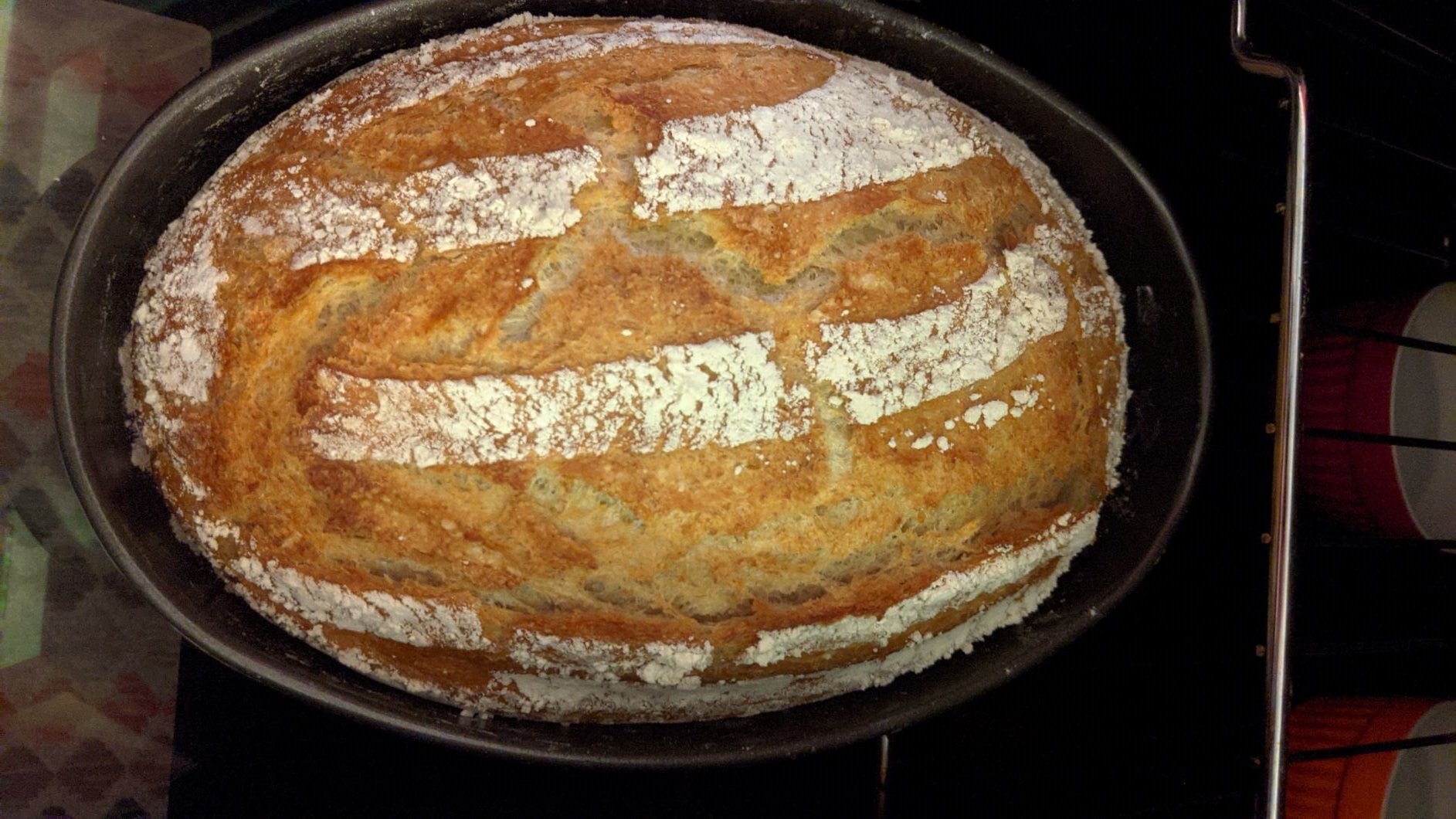
About 30 minutes before baking, Warm oven for 250 degrees (need be justified on individual oven, could be different). Cover bottom of the lidded pan (e.g. IKEA £25) or lidded cast-iron pot, to avoid stick the bread to the bottom. Dust tops of dough, with whole-wheat flour. Gently turn 1 loaf into pan seam-side down. Use a lame (a baker’s blade) or razor blade to score the top of the bread a few times to allow for expansion, cover and transfer to oven. Cook for about 60 min (various between ovens). Carefully remove lid (steam may release) and cook for 10- 20 more minutes or until crust is a rich, golden brown colour. Keep inside the oven with slightly open doors for 20-30 min for rest.
STEP 9
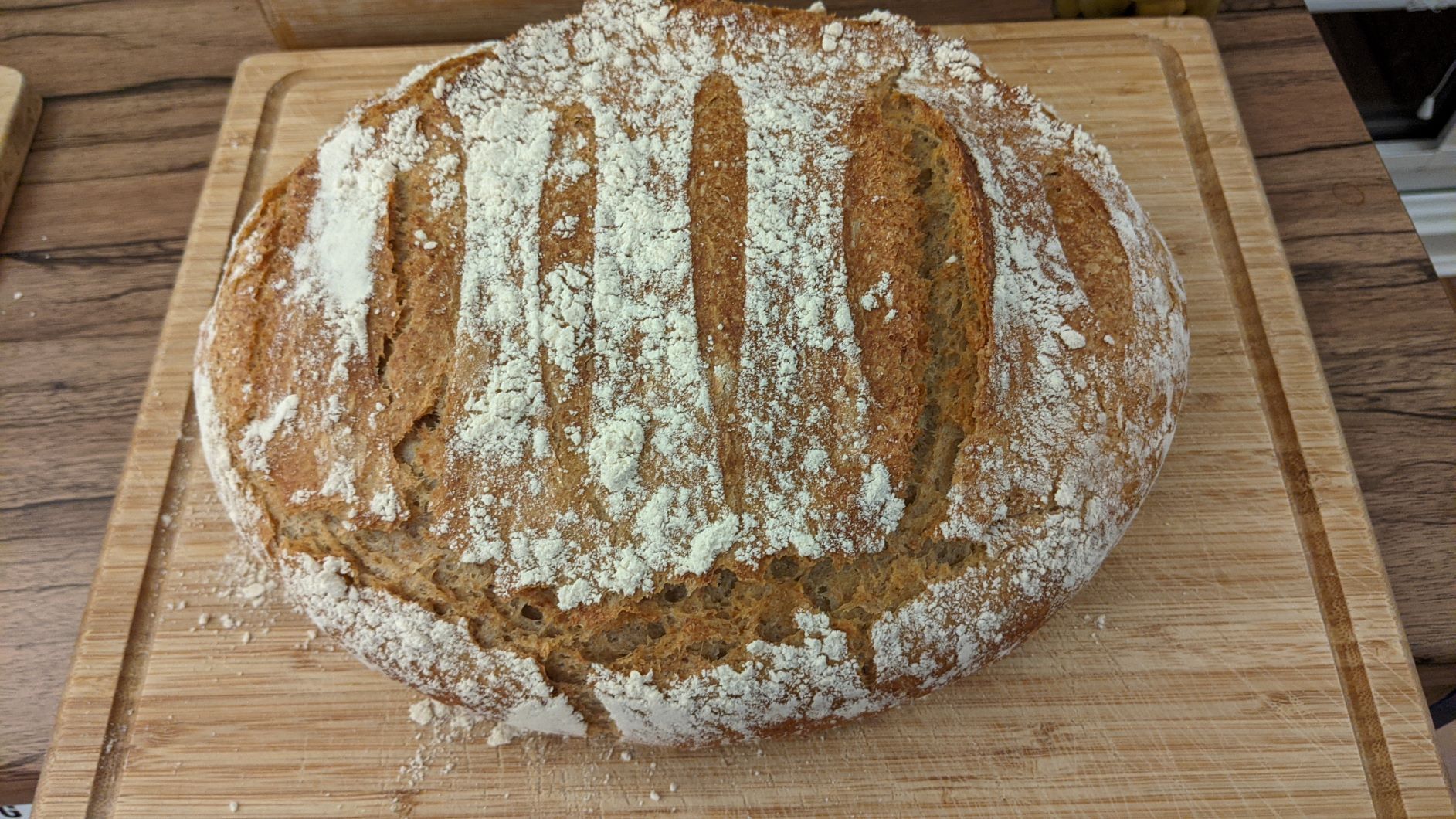
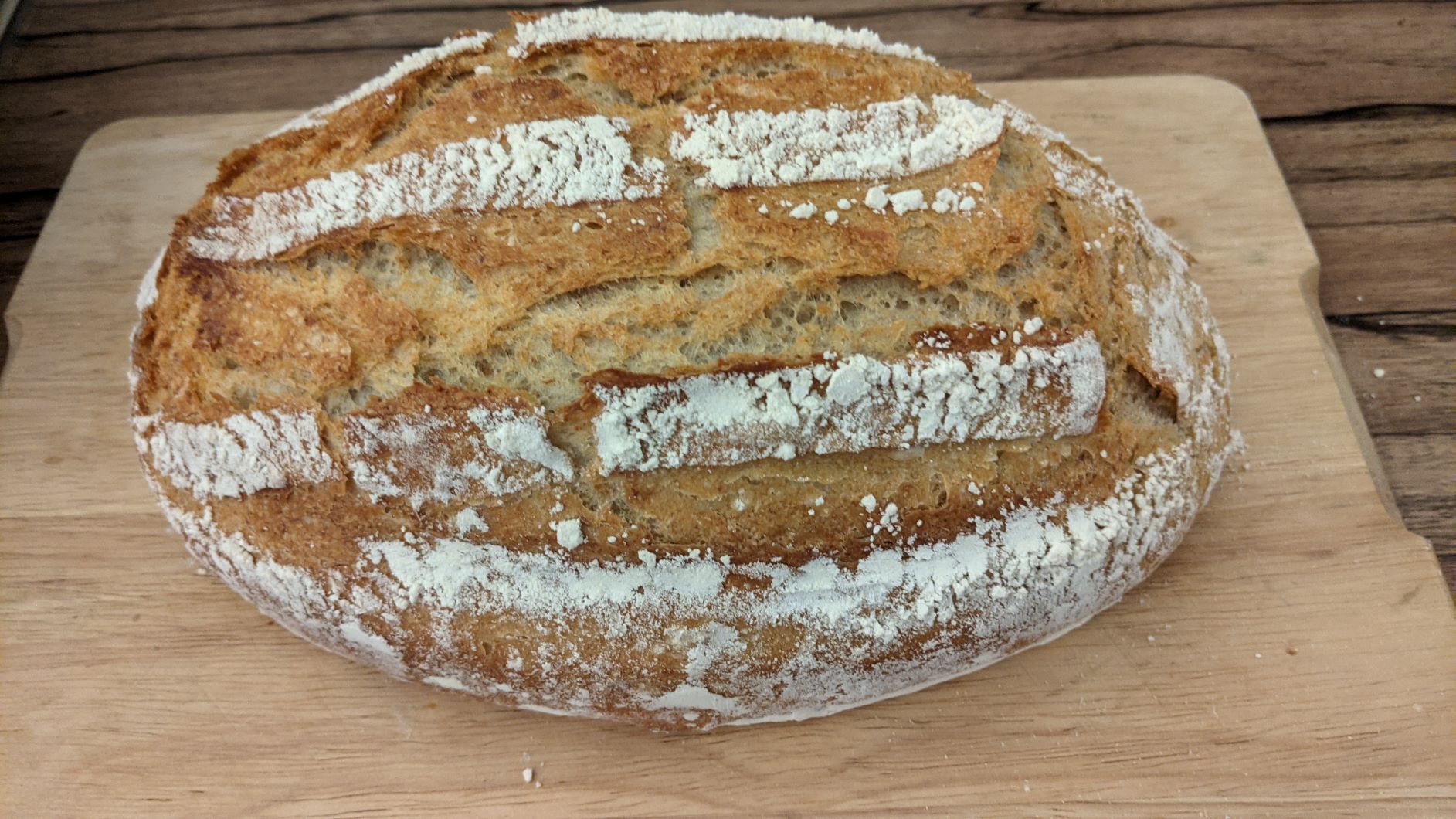
Transfer bread to a wire rack to cool for at least 15 minutes before slicing. The bottom of the loaf should sound hollow when tapped
STEP 10
Enjoy your bread, well done!!!