Chapter 1 : Introduction to Allergies
Topics covered in this snack-sized chapter:
Hay fever
- Congestion
- Itchy, runny nose
- Itchy, watery or swollen eyes (conjunctivitis)
Atopic dermatitis
- Itchy skin
- Red skin
- Flaking or peeling skin
Food allergy
- Tingling mouth
- Swelling of the lips, tongue, face or throat
- Hives
- Anaphylaxis
Insect sting allergy
- A large area of swelling (edema) at the sting site.
- Itching or hives all over your body.
- Cough, chest tightness, wheezing or shortness of breath.
- Anaphylaxis.
Drug allergy
- Hives
- Itchy skin
- Rash
- Facial swelling
- Wheezing
- Anaphylaxis
- A life-threatening medical emergency, this reaction can cause you to go into shock.
- Loss of consciousness
- Lightheadedness
- Severe shortness of breath
- A rapid, weak pulse
- Skin rash
- Nausea and vomiting
- Swelling airways, which can block breathing
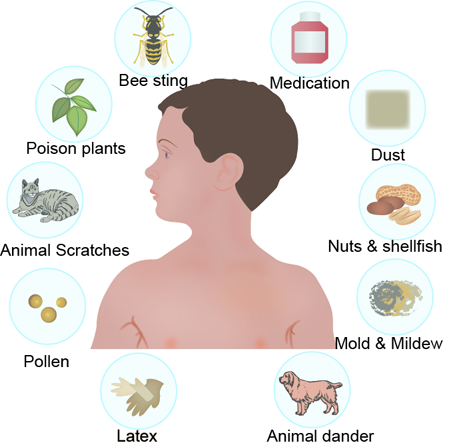
- Airborne allergens, such as pollen, animal dander, dust mites and mold.
- Certain foods, particularly peanuts, tree nuts, wheat, soy, fish, shellfish, eggs and milk.
- Insect stings, such as bee stings or wasp stings.
- Medications, particularly penicillin or penicillin-based antibiotics.
- Latex or other substances you touch, which can cause allergic skin reactions.
- Have asthma or a family history of asthma or allergies: You're at increased risk of allergies if you have family members with asthma or allergies such as hay fever, hives or eczema.
- Are a child: Although you can become allergic to something at any age, children are more likely to develop an allergy than are adults. Children sometimes outgrow allergic conditions as they get older.
- Anaphylaxis
- Another allergy
- Asthma
- Atopic dermatitis (eczema), sinusitis, and infections of the ears or lungs
- Fungal complications of your sinuses or your lungs.
- Allergen avoidance: Your doctor will help you take steps to identify and avoid your allergy triggers. This is generally the most important step in preventing allergic reactions and reducing symptoms.
- Medications to reduce symptoms: Allergy medications can help reduce your immune system reaction and ease symptoms. The drugs you use depend on the type of allergy you have.
- Immunotherapy: For severe allergies or allergies not completely relieved by other treatment, your doctor may recommend allergy shots (immunotherapy).
- Emergency epinephrine: If you have a severe allergy, your doctor may give you an emergency epinephrine shot that can reduce symptoms until you get emergency treatment.
Household airborne allergy symptoms
- Frequently washing bedding and stuffed toys in hot water
- Maintaining low humidity
- Regularly using a vacuum with a fine filter such as a high-efficiency particulate air (HEPA) filter
- Replacing carpeting with hard flooring.
Mold allergy symptoms
Alternative medicine
- Butterbur may help relieve symptoms of allergic rhinitis.
- Milk thistle may improve symptoms of allergic rhinitis.
- Phleum pratense may help relieve symptoms associated with asthma.
- Avoid known triggers: Even if you get treatment for your allergy symptoms, you still need to try and avoid your triggers. Some allergic reactions are triggered or worsened by temperature extremes or emotional stress.
- Wear a medical alert bracelet: If you've ever had a severe allergic reaction. A medical alert bracelet (or necklace) lets others know that you have a serious allergy in case you have a reaction and you're unable to communicate.