Topics covered in this snack-sized chapter:
A Fraction is a part of an entire object.
A fractional number is part of a whole number.
A fraction has a numerator and a denominator.
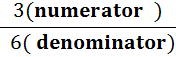
The term on top is called the numerator, and the term on the bottom is called the denominator.
The horizontal line in the middle is called the fraction bar.
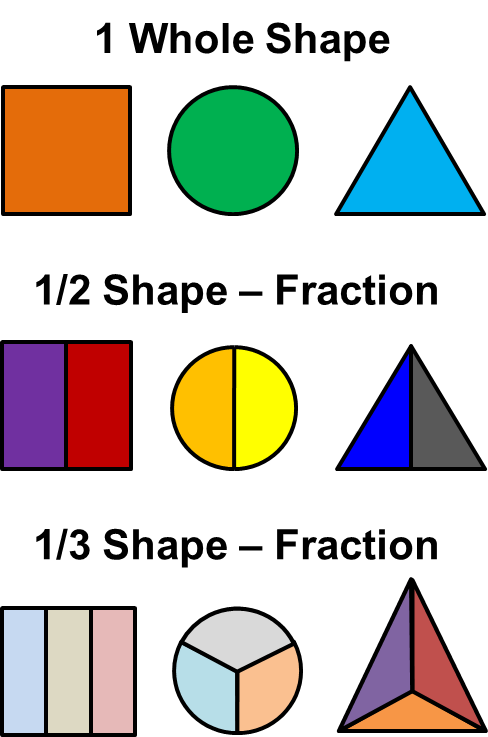
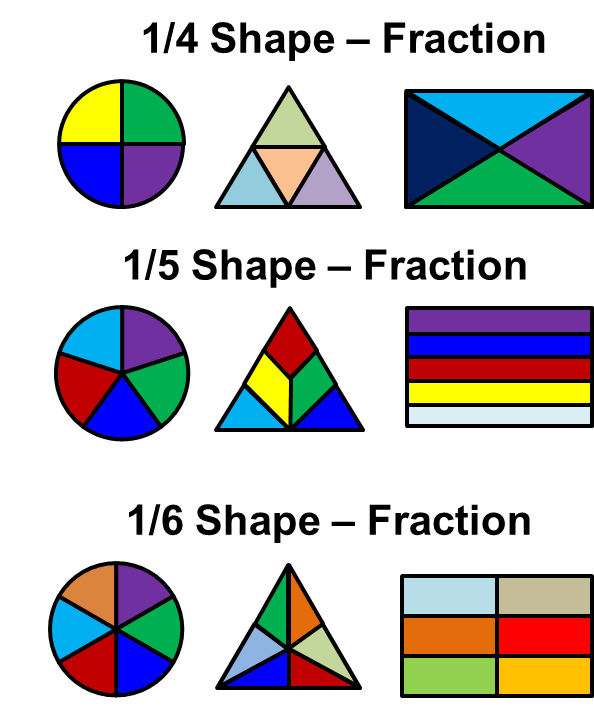
There are three major types of fraction
If the numerator of the fraction is less than the denominator, the fraction is said to be proper.
All proper fractions are less than 1.
Example:
2/3, 1/3, 5/25
If the numerator of the fraction is greater than the denominator, the fraction is said to be improper.
3/2, 10/3, 65/25
A fractional number that contains a combination of whole number and a fraction is said to be a mixed fraction.
Example: 
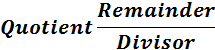
On dividing two numbers, if a remainder arrives, the result of division can be represented as a mixed fraction of the form:
11/3 gives the quotient 3, remainder 2 and divisor 3
So, the mixed form will be: 
Example:
Convert the following fraction in mixed fraction: 17/3
Simplify
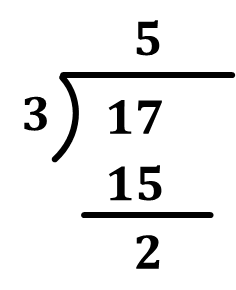
Remainder is 2, 5 is quotient and 3 is divisor.
So the mixed fraction will become
To convert mixed fraction into simple fraction
Multiply the denominator with the whole number and add the numerator to get simple fractions.
Example:
To solve 
Solution:
Multiply the whole number part by the fraction’s denominator.
9 × 4 = 36
Add the numerator to that.
= 36 + 6 = 42
Take that resulting number as numerator. The denominator will be the same.
= 42/9
Hence, 42/9 is the simple fraction.
Rule for addition and subtraction of fractions:
1. If the denominators of both fractions are same, add only numerator value. Take the denominator common for both addition and subtraction.
Example:
To solve 
Solution:
The denominators are same for both fractions so, add only the numerators, take denominator as common,


Example:
To solve

Solution:
The denominators of both the fractions are same, so, subtract only numerator, take denominator as common.


2. If the denominators of both fractions are not the same then, make the denominators common before addition or subtraction.
Example:
Solve

Solution:
The bottom numbers are different. So, we need to make them same before proceeding further, because we can't add them in that way.
The number "6" is twice as big as "3", so to make the bottom numbers the same we can multiply the top and bottom of the first fraction by 2, like this:

We multiply both top and bottom by the same number, to keep the value of the fraction the same.
Now the fractions have the same denominator number ("6"), and looks like this

The denominator of both the fractions is same so add only the numerators, taking the denominator common.


Simplified fraction 
In order to multiply two fractions, multiply the numerators and denominators separately to get the new fraction.
Example:

The mechanism for division is as follows:
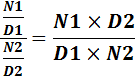
Remember, a ÷ b means
a × (1/b)
And a ÷ (b/c) means a × (c/b)
Example:


Some examples
Find the difference of:

Converting the unlike fractions into Like Fractions
The LCM of 2 and 3 = 6


From (i) and (ii)
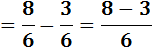

Example: 2
Find the difference of:

Converting the unlike fractions into Like Fractions
The LCM of 2 and 5 = 10
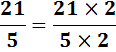
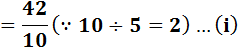
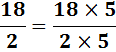
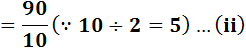
From (i) and (ii)


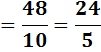
In the last step we divided the numerator and denominator by 2 to reduce it to lowest form.
When the repeating pattern begins immediately after the decimal point.
- A simple division of the pattern by the same number of nines as numbers it has will suffice.
Example:
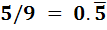
0.555555555555… = 5/9
0.626262626262… = 62/99
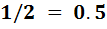
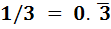
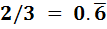
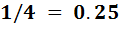
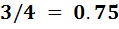
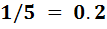
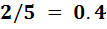
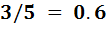
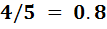
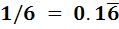
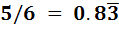
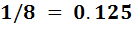
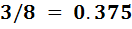
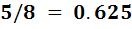
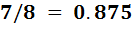
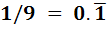
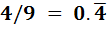
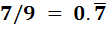
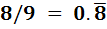
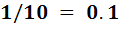
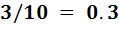
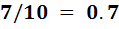
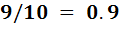
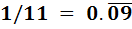
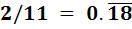
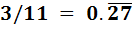
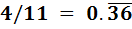
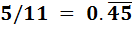
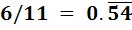
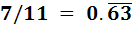
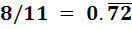
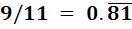
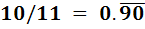
The table below shows the fraction to decimal conversion of numbers:
Note: The bar placed above a number describes that the number is repeating