Topics covered in this snack-sized chapter:
If you or a loved one has Asthma, you are not alone.
Asthma does not recognize social class:
- It prevails in both city and country areas.
- It is present in areas of clean and polluted air.
- It affects both the old and young, male and female.
- There are over 15 million Americans with Asthma and in New Zealand 20% of the population suffer from this condition.
Asthma is a condition that affects the airways of the lungs.
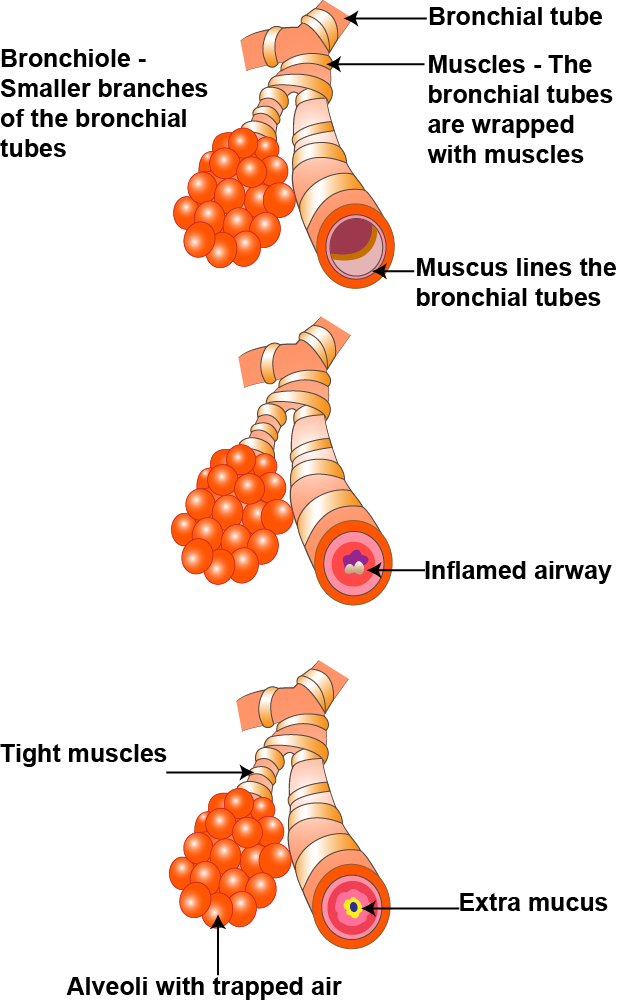
When you have asthma, the tubes that carry air down to your lungs are hyper-reactive (extra sensitive). They become easily swollen and inflamed.
The breathing tubes restrict the airflow and give you asthma because:
- The smooth muscle in the walls of the airways spasm and constrict.
- The inner lining of the breathing tubes swell.
- Excessive mucus is secreted into the breathing tubes.
When this happens, breathing, our most basic instinct, becomes a struggle.
Asthma is a chronic lung condition characterized by:
- Wheezing is a whistling sound made during inhalation or exhalation.
- Wheezing can result from either of two lung conditions: reduced airflow resulting from narrowing of the airways or congestion in the lungs.
With asthma, a blockage of airflow in and out of the lungs occurs from muscle squeezing, swelling and excess mucous.
Around 12-15 million people in the United States have asthma, including up to 5 million children.
Physicians who are not specialists in this disease may mistake its symptoms for an infection, unaware that the underlying problem is asthma.
Asthma is characterized by:
- The airway lining becomes red, swollen, and narrow.
- The muscles encircling the airway tighten causing the airway to narrow, making it difficult to get air in and out of the lungs.
- Airway hyper-responsiveness:
- The muscles encircling the airway respond more quickly and vigorously.
Asthma is considered to be a major public health problem in many countries.
Despite the increasing availability of treatment, asthma-related morbidity and mortality continues to rise.
The prevalence of asthma is increasing in developed as well as developing countries throughout the world.
The current prevalence of asthma is estimated to be somewhere between 5% and 10%.
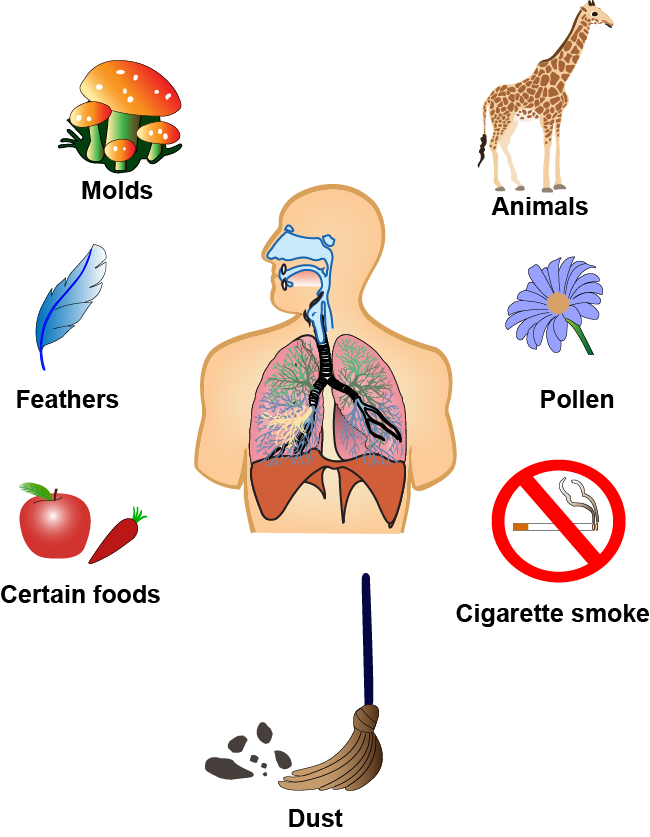
Asthma becomes worse when you are exposed to triggers.
A trigger is anything which makes your breathing difficult or your asthma worse.
People with asthma react to different triggers but common ones include:
| Allergic
| Non-allergic
|
| Cockroach particles
Cat hair & saliva
Dog hair and saliva
House dust mites
Mold or yeast spores
Metabisulfite, used as a preservative in many beverages and some foods
Pollen
| Smoke
Exercise
Gas, wood, coal, and kerosene heating units
Natural gas, propane, or kerosene used as cooking fuel
Fumes
Smog
Viral respiratory infections
Wood smoke
Weather changes
|