Topics covered in this snack-sized chapter:
Communication: Way of expressing thoughts and feelings
Skill: An ability and capacity acquired through deliberate
Communication is the art of transmitting information, ideas and attitudes from one person to another.
Communication is the process of meaningful interaction among human beings.
Communication is a process that involves exchange of information, thoughts, ideas and emotions.
The purpose of communication is to get your message across to others clearly and unambiguously.
Communication involves effort from both the sender of the message and the receiver.
Communication is successful only when both the sender and the receiver understand the same information as a result of the communication.
Communication should be a two way process
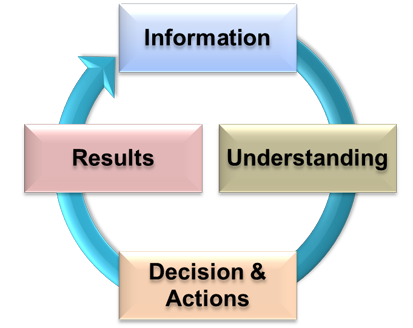
Information in its most restricted technical sense is an ordered sequence of symbols that record or transmit a message.
Understanding is a psychological process related to an abstract or physical object, such as:
- A person, situation or message whereby one is able to think about it and use concepts to deal adequately with that object
Decision is the selection between possible actions.
Result (also called Upshot) is the final consequence of a sequence of actions or events expressed qualitatively or quantitatively.
Context- Every message, whether oral or written, begins with context
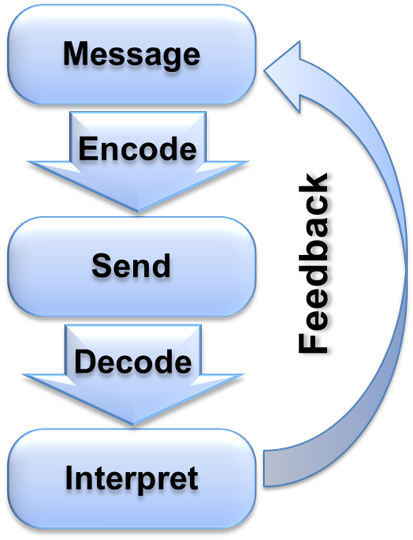
The message may be in the form of
- Question answer or material
Sender is the person who communicates the idea, information, material etc.
He/she acts in the capacity of the speaker, writer, or encoder
- The message he/she intends to send
- The message he/she actually sends
- The message other person receives or understands
- The other person’s interpretation of the message
- The other person’s response
Medium of communication includes:
- Pictures or any other mechanical device
The receiver is the decoder
- He/she when receives message decodes it or interprets the message
Feedback can be an oral or a written message
- An action or simply a silence
There are mainly two types of communication
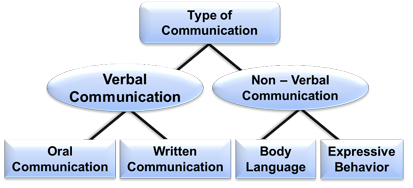
Verbal communication is communication that uses words either written or spoken.
"Oral" means "with your mouth", so "Oral Communication" means to communicate by talking
Written communication involves any type of interaction that makes use of the written word
Non-verbal communication is behavior, other than spoken or written communication, that creates or represents meaning.
Body language refers to body movements that depend on a person’s attitude or feelings.
Expressive Behavior
Gestures are communications like facial expressions, hand signals, eye gazing and body postures.
Communication occurs in the context of people trying to fulfill one or several of the following six needs:
- To give or get information
- To be empathically understood and respected
- To cause change of action
- To create excitement and reduce boredom
- To avoid something unpleasant, like silence or confrontation
Listening Skills
Speaking Skills
Reading Skills
Writing Skills
“Listening is the act of hearing attentively.”
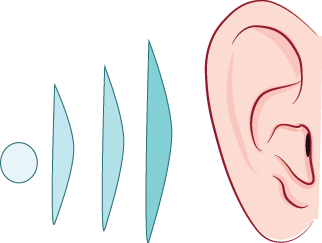
Listening is difficult as human mind tends to get distracted easily.
A person who controls his mind and listens attentively acquires various other skills and is benefited.
Active listening is very important for effective communication.
Speaking is a productive skill; it is an art of communication.
Good speaking is the act of generating words that can be understood by listeners.
A good speaker is clear and informative.
Reading skills are specific abilities which enable a reader
- To read the written form in a meaningful language
- To read anything written with independence, comprehension and fluency
- To mentally interact with the message
Writing skills are specific abilities which help writers put their thoughts into words in a meaningful form and to mentally interact with the message.
Increases productivity
Reduces stress
Better understanding of what others are saying
Better understanding of how to get your message across
Enhances relationships
Saves time and money