Chapter 1 : Depression
Topics covered in this snack-sized chapter:
- Difficulty in concentrating and making decisions.
- Loss of appetite and weight or a weight gain.
- Difficulty in sleeping.
- Lack of energy.
- It is a weakness rather than an illness.
- If the sufferer just tries hard enough, it will go away.
- If you ignore depression in yourself, it will go away.
- Highly intelligent or highly accomplished people do not get depressed.
- People with developmental disabilities do not get depressed.
- People with depression are "crazy."
- Depression does not really exist.
- Children, teens, the elderly or men do not get depressed.
- There are ethnic groups for whom depression does not occur.
- Depression cannot look like (present as) irritability.
- People who tell someone they are thinking about committing suicide are only trying to get attention and would never do it, especially if they have talked about it before.
- People with depression cannot have another mental or medical condition at the same time.
- Psychiatric medications are all addicting.
- Psychiatric medications are never necessary to treat depression.
- Medication is the only effective treatment for depression.
- Children and teens should never be given antidepressant medication.
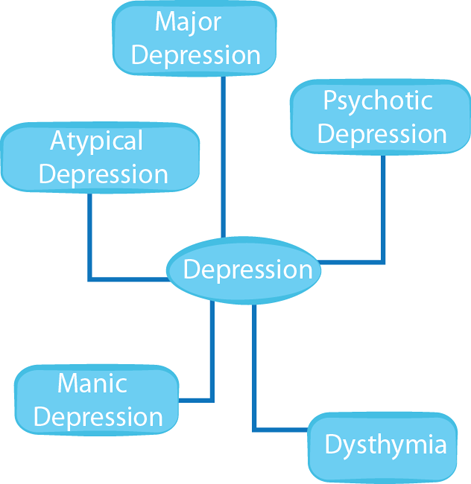
- Atypical Depression
- Psychotic Depression
- Dysthymia
- Manic Depression
- Major Depression
Atypical Depression
Psychotic Depression:
Dysthymia:
Manic Depression:
Major Depression:
- Feelings of sadness or unhappiness.
- Irritability or frustration, even over small matters.
- Loss of interest or pleasure in normal activities.
- Reduced sex drive.
- Insomnia or excessive sleeping.
- Changes in appetite: Depression often causes decreased appetite and weight loss, but in some people it causes increased cravings for food and weight gain.
- Agitation or restlessness: For example, pacing, hand-wringing or an inability to sit still.
- Irritability or angry outbursts.
- Slowed thinking, speaking or body movements.
- Indecisiveness, distractibility and decreased concentration.
- Fatigue, tiredness and loss of energy: Even small tasks may seem to require a lot of effort.
- Feelings of worthlessness or guilt, fixating on past failures or blaming yourself when things aren't going right.
- Trouble thinking, concentrating, making decisions and remembering things.
- Frequent thoughts of death, dying or suicide.
- Crying spells for no apparent reason.
- Unexplained physical problems, such as back pain or headaches.
- Abuse: Past physical, sexual, or emotional abuse can cause depression later in life.
- Certain medications: For example, some drugs used to treat high blood pressure, such as beta-blockers or reserpine, can increase your risk of depression.
- Conflict: Depression may result from personal conflicts or disputes with family members or friends.
- Death or a loss: Sadness or grief from the death or loss of a loved one, though natural, can also increase the risk of depression.
- Genetics: A family history of depression may increase the risk. It's thought that depression is passed genetically from one generation to the next. The exact way this happens, though, is not known.
- Major events: Even good events such as starting a new job, graduating or getting married can lead to depression. So can moving, losing a job or income, getting divorced or retiring.
- Other personal problems: Problems such as social isolation due to other mental illnesses or being cast out of a family or social group can lead to depression.
- Serious illnesses: Sometimes depression co-exists with a major illness or is a reaction to the illness.
- Substance abuse: Nearly 30% of people with substance abuse problems also have major or clinical depression.