Chapter 1 : Introduction to Diabetes
Topics covered in this snack-sized chapter:

Diabetes is a metabolic disease in which a person has high blood sugar.
It is essentially due to one of following conditions:
- The body does not produce enough insulin
- Cells do not respond to the insulin that is produced
In the United States, 20+ million people suffer from diabetes mellitus.
Symptoms include:
Risk for developing Type II Diabetes increases by 4 percent for every pound of excess weight a person carries.
- The best strategy to avoid diabetes (Type II) is to maintain a healthy body weight.
Diabetes is due to:
- Insulin doesn’t work properly
Insulin (hormone) allows cells to use glucose for energy.
Cells cannot utilize glucose without insulin.
Excess glucose builds up in the bloodstream, increasing the risk of diabetes.
Polyphagia - excessive eating
Polyuria - excessive urination
Polydipsia - excessive fluid intake
Blurred vision
Poor wound healing
Irritability
Dramatic weight loss
Weakness and fatigue
Nausea and vomiting
In diabetes mellitus, low insulin levels or poor response to insulin prevent cells from absorbing glucose:
- As a result, glucose builds up in the blood
- When glucose-laden blood passes through the kidneys,
the organs that remove blood impurities, the kidneys cannot absorb all of the excess glucose.
This excess glucose spills into the urine, accompanied by water and electrolytes—ions required by cells to regulate the electric charge and flow of water molecules across the cell membrane.
This causes frequent urination to get rid of the additional water drawn into the urine; excessive thirst to trigger replacement of lost water; and hunger to replace the glucose lost in urination.
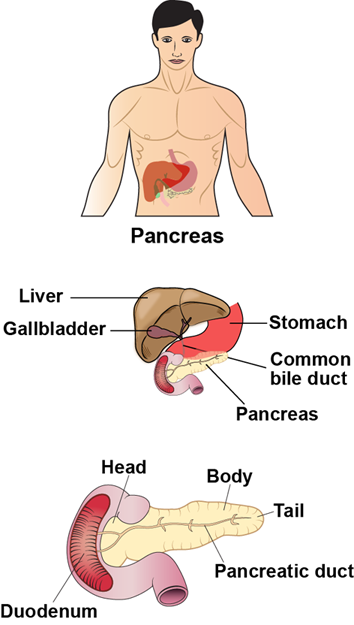
Pancreas is a gland that lies behind the stomach.
It produces three hormones:
- Insulin- Hormone that lowers blood glucose
- Glucagon - Hormone that increases the amount of glucose in the blood when it is needed
- Somatostatin - Hormone that can suppress both glucagon and insulin when needed
It lies on the left side of the body.
Insulin is a hormone.
Insulin is secreted by groups of cells within the pancreas.
Insulin controls the level of the sugar glucose in the blood.
In 1922 a team of scientists at the University of Toronto in Canada discovered that the hormone insulin could be used to control the effects of diabetes.
Although not a cure for diabetes, insulin regulates levels of blood sugar, allowing people with diabetes to remain in good health.
When the total amount of insulin produced by the body (pancreas), proves to be insufficient to maintain normal blood glucose level
A person normally secretes insulin in response to an elevated blood sugar level.
Insulin helps sugar move out of the blood and into the cells.
Insulin decreases the body’s ability to make certain kinds of fats.
Type I
- The immune system attacks the beta cells and destroys them
Type II
- The pancreas is still making insulin, just not enough to keep up, or the body has become insulin resistant
Type I - body does not produce any insulin
Type II - body is not making enough insulin or is losing sensitivity to insulin made
Gestational Diabetes - diabetes develops only during pregnancy
Impaired Glucose Tolerance - an intermediate between healthy individual and a diabetic individual
Diabetes Mellitus is caused by the lack of hormone, insulin, which controls the sugar (glucose) levels in the body.
Diabetes Insipidus is caused by the lack of hormone vasopressin, which controls the amount of urine secreted.
Diabetes is most common in adults over 45 years of age
In people who are overweight or physically inactive
In individuals who have an immediate family member with diabetes
In people of African, Hispanic, and Native American descent
The highest rate of diabetes in the world occurs in Native Americans
More women than men have been diagnosed with the disease
Fasting plasma glucose in (mg/dl)
Person must have symptoms of diabetes
- Random plasma glucose >200 mg/dl
- Fasting blood glucose of >126 mg/dl
- 2-hour plasma glucose >200 mg/dl on oral glucose tolerance test
Complications may affect following organs:
A diabetic diet is no different from the basic healthy eating plan.
In simple words, eat balanced diet of carbohydrates, fats and protein.
Eat less.
Instead of 3 heavy meals, go for 4-5 small mid intervals.
Consume fresh fruit and vegetables.
An exercise goal is no different than a basic healthy activity plan.
In simple words, exercise daily for 30 min.
20+ million children and adults
7% of the population
15 million = diagnosed
6+ million = unaware
About equal in men and women
2 to 4 times higher in non-Hispanic blacks, Hispanic/Latino American, American Indian, and Asian/Pacific than non-Hispanic whites
5th
deadliest disease in the U.S.