Chapter 2 : Ten Principles of Economics
Topics covered in this snack-sized chapter:
- The cost of something is what you give up to get it.
- Rational people think at the margin.
- People respond to incentives.
- Trade can make everyone better off.
- Markets are usually a good way to organize economic activity.
- Governments can sometimes improve market outcomes.
- A country's standard of living depends on its ability to produce goods and services.
- Prices rise when the government prints too much money.
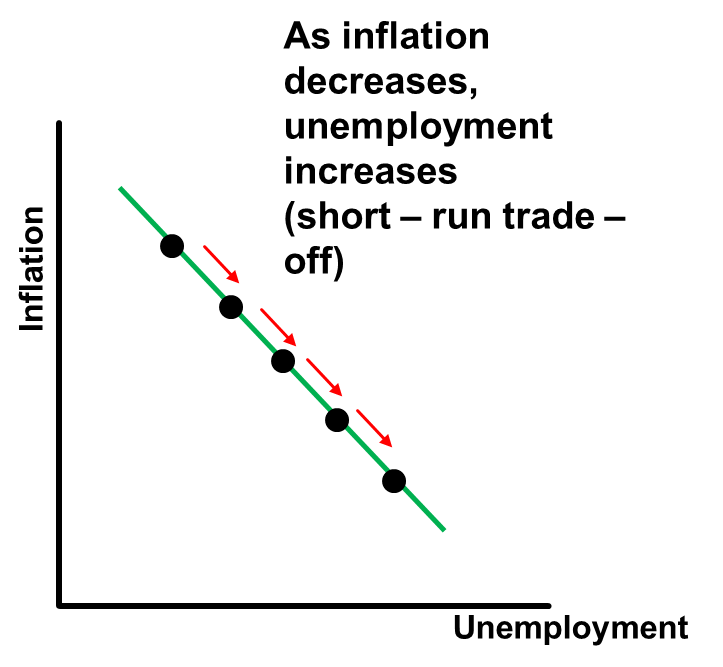
- Society faces a short-run tradeoff between inflation and unemployment.
To get one thing, you have to give up something else.
Making decisions requires trading:
Decision makers have to consider both the obvious and implicit costs of their actions.
Decisions require comparing costs and benefits of alternatives.
- Whether to go to college or to work?
- Whether to eat at home or eat out?
The opportunity cost of an item is what you give up to obtain that item.
A rational decision-maker takes action if the marginal benefit of the action exceeds the marginal cost.
- Marginal changes are small, incremental adjustments to an existing plan of an action.
- People make decisions by comparing costs and benefits at the margin.
Marginal changes in costs or benefits motivate people to respond.
- Behavior changes when costs or benefits change.
- The decision to choose one alternative over another occurs when that alternative’s marginal benefits exceed its marginal costs.
Trade allows each person to specialize in the activities he or she does best.
- People gain from their ability to trade with one another.
- By trading with others, people can buy a greater variety of goods or services.
- Competition results in gains from trading.
6: Markets are usually a Good Way to Organize Economic Activity arrow_upward
A Market Economy is an economy that allocates resources through the decentralized decisions of many firms and households as they interact in markets for goods and services.
- Households and firms that interact in market economies act as if they are guided by an "invisible hand" that leads the market to allocate resources efficiently.
- The opposite of this is economic activity that is organized by a central planner within the government.
- Households decide what to buy and who to work for?
- Firms decide who to hire and what to produce.
7: Governments can Sometimes Improve Market Outcomes arrow_upward
Market failure occurs when the market fails to allocate resources efficiently.
- When a market fails to allocate resources efficiently, the government can change the outcomes through public policy.
- Example: Regulations against monopolies and pollution.
When the market fails, government can intervene to promote efficiency and equity.
8: A Country's Standard of Living Depends on its Ability to Produce Goods and Services arrow_upward
Countries whose workers produce a large quantity of goods and services per unit of time enjoy a high standard of living.
As a nation's productivity grows, so does its average income.
Standard of living may be measured in different ways:
- By comparing personal incomes.
- By comparing the total market value of a nation’s production.
Almost all variations in living standards are explained by differences in countries’ productivities.
- Productivity is the amount of goods and services produced from each hour of a worker’s time.
9: Prices Rise When the Government Prints Too Much Money arrow_upward
When the government creates large quantities of money, the value of the money falls.
- As a result, prices increase, requiring more of the same money to buy goods and services.
One cause of inflation is the growth in the quantity of money.
- Inflation is an increase in the overall level of prices in the economy.
10: Society Faces a Short-Run Tradeoff between Inflation and Unemployment arrow_upward
Reducing inflation often causes a temporary rise in unemployment.
This tradeoff is crucial in understanding the short-run effects of changes in taxes, government spending, and monetary policy.