Chapter 1 : Introduction to Electrical Engineering
Topics covered in this snack-sized chapter:
- Electronics Signal Processing
Power Engineering is also called Power Systems Engineering.
It is a subfield of Electrical Engineering that deals with the generation, transmission and distribution of electric power.
It also deals with the electrical devices connected to such systems including generators, motors and transformers.
A Control system is a device, or set of devices to manage, command, direct or regulate the behavior of other devices or system.
Design of dynamic systems and controllers for the systems.
Electronics/Microelectronics:
It is concerned with the design of circuits using transistors and microchips, and with the behavior and movement of electrons in a semiconductor, conductor, vacuum, or gas.
Telecommunication is the transmission of information over significant distances to communicate.
It also deals with design of transmission systems (voice, data).
Analysis of signals in either discrete or continuous time.
Instrumentation engineering deals with:
- The design of devices to measure physical quantities like pressure, flow and temperature. The design of such instrumentation requires a good understanding of physics that often extends beyond electromagnetic theory.
- Design of sensors and data acquisition equipment.
To understand electrical engineering it is important to understand some basic terms:
An electric circuit is an interconnection of electrical elements linked together in a closed path so that electric current may flow continuously.
Circuit diagrams are the standards in electrical engineering.
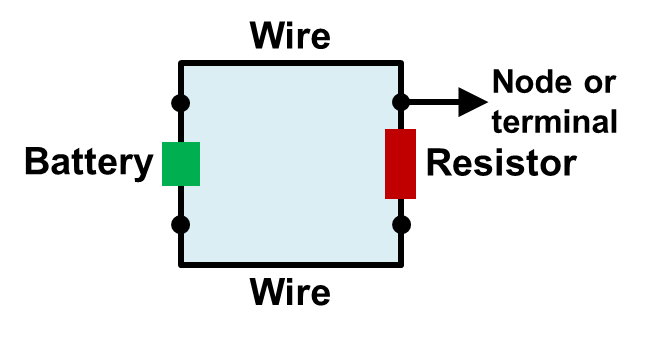
There are two types of electrical circuits:
It is an electronic circuit that operates with currents and voltages that vary continuously with time and have no abrupt transitions between levels.
Example: Vacuum Tube, Transistor Amplifiers, Operational Amplifiers and Oscillators.
It is an electronic circuit that uses a discrete level of voltage.
Example: Computers, Electronic Clock.
There are two types of components:
The components which store the energy in the form of current or voltage.
Example: Resistors, capacitors, inductors.
The components which produce the energy in the form of current or voltage.
Example: Transistor and Thyristors.
Electric charge is a physical property of matter that causes it to experience a force when near to other electrically charged matter.
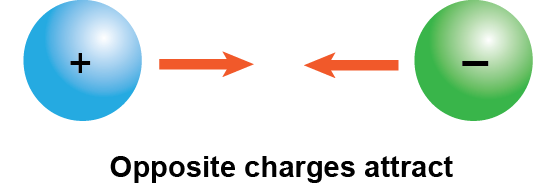
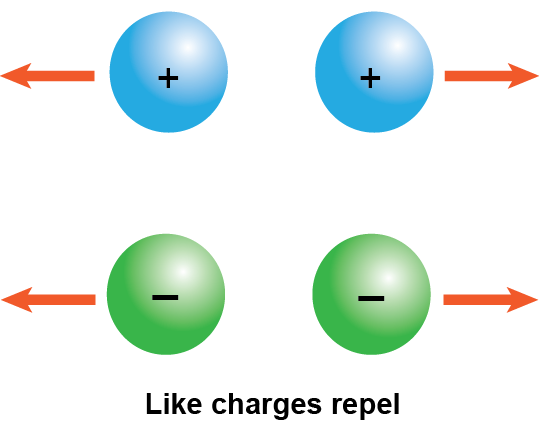
The SI unit of quantity of electric charge is the coulomb, which is equivalent to about 6.242×10¹⁸
e (e is the charge of a proton).
- Hence, the charge of an electron is approximately -1.602×10⁻¹⁹
C.
Electric current (I) is a flow of electric charge through a medium.
This charge is typically carried by moving electrons in a conductor such as wire.
- It can also be carried by ions in an electrolyte, or by both ions and electrons in plasma.
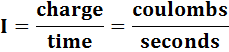
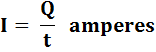
An Ampere (A) is the number of electrons having a total charge of 1 C moving through a given cross section in 1 second.
Current flows in the direction of positive charge flow.
Two types of electrical current are electron current and conventional current.
The flow of free electrons under the influence of applied voltage out of the negative terminal to the positive terminal.
The flow of positive charge carriers is from positive terminal to the negative terminal.
Voltage is the potential difference between two points or the difference in electric potential energy per unit charge between two points.
Voltage is electromotive force provided by a source or a potential difference between two points in a circuit.
Voltage is measured in Volts (V): 1 J of energy is needed to move 1 C of charge through a 1 V potential difference.
- Voltage is represented by V or v.
Electric power is the rate at which electric energy is transferred by an electric circuit.
The SI unit of power is the watt.
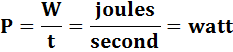

- Power = Voltage × Current
A watt results when 1 joule of energy is converted or used in 1 second.
Electricity is a general term encompassing a variety of phenomena
resulting from the presence and flow of electric charge.
- These include many easily recognizable phenomena, such as lightning, static electricity, and the flow of electrical current in an electrical wire.
- In addition, electricity encompasses less familiar concepts such as the
- Electromagnetic field and
- Electromagnetic induction.