Chapter 2 : Writing Systems
Topics covered in this snack-sized chapter:
A writing system is an organized regular method of information storage and transfer for the communication of messages in a language by visually encoding and decoding with a set of signs or symbols, both known generally as characters.
Not all writing systems are same.
- Each one has some unique characteristics.
In some, symbols represent words:
Pictographs:
- Pictures represent concepts.
- Example: Ancient Egyptian hieroglyphs.
Ideographs:
- Symbols represent words or concepts.
- Meaning is by convention.
In others, symbols represent sounds:
Symbol = Syllables:
- Symbols represent syllables.
- Example: Japanese, Korean.
Symbol = Phonemes:
The smallest unit of sound employed to form meaningful contrasts between utterances (a spoken word, statement, or vocal sound).
- An example of a phoneme is the /k/ sound in the words kit and skill.
- In most dialects, the “k” sounds in each of these words are actually pronounced differently.
Phonemes are different speech sounds, or phones.
Phonemes do not have meaning by themselves.
Putting phonemes together forms words which carry meanings.
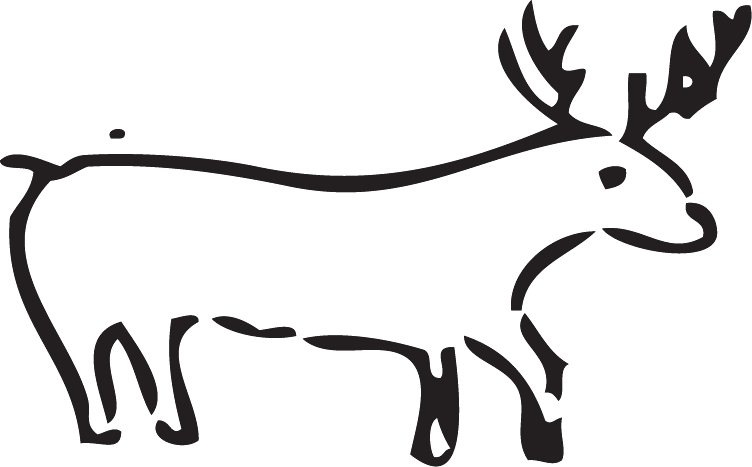
A pictograph showing an animal.
Meaning conveyed directly.
It looks like the thing it represents.
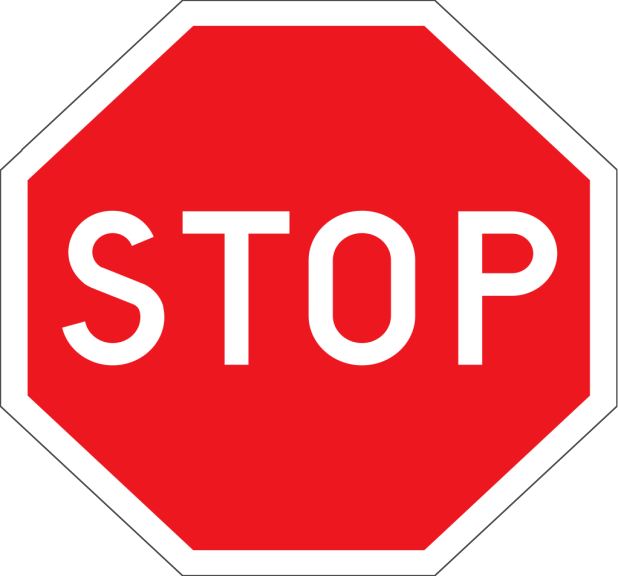
Meaning is assigned by conventional usage and understanding.
We learn to interpret them in a particular way.
May or may not be iconic.
The basis of Mandarin Chinese writing.
- Ideograph showing Moon in Chinese writing.
- Ideograph showing Sun in Chinese writing.
Note that symbols represent whole words or concepts.
- No clues to pronunciation.
- This type of writing system can be language independent.
Each symbol represents a syllable.
Symbols represent individual sounds, not whole words.
A symbol set for a syllable-based writing system is called a syllabary.
Syllabaries appear in several languages, including Japanese and Korean.
Syllabaries are good choice for languages with a fairly small number of syllable types (Example: Japanese).
- Small phonemic inventory.
- Constraints on syllable type.
Letters represent specific sounds rather than whole words.
Sound is represented at the phoneme level, not at the syllable level.
“Ideal” alphabetic system: 1 letter = 1 sound.
English writing uses the Roman alphabet.
Upper-Case
- A B C D E F G H I J K L M N O P Q R S T U V W X Y Z.
Lower-Case
- a b c d e f g h i j k l m n o p q r s t u v w x y z.
English spelling represents underlying morphological regularities.
The Morpheme is the smallest component of a word that has a meaning.
- May or may not stand alone (e.g. “anti-” or “un-”)
Examples:
- 1 word, 2 morphemes (believe + ed)
- 1 word, 2 morphemes (believe + able)
- 1 word, 3 morphemes (un + believe + able)
Developed explicitly for the study of sound patterns in the world’s languages
- Designed to represent the sounds of all of the world’s languages.
- Used as a pronunciation guide.
- Example: “learning” becomes “lərnɪŋ”