Chapter 2 : Cardiovascular System
Topics covered in this snack-sized chapter:
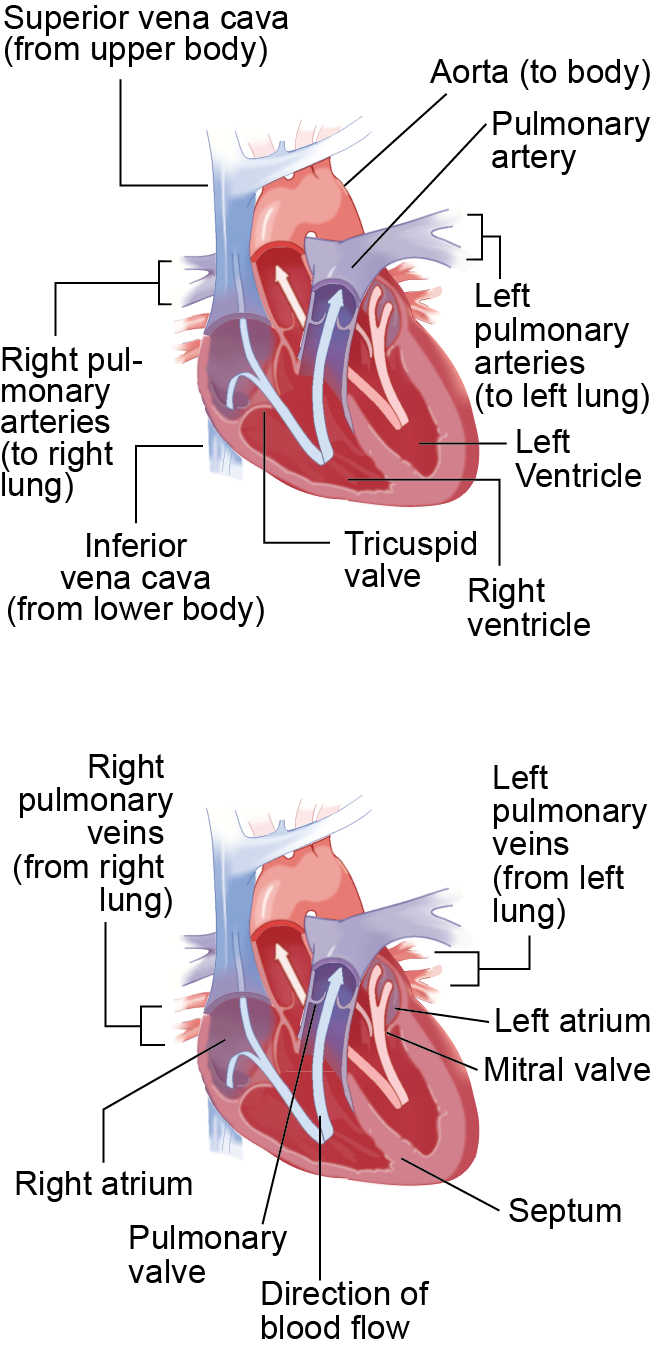
The cardiovascular system consists of:
- Heart
- Blood
- Blood vessels
In a day, the average adult’s heart:
- Beats 100,000 times.
- Pumps more than 1,800 gallons of blood.
Blood is propelled mainly by contractions of the heart and arteries.
- Valves in the heart and veins ensure its flow in one direction.
During each heartbeat, 60 to 90 ml (2 to 3 oz) of blood is pumped out of the heart.
If the heart stops pumping, death occurs within five minutes.
The main function of the system is:
- To transport oxygen and nutrients to organs and tissues throughout the body.
- To carry away waste products.
The system is essentially a pump and a delivery process:
- Supplies trillions of cells with oxygen and other nutrients vital for survival.
- Transports cellular waste to appropriate organs for removal.
Among its vital functions, the circulatory system increases the flow of blood to meet increased energy demands during exercise and regulates body temperature.
In case of bleeding, the circulatory system sends clotting cells and proteins to the affected site, which quickly stop the bleeding and promote healing.
The heart, blood, and blood vessels are the three structural elements that make up the circulatory system.
- Heart: Center of the cardiovascular system.
- Blood Vessels: Arteries, veins and capillaries constitute blood vessels.
- Blood: Blood consists of three types of cells:
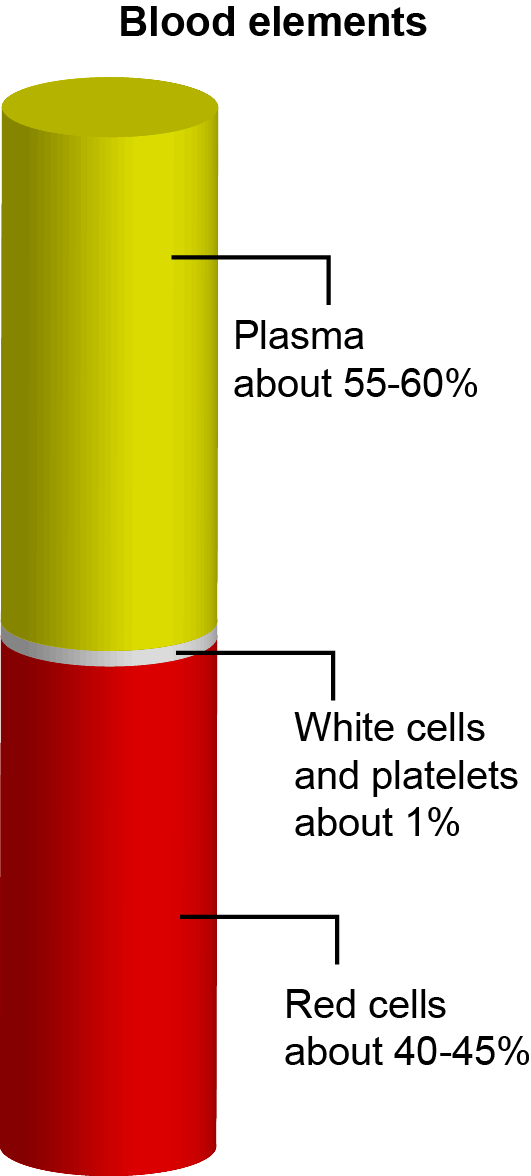
- Oxygen-bearing red blood cells
- Disease-fighting white blood cells
- Blood-clotting platelets, all of which are carried through blood vessels in a liquid called plasma
- Plasma is yellow and consists of water, salts, proteins, vitamins, minerals, hormones, dissolved gases, and fats
The heart is the engine of the circulatory system.
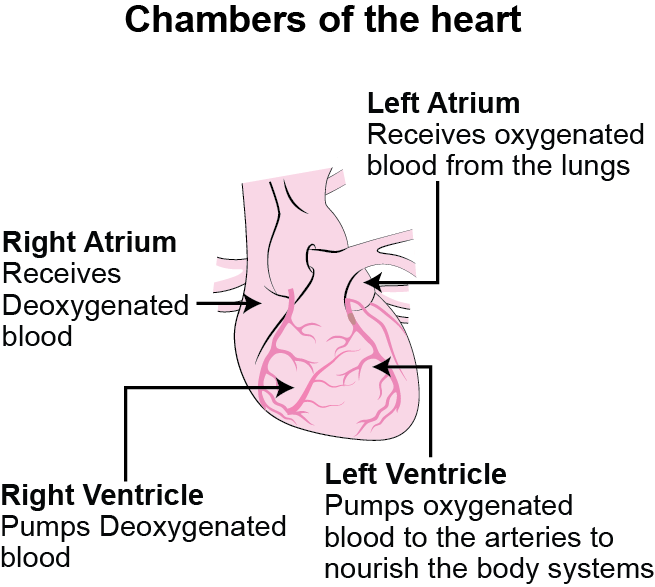
It is divided into four chambers:
| Upper Chamber Collector | The right atrium: Collects deoxygenated blood. The left atrium: Collects oxygenated blood. |
| Lower Chamber Ejector | The right ventricle: Ejects deoxygenated blood into the arteries. The left ventricle: Ejects oxygenated blood into the arteries. |
The pumping action of the heart occurs in two stages for each heart beat:
- Diastole: When the heart is at rest.
- Systole: When the heart contracts to pump deoxygenated blood toward the lungs and oxygenated blood to the body.
The heart is a hollow muscular organ (cardiac muscle) located between the lungs and above the diaphragm.
Blood Flow (Cardiac cycle):
- Heart→Start
- Arteries →
- Arterioles →
- Capillaries →
- Venules→
- Veins →
- Heart→ Repeat
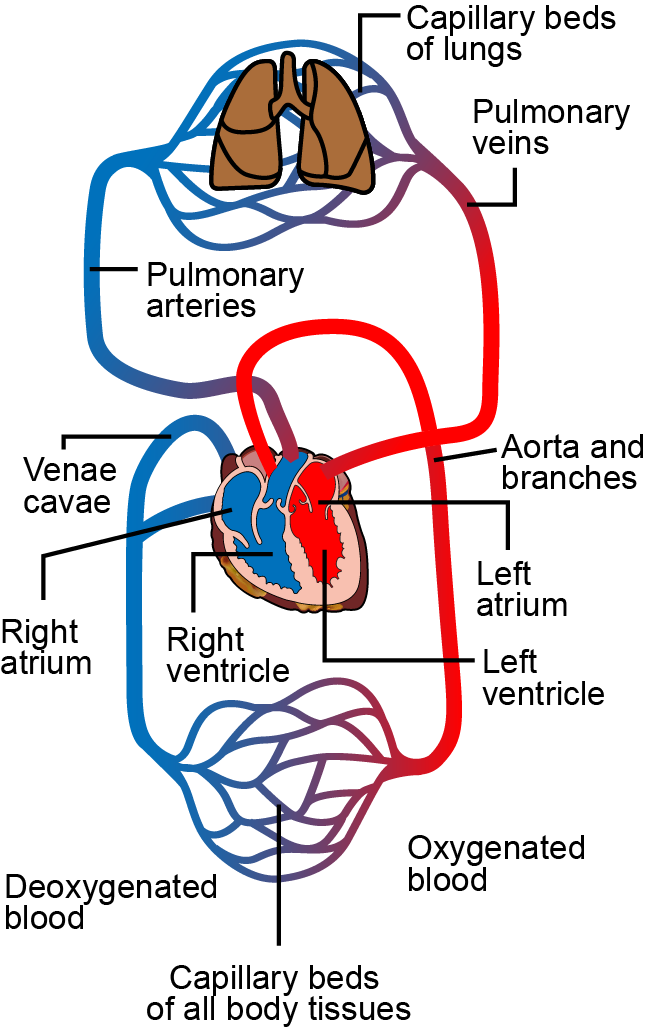
- The heart pumps blood into the lungs, which remove carbon dioxide and replenish the blood with oxygen.
- The heart collects the oxygenated blood and pumps it, through the arteries, to the entire body.
- The heart collects deoxygenated blood from the veins.
Minimum blood pressure is essential to push blood through blood vessels to the body tissues for nutrient and waste exchange.
The heart ensures the unidirectional flow of blood through both the heart and the blood vessels.
- Backflow of blood is prevented by valves within the heart.
- The heart acts like two independent, side-by-side pumps that work independently but at the same rate.
- It develops blood pressure through alternate cycles of heart wall contraction and relaxation.
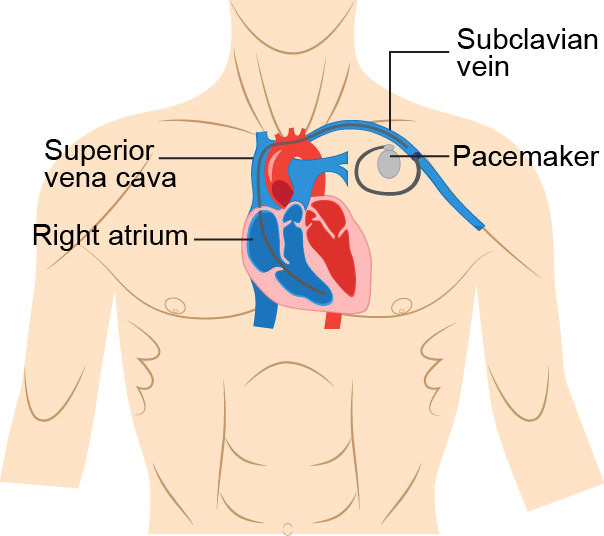
- Heart’s pace (beats) is controlled by the sinoatrial node (or pacemaker).
- The pacemaker generates electrical activity which initiates the cardiac cycle.
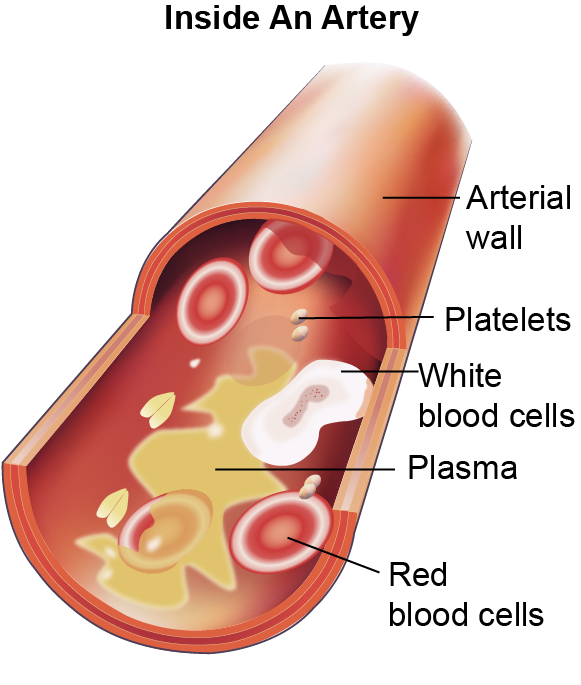
Arteries- Vessels that carry blood away from the heart.
Arteries carry blood high in oxygen (except for the pulmonary arteries).
Arteries carry the nutrient-rich, oxygenated blood out to the rest of the body.
Arteries are thick layers of muscles.
The aorta is the largest artery in the body.
Capillaries are tiny links between arteries and veins where oxygen and nutrients diffuse to body tissues.
They provide a surface area over which:
- Oxygen passes from the blood and enters into body tissues.
- Waste products (carbon dioxide), pass from the tissues into the blood.
Veins- Vessels that carry blood toward the heart.
Veins carry blood low in oxygen (except for the pulmonary veins).
Veins are thinner layers of muscles, compared to arteries which are tough, elastic tubes that carry blood away from the heart.
Veins contain valves, which keep the flow of blood in one direction.