Chapter 2 : Engineering Materials
Topics covered in this snack-sized chapter:
Materials play an important role in the manufacturing of tools and devices.
Selection of appropriate materials for tools/equipment, add to the economy, working and life of machinery.
Metals
Ceramics
Polymers
Adhesives
Composites
The earth’s crust has one fourth of Metals by its weight.
Twenty-four of the 26 most abundant elements in the Earth’s crust are metals.
Metals are good conductors of heat and electricity because thermal and electrical energy can be transferred by the free electrons.
Some of the earliest metals used include:
Generally all metals except gold are found chemically combined with other elements in the form of oxides and sulphates.
Metal that are not mixed with any other materials are known as pure metals.
- Metals listed in the Periodic Table are pure metals.
Some of Pure metals are Iron, Copper, Zinc, and Titanium.
Alloys are mixtures of two or more metals formed together with other elements/materials to create new metals with improved Mechanical Properties and other properties of the base metal.
Ferrous Metals:
- Ferrous metals contain iron as a principle ingredient. Example:
Nonferrous Metals:
- Nonferrous metals do not contain iron as a principle ingredient, although they may contain small percentages.
- Aluminum, beryllium, and titanium are used in structural applications.
- The refractory metals, such as titanium, tungsten, vanadium, and zirconium are used in applications requiring high strength, hardness, and thermal stability.
- Some of Nonferrous Metals are Aluminum, Copper, Magnesium, Nickel, Chromium, titanium, Gold, Silver, Platinum, Brass, and Bronze.
| Alloy
| Constituent Metals
|
| Brass
| Copper and Zinc
|
| Low Carbon Steel
| Iron and 0.05–0.15% carbon
|
| High Carbon Steel
| Iron and 0.6–0.99% carbon
|
| Stainless Steel
| steel and chromium
|
| Bronze
| Copper and tin
|
- They are primarily used as electrical insulators.
Engineering ceramics are almost exclusively made from powders because they cannot be cast in the liquid state due to their high melting temperature.
Ceramics can be shaped by mixing them with a plasticizer or a liquid solvent.
Categories of ceramic products
Structural Ceramics:
Bricks, pipes, floor and roof tiles.
Refractories:
Kiln linings, gas fire radiant, steel and glass making crucibles.
Chemically Bonded Ceramics:
Chemically Bonded Ceramics (CBCs) have been extensively used in many applications.
These include:
- Radiation shielding systems
- Nuclear waste solidification and encapsulation
- High temperature structural applications
- Composites and biomedical applications
Glass is an amorphous non-crystalline material that may be heated, even to a liquid phase, and formed into useful shapes.
A polymer is a large molecule (macromolecule) composed of repeating structural units.
These sub-units are typically connected by covalent chemical bonds.
Polymers are ubiquitous.
- Initially polymers were found naturally.
Through human ingenuity and necessity natural polymers have been modified to improve their utility and synthetic polymers are developed.
Polymers are used as engineering materials in the neat form, i.e., as the pure material, or in combination with a large diversity of additives, both organic and inorganic.
Synthetic polymers are present in the form of plastics, fibers, elastomers, adhesives, etc.
Compared to metals, plastics have lower density, strength, elastic modulus, and thermal and electrical conductivity, and a higher coefficient of thermal expansion.
The availability of plastic materials for use in various applications is huge.
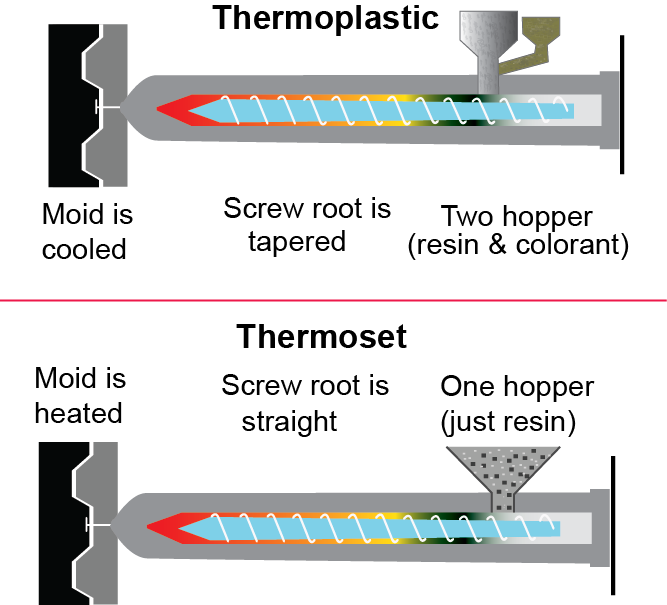
The two major classifications are:
- Thermosetting material: They are set, cured, or hardened into a permanent shape, which usually occurs rapidly under heat.
- E.g. Alkyds, Amino Resins, Polyester, etc.
- Thermoplastics materials: They do not set or cure under heat.
- E.g. Acetal and Polyacetal, Acrylics (Methyl methacrylate, PMMA), etc.
These are a class of aromatic polyester polymers.
- They are extremely unreactive and inert, and highly resistant to fire.
Liquid crystalline polymers have a rigid rod like aromatic structure.
- The rod like molecules arranges themselves in parallel domains in both the melted and solid states.
In the molten state the molecules readily slide over one another, giving the resin very high flow under shear.
Liquid-crystal polymers are present in melted or liquid or solid form.
Adhesives are substances capable of holding materials together in a useful manner by surface attachment.
Adhesives are materials that, by adhesion, cohesion, or molecular bonding, cling to the surface of another material.
An adhesive is a material, usually in a liquid or semi-liquid state, that adheres or bonds items together. Adhesives come from either natural or synthetic sources.
There are three categories of adhesive materials:
- Structural adhesives- intended to hold two or more parts together under conditions where the adhesive joint is subjected to high mechanical loads.
- Holding adhesives- intended to permanently or temporarily hold lightweight items in place.
- Sealing adhesives- intended to fill a space between two or more materials and provide a seal without the need to have high structural strength.
Composite materials are materials made from two or more constituent materials with significantly different physical or chemical properties, that when combined, produce a material with characteristics different from the individual components.
- Examples: light, strong, corrosion resistant.
The idea that a better combination of properties can be achieved is called the principle of combined action.
Composites have been developed where no single, quasi-continuous material will provide the required properties.
These are cheapest and most widely used.
They fall in two categories depending on the size of the particles:
- Large-particle composites, which act by restraining the movement of the matrix, if well bonded.
- Dispersion-strengthened composites, containing 10-100 nm particles, similar to what was discussed under precipitation hardening. The matrix bears the major portion of the applied load and the small particles hinder dislocation motion, limiting plastic deformation.
In many applications, like in aircraft parts, there is a need for high strength per unit weight (specific strength).
This can be achieved by composites consisting of a low-density (and soft) matrix reinforced with stiff fibers.
The strength depends on the fiber length and its orientation with respect to the stress direction.
The efficiency of load transfer between matrix and fiber depends on the interfacial bond.
Laminar Composites:
- Sheets (panels) with different orientation of high strength directions are stacked and glued together, producing a material with more isotropic strength in the plane.
Sandwich Panels:
- Strong, stiff end sheets are bonded to lightweight core structure, for instance honeycomb which provides strength to shear.