Topics covered in this snack-sized chapter:
The prefix ‘Nano’ in the word Nanotechnology means a
billionth ( .
.
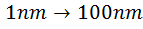
Nanotechnology is defined as the study and use of structures between 1 nanometer and 100 nanometers in size.
Nanotechnology concerns objects that are extremely small, bigger than atoms but smaller than you can see with a light microscope.
Nanotechnology
is taken as the scale range 1
to 100 nm.
Nano Scale uses nanometer as the basic unit of measurement and it represents a billionth of a meter or one billionth of a part.
- One billionth
 of meter.
- Feature size of computer chips 90nm in 2005.
- Diameter of human hair 10

Nano scale materials have feature size less than 100nm utilized in Nano scale structures, devices and systems.
Nanoparticles and Structures:
In nanotechnology, particle is defined as a small object.
The following figure shows gold nanoparticle.
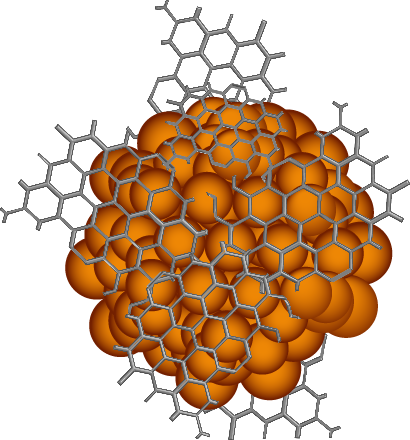
Lateral dimension 1-100nm.
Nanowires and nanotubes exhibit novel physical, electronic and optical properties due to two dimensional quantum confinement, structural one dimensionality, and high surface to volume ratio.
Biological materials utilized in nanotechnology.
Proteins, enzymes, DNA, RNA.
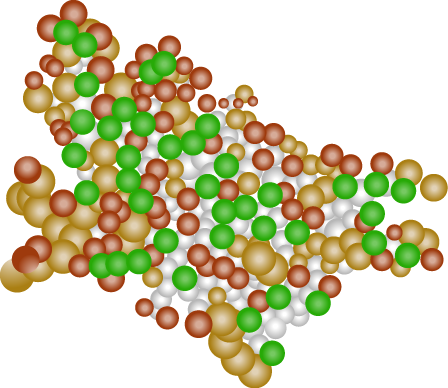
Proteins structure
Synthetic nanomaterial utilized in biomedical application.
Polymers, carbon nanotubes.
Size of devices
Type of interconnect
Method of fabrication.
Largest sustainable system
Reliability
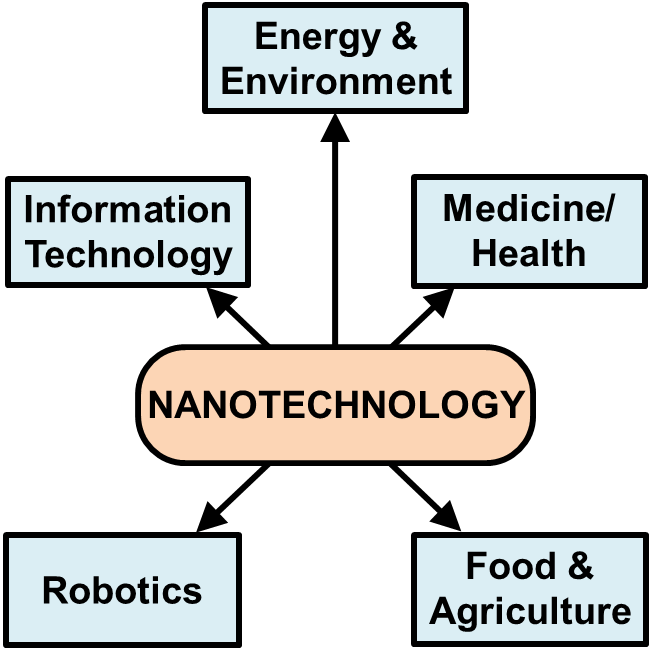
Smaller, faster, more energy efficient and powerful computing and other IT- based systems.
More efficient and cost effective technologies for energy production- solar cells, fuel cells, batteries, bio-fuels.
Cancer treatment
Bone treatment
Drug delivery
Appetite control
Drug development
Medical tools
Diagnostic tests
Imaging
Small machines to cure diseases
Foods and beverages
- Advanced Packaging materials
- Lab-on-chips for food quality
Appliances and textiles
Household and cosmetics
- Self-cleaning and scratch free products.
- Paints and better cosmetics.