Topics covered in this snack-sized chapter:
In organic chemistry, hydrocarbon is an organic compound consisting entirely of hydrogen (H) and carbon(C).
Any univalent radical, derived from a hydrocarbon, such as methyl or phenyl.
The hydrocarbons form different classes of organic compounds:
- When one or more hydrogen atoms are replaced by a particular atom such as a halogen or a group of atoms.
Hydrocarbons with the same molecular formula but different structural formulae are called structural isomers.
Hydrocarbons are classified on the basis of IUPAC nomenclature as follows:
Saturated hydrocarbons (alkanes) are the simplest of the hydrocarbon species and are composed entirely of single bonds and are saturated with hydrogen.
Alkanes
are the simplest of the hydrocarbon species.
- Composed entirely of single bonds and are saturated with hydrogen atoms
Saturated hydrocarbons are the basis of petroleum fuels and are either found as
Linear or Branched species.
Unsaturated hydrocarbons are hydrocarbons that have double or triple covalent bonds between adjacent carbon atoms.
- Those with one or more double bonds are called alkenes.
- Those containing triple bonds are called alkynes.
These are the hydrocarbons containing one or more carbon rings to which hydrogen atoms are attached.
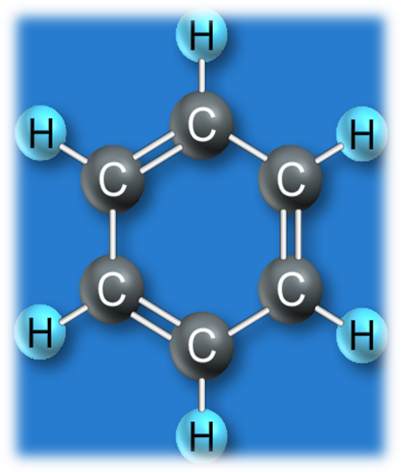
An aromatic hydrocarbon (or sometimes aryl hydrocarbon) is a hydrocarbon with alternating double and single bonds between carbon atoms forming rings.
In the early days of discovery they were oils with fragrant odors, hence they were named aromatic.
Aromatic hydrocarbon or arene is a hydrocarbon that has at least one aromatic ring.
Because of their relatively non-polar nature, all hydrocarbons are insoluble in water.
When hydrocarbons burn in sufficient oxygen; carbon dioxide (CO2
) and water (H2
O) are the sole products.
Hydrocarbons can be:
- Gases (e.g. methane and propane)
- Liquids (e.g. hexane and benzene)
- Waxes or low melting solids (e.g. paraffin wax and naphthalene)
- Polymers (e.g. polyethylene, polypropylene and polystyrene)
Almost all usable supplies of hydrocarbons are obtained from fossil fuels:
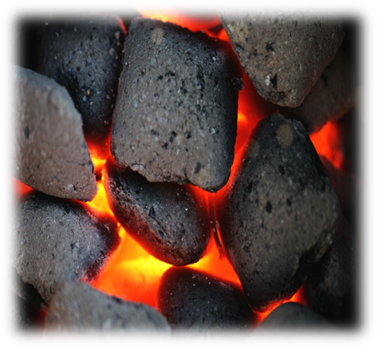
The majority of hydrocarbons found naturally, occur in the form of crude oil.
- Through distillation, crude oil is boiled and condensed over several fractions to give the desired mixture of compounds.
- Gasoline, for example, is a fraction boiling roughly between 40°C and 200°C
- The vapors that are condensed in this fraction are mostly alkanes and have between 5 to 10 carbon atoms
Some hydrocarbons are also abundant in the solar system.
Hydrocarbons are one of the Earth's most important energy resources.
The predominant use of hydrocarbons is as a combustible fuel source.
In their solid form, hydrocarbons take the form of asphalt.
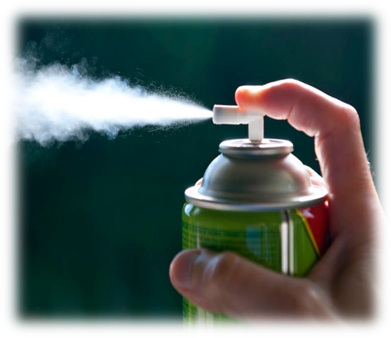
Mixtures of volatile hydrocarbons are now used as a propellant for aerosol sprays.
From the [6C-10C] alkanes, alkenes and isomeric cycloalkanes are the top components of:
- Specialized industrial solvent mixtures
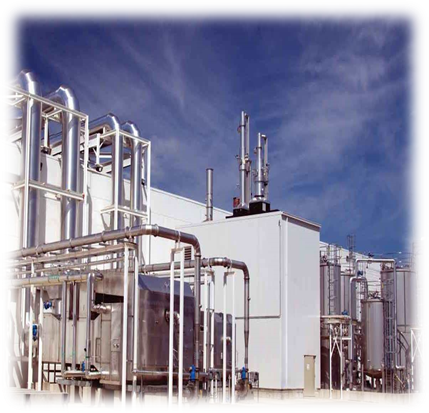
They are collected and widely utilized as:
- As extremely high viscosity sheer-resisting liquids