Chapter 1 : Introduction
Topics covered in this snack-sized chapter:
- What is Physiology?
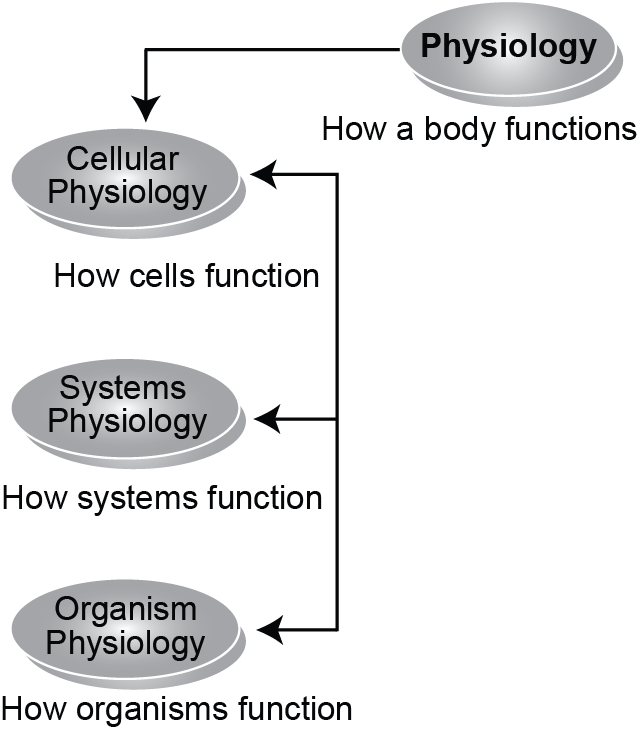
- Branches of Physiology
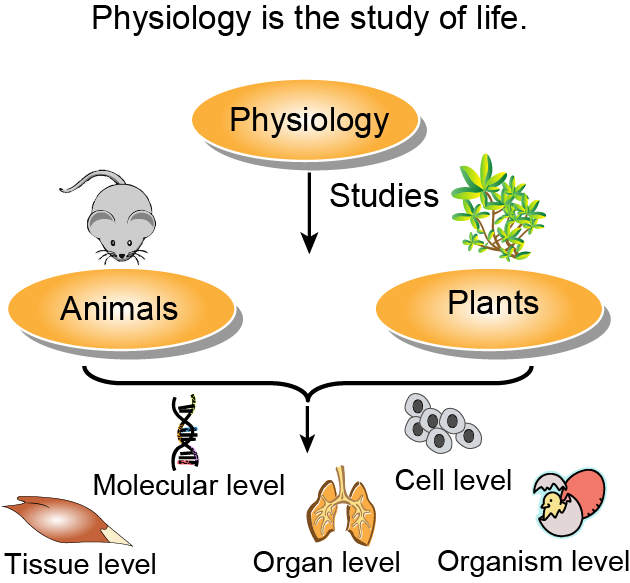
- Levels of Organization of the Human Body
- Atom and Molecule (Chemical Level)
- The Cell
- The Tissue
- The Organ
- The Organism
- Human Body Systems
- Homeostasis and Feedback Systems
- What is a Feedback Loop?
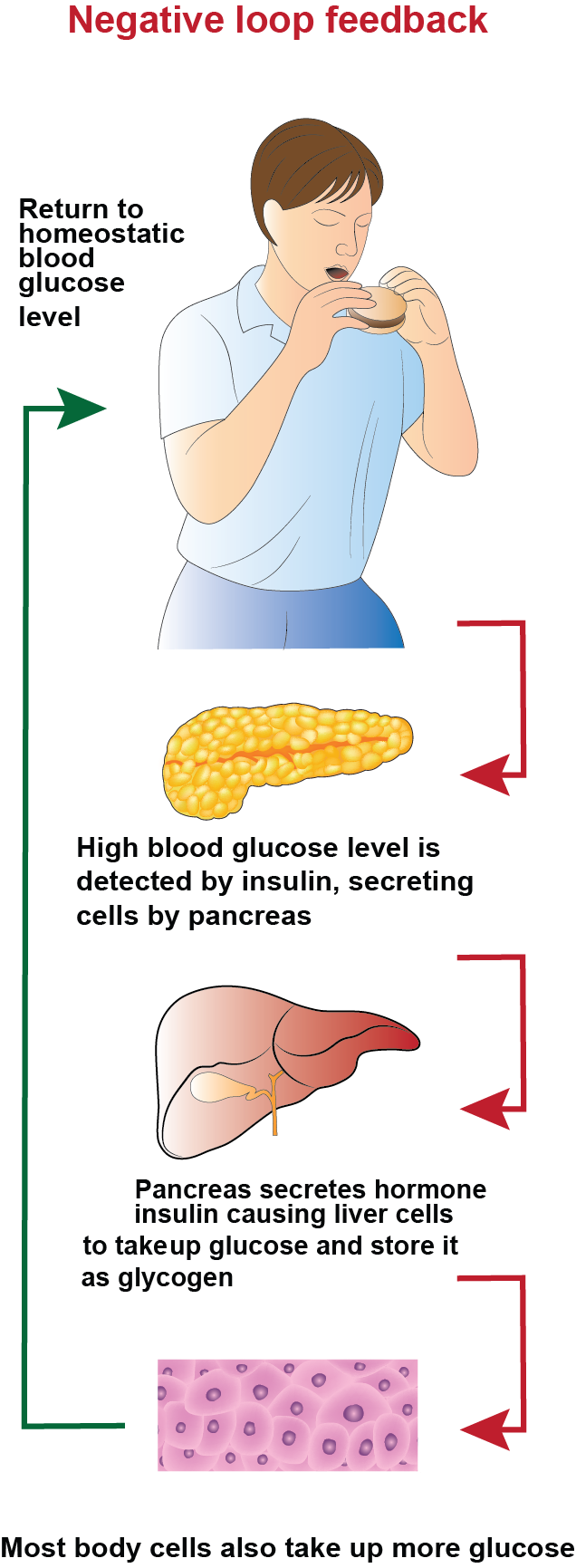
- Negative Feedback Loops in the Body
- Positive Feedback Loops in the Body
- Atoms - The smallest unit of matter that participates in reactions.
- Molecules - Two or more atoms joined together.
- Nerve cells
- Blood cells
- Muscle cells
- Fat cells
- Epithelial tissue
- Connective tissue
- Muscle tissue
- Nervous tissue
- Integumentary System
- Skeletal System
- Muscular System
- Nervous System
- Endocrine System
- Cardiovascular System
- Lymphatic and Immune System
- Respiratory System
- Digestive System
- Urinary System
- Reproductive System
The Integumentary System
- It protects internal organs and helps to maintain body temperature.
The Skeletal System
- It provides support and protection to internal organs.
The Muscular System
- It permits movement of the body, maintains posture, and circulates blood throughout the body.
The Nervous System
- It provides regulation of body functions and sensory perception.
The Endocrine System
- Regulation of homeostasis, growth and development.
The Cardiovascular System
- Delivery of oxygen and nutrients to the tissues.
The Lymphatic and Immune System
- Defense against infection.
The Respiratory System
- Absorption of oxygen and release of carbon dioxide.
The Digestive System
- Absorption of nutrients
The Urinary System
- Electrolyte balance and waste removal.
The Reproductive System
- Controls the biological process by which new individuals are produced.
- Homeostasis is a highly complex process.
- Homeostasis is maintained through the regulatory process called “feedback”.
- A receptor that monitors a particular aspect of physiology.
- A control center that sets the normal range receives input from the receptor and sends output when changes are needed.
- An effector that produces a response or effect that changes the physiology.
- Positive loops - where the response enhances the condition.
- Negative loops - where the response counteracts or antagonizes the condition.