Chapter 1 : Basic Principles of Management
Topics covered in this snack-sized chapter:
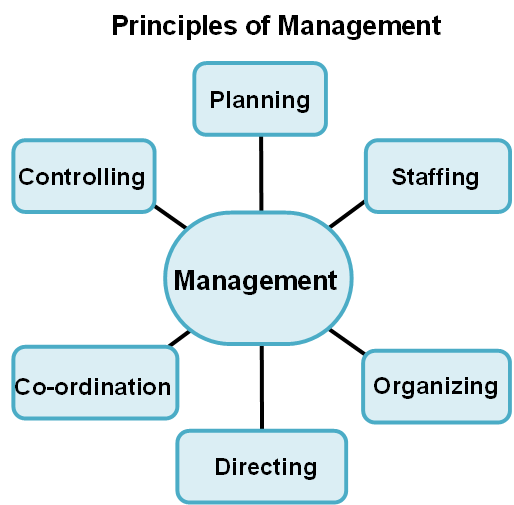
Planning
- Vision
- Mission
- Objectives
- Goals
Staffing
- Recruiting
- Selecting
- Hiring
- Training
- Retraining
Organizing
- Division of labor
- Delegation of authority
- Departmentalization
- Span of control
- Coordination
Directing
- Supervision
- Motivation
- Leadership
- Communication
Co-ordination
- Planning facilitates co-ordination by integrating the various plans through mutual discussion, exchange of ideas
- Manager groups and assigns various activities to subordinates
- A manager should bear in mind that the right no. of personnel in various positions with right type of education and skills are taken
- The purpose of giving orders, instructions & guidance to the subordinates is served only when there is a harmony between superiors & subordinates.
- Manager ensures that there should be co-ordination between actual performance & standard performance to achieve organizational goals.
Controlling
- Establishing standards based upon objectives
- Measuring and reporting performance
- Comparing the two
- Taking corrective/preventive action
- Directing
Interpersonal Role
- Figurehead role: Symbolizes the organization and what it is trying to achieve.
- Leader role: Train, counsel, mentor and encourage high employee performance.
- Liaison role: Link and coordinate people inside and outside the organization to help achieve goals.
Informational Role
- Monitor role: Analyzes information from both the internal and external environment.
- Disseminator role: Manager transmits information to influence attitudes and behavior of employees.
- Spokesperson role: Use of information to positively influence the way people in and out of the organization respond to it.
Decisional Role
- Entrepreneur role: Deciding upon new projects or programs to initiate and invest.
- Disturbance handler role: Assume responsibility for handling an unexpected event or crisis.
- Resource allocator role: Assign resources between functions and divisions, set budgets of lower managers.
- Negotiator role: Seeks to negotiate solutions between other managers, unions, customers or shareholders.
- Identity: Who are we and what do we aspire to become?
- New information: What else do we need to know?
- Relationships: Who else needs to be here to work with us?
- Intellectual skills: Logical thinking and problem solving
- Technical skills: Specialized knowledge required for work
- Ethical skills: Discriminate right from wrong
- Interactive skills: Communicate intelligently and create an atmosphere that facilitates communication
- Emotional skills: Ability to identify and handle one’s feelings
- Organization
- Situation
- Personal values
- Personality
- Chance
- Observation
- Reflection
- Guided readings
- Visits / attachments
- Seeking feedback
- Seeking challenges
- Presentations
- Chairing meetings
- Prepared packages
- Survival and growth are dependent upon adaptation to changing environment.
- Environment is influenced and shaped by the decisions and actions of the organization.
- Learning from experience is essential for adaptation and change.
- Individuals and organizations change in both common and unique directions.
- Structures
- Chains of command
- Responsibility limits
- Incentive systems
- Company culture and values
- Knowledge of product, technology, and processes
- Knowledge of development models
- Knowledge of organization of development activity
- Ability to work toward long-term goals
- Ability to motivate people
- Empower
- Non-threatening
- Facilitative
- Obtain involvement
- Obtain commitment