Chapter 1 : Introduction
Topics covered in this snack-sized chapter:

Public Relations is a multi-disciplinary field.
- Combination of Philosophy, sociology, economics, language, journalism, communication, business, politics, etc.
- Most effective when viewed as a strategic management function.
Public Relations is an ongoing two-way planned program.

Institute of Public Relations defines:
- “Public Relations is a deliberate, planned and sustained effort to establish and maintain mutual understanding between an organization and its public.”
The International Public Relations Association defines PR as:
- ” Public Relations is the art and social science of analyzing trends, predicting their consequences, counseling organization leaders and implementing planned programs of action which will serve both the organization’s and the public interest.”
PR is a set of planned activities designed to promote goodwill between an organization and its public.
- Enhances image and reputation of a company.
- Helps in improvement and modification according to needs and demands.
- With the help of PR, an organization can improve its operating environment.
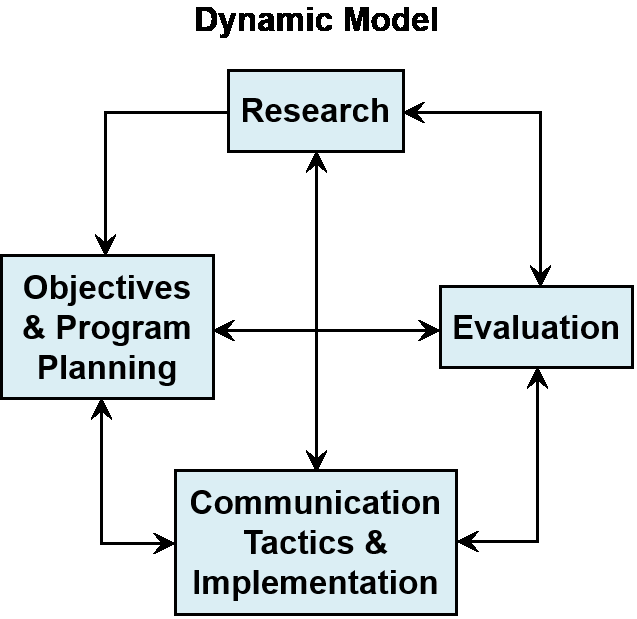
In PR, the process of communication involves four steps:
- Research
- Action Plan / Objectives / Program Planning
- Communication Tactics / Implementation of Plan
- Evaluation
- Client or organization
- Problem or potential problem and opportunities to do public relations.
- Audiences or publics
- Identifying goals and objectives.
- Identifying target audience(s) or public.
- Creating a theme for the program/campaign.
- Tactics for communicating
- Time line for the program/campaign
- Budget
- Identify research methods to be used to evaluate the success of the program/campaign during & after.
- Determine a way to measure whether the campaign achieved its objectives.
Spiritual leaders adapt PR activities for developing friendly relations amongst the countries.
Mahatma Gandhi, due to his PR qualities successfully united India for Independence.
Many leading companies make use of public relations to enhance their market value and startups to make their unique position in the market.
Mostly confined to early half of the twentieth century.
Greeks derived it from the word Semantikos which means how to get people to believe and do things.
Ivy Lee is regarded as the first real Practitioner of Public Relations.
Lee professionalized PR by following these three principles:
- Tell the Truth
- Provide accurate facts
- The PR Director must have access to top management and must be able to influence decisions.
Lee defines PR as the actual relationship of the company to the people and that relationship involves more than talk. The company must act by performing good deeds.
Edward L. Bernays is regarded as the profession’s founder.
- Also known as self-appointed Father of Public Relations
- He devised standardized methods and techniques of modern day PR
- Taught the course at NY University(1923)
- Developed three tools to influence Public consent:
- Market Research
- Social Surveys
- Public Opinion Polls
Bernay’s concept includes-
- PR is a public service
- PR should promote new ideas and progress.
- PR should build a public conscience.
PR as a profession was initially an American phenomenon.
By end of 20th century, PR was a need throughout the industrialized world.