Chapter 2 : Telecommunication Network
Topics covered in this snack-sized chapter:
A telecommunication network: a collection of terminals, links and nodes which connect to enable telecommunication between users of the terminals.
The network enables the transfer of information.
Node
- The beginning point or the intermediate point or the end point of the network
- A device that leads to the commencement, transfer or reception of information
Switch
- Links one part of the network to another
- Forwards the data from input port to specific output ports based on a predefined set of instructions
Network topologies describe the ways in which the elements of a network are mapped. They describe the physical and logical arrangement of the network nodes.
The physical topology of a network refers to the configuration of cables, computers, and other peripherals.
Different Types of Topologies
All the nodes (file server, workstations, and peripherals) on a bus topology are connected by one single cable.
A bus topology consists of a main run of cable with a terminator at each end. All nodes (file server, workstations, and peripherals) are connected to the linear cable.
Popular on LANs because they are inexpensive and easy to install.
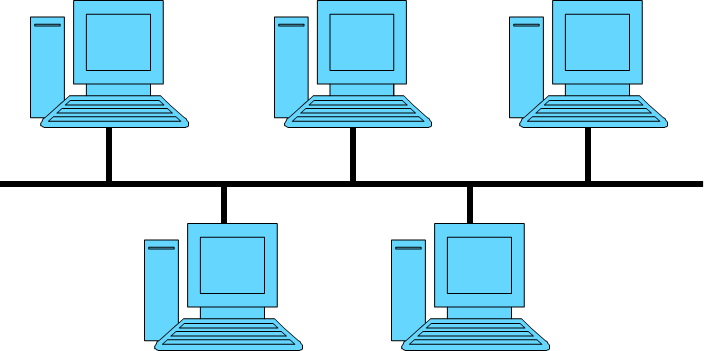
Bus Topology
In a star network, each node (file server, workstations, and peripherals) is connected to a central device called a hub.
The hub takes a signal that comes from any node and passes it along to all the other nodes in the network.
Data on a star network passes through the hub, switch, or concentrator before continuing to its destination.
The hub, switch, or concentrator manages and controls all functions of the network.
The star topology reduces the chance of network failure by connecting all of the systems to a central node.
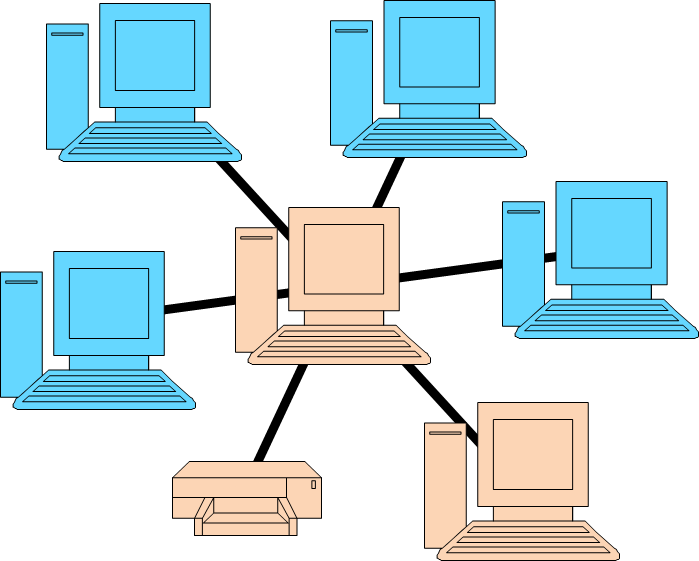
Star Topology
In a ring network, every device has exactly two neighbors for communication purposes.
All messages travel through a ring in the same direction.
A failure in any cable or device breaks the loop and can take down the entire network.
To implement a ring network we use the Token Ring technology.
A token, or small data packet, is continuously passed around the network. When a device needs to transmit, it reserves the token for the next trip around, then attaches its data packet to it.
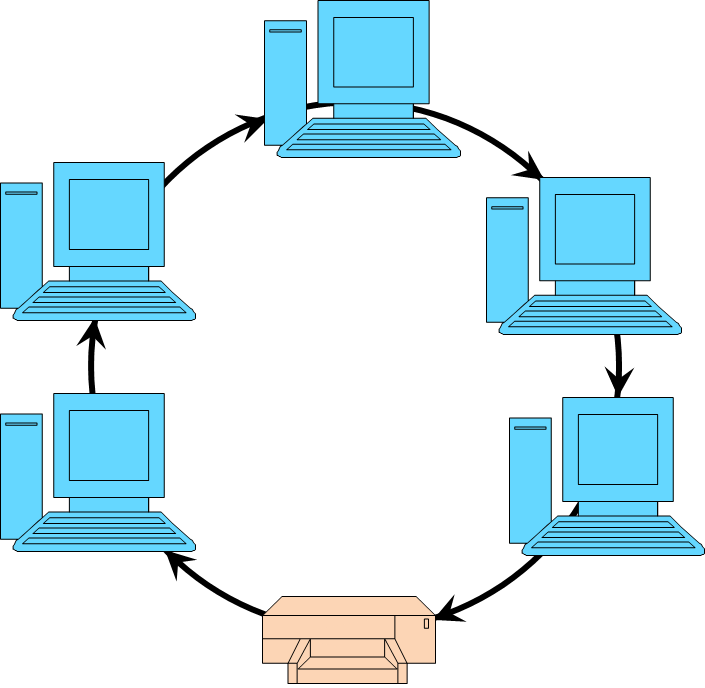
Ring Topology
In this topology, each node is connected to every other node in the network.
Implementing the mesh topology is expensive and difficult.
In this type of network, each node may send message to destination through multiple paths.
While the data is travelling on the Mesh Network it is automatically configured to reach the destination by taking the shortest route which means the least number of hops.
A tree topology (hierarchical topology) can be viewed as a collection of star networks arranged in a hierarchy.
This tree has individual peripheral nodes which are required to transmit to and receive from one other only and are not required to act as repeaters or regenerators.
The tree topology arranges links and nodes into distinct hierarchies in order to allow greater control and easier troubleshooting.
This is particularly helpful for colleges, universities and schools so that each of them connect to the big network in some way.
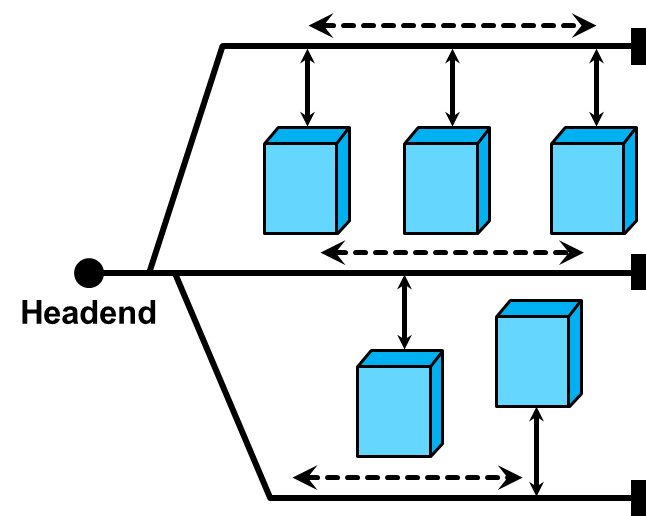
Tree Topology
A combination of any two or more network topologies.
A hybrid topology always accrues when two different basic network topologies are connected.
It is a mixture of above mentioned topologies. Usually, a central computer is attached with sub-controllers which in turn participate in a variety of topologies
When two or more Network Topologies are combined in a manner to form a new kind of Topology is known as Hybrid Topology.
Local Area Network
- It is the interconnection of the Nodes to a limited area.
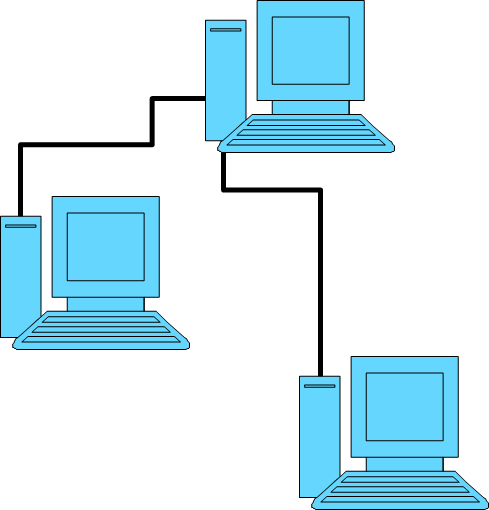
Local Area Network
Metropolitan Area Network
- It usually interconnects a large number of LAN’s, it ranges from a group of building to entire city.
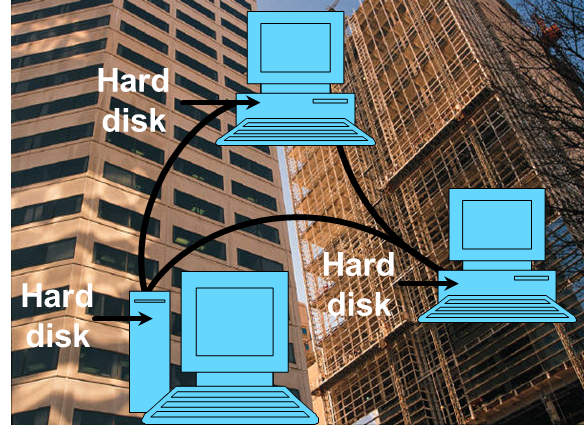
Metropolitan Area Network
Wide Area Network
- It is the interconnection of the Nodes when they are large distance apart.
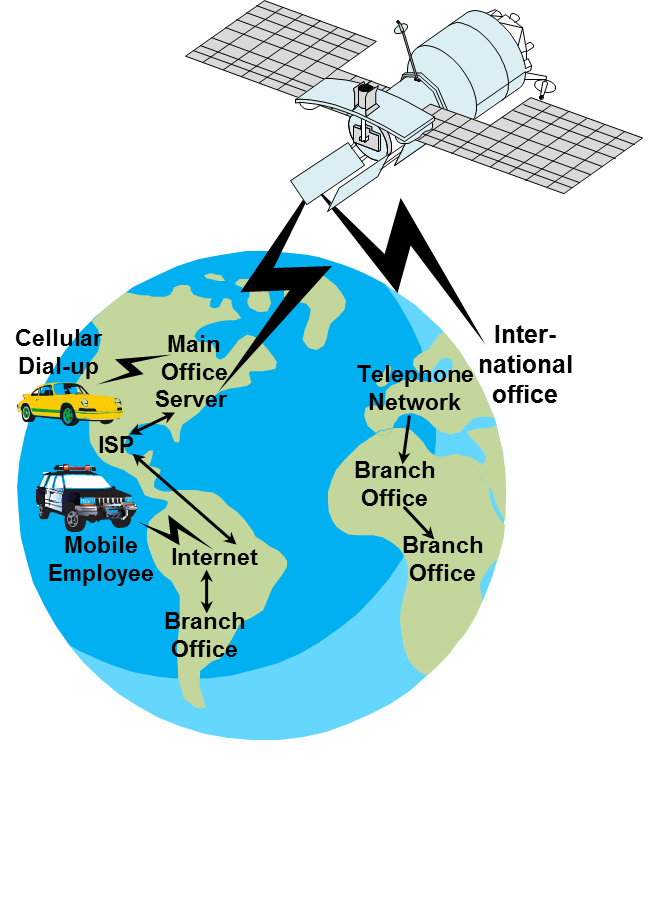
Wide Area Network
Client/Server Network
- In this network server controls the resources and client relies on the server for access to resources.
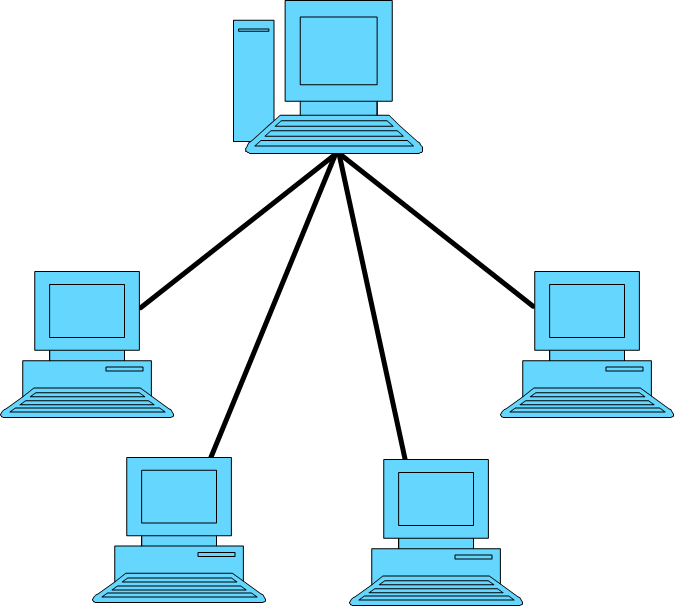
Client Server Network
Virtual Private Network
- It is a technology that connects the network with the intermediate network to connect the remote node.
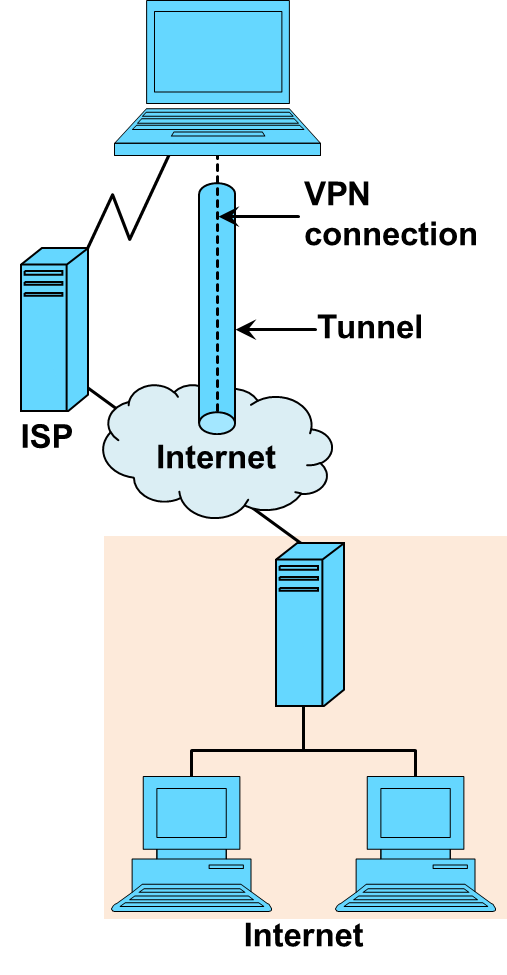
Virtual Private Network
Peer to Peer Network
- In this network each node can act as a Client or Server for other node in the network.
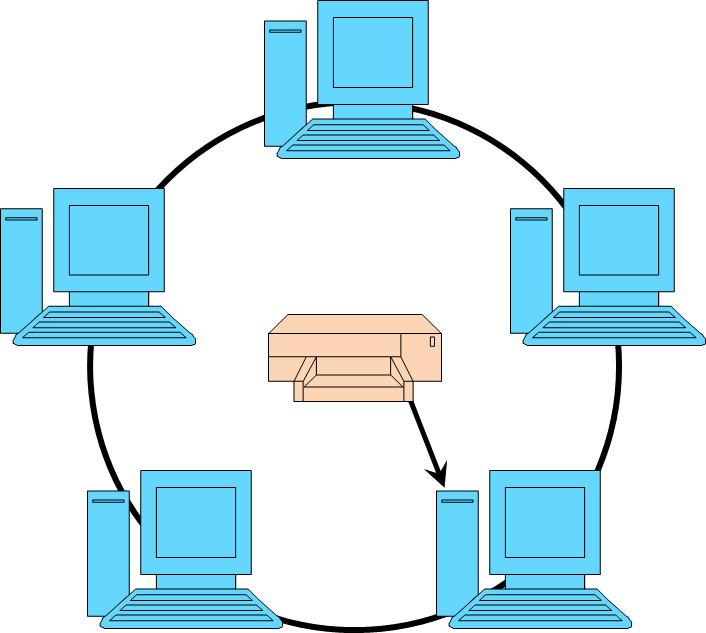
Peer to Peer Network