Chapter 1 : Introduction to Trigonometry
Topics covered in this snack-sized chapter:
- Introduction to Trigonometry
- Triangle Properties: Similar Triangles
- Solving the Height Problem (Using Similar Triangles)
- Angles and Rotation
- Ray
- Measuring Angles
- 360 Degree Angle
- 90 Degree Angle
- 180 Degree Angle
- One Radian
- Arc Length Theorem
- Relationship between Radians and Degrees
- Angles in the Coordinate Plane
- Types of Angles
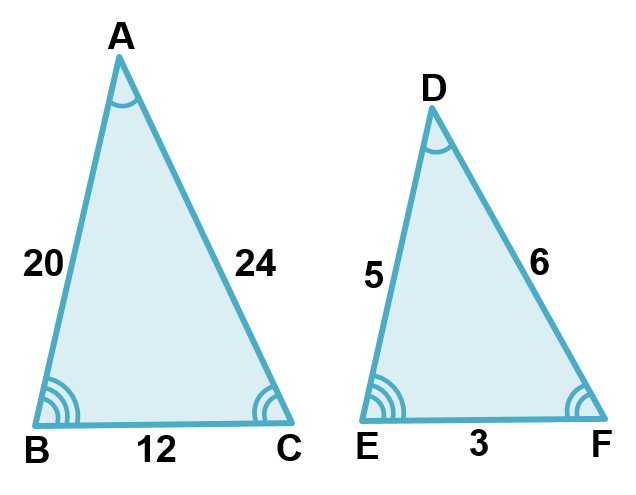
 and
and  ,
,
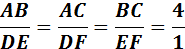
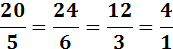
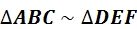 .
.
 tall, but his shadow is only
 . long. There is a tree across the street with a shadow of
 .
.
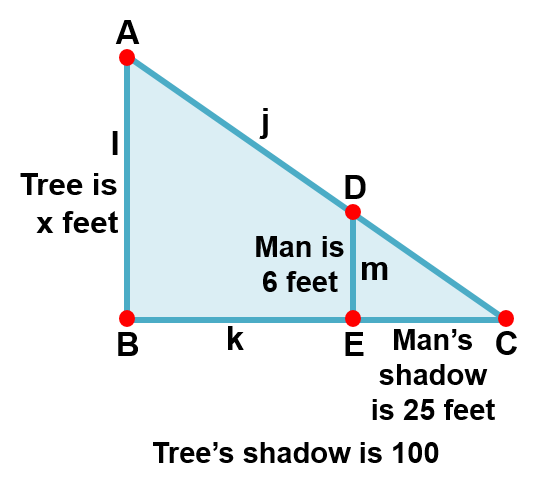
 and
and  :
:



25 x = 600
x = 24

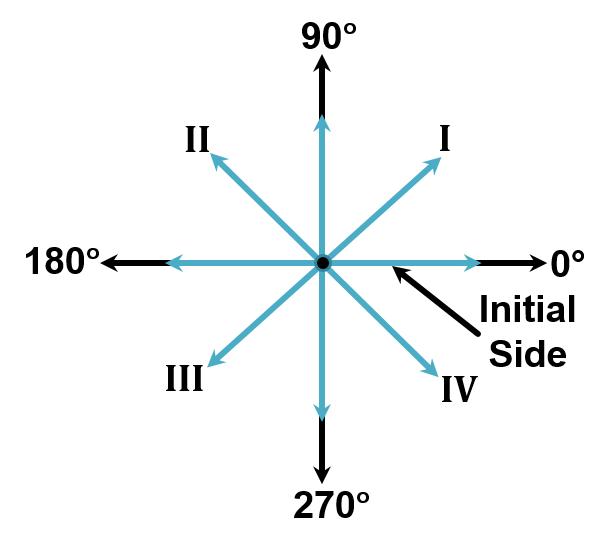
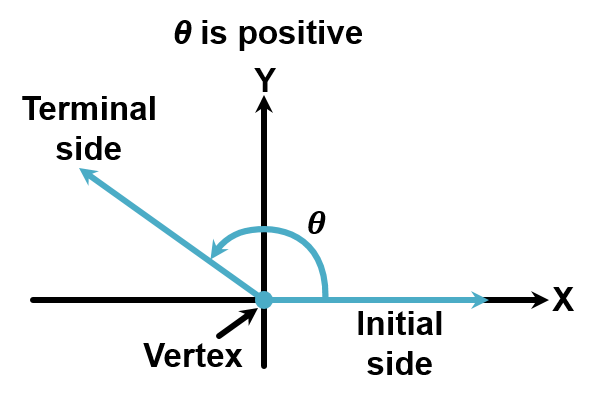
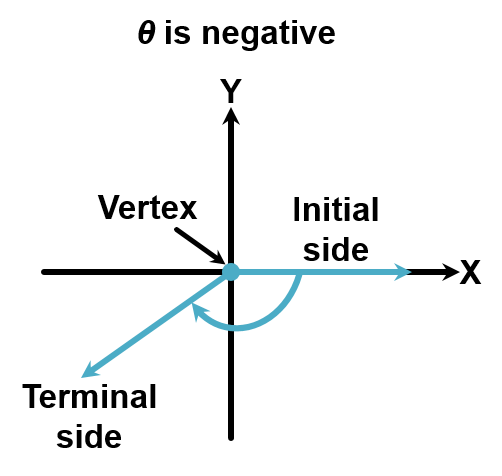
- The vertex is at the origin of the
 and
and  axis.
axis.
- The initial side of the angle lies along the positive axis.
 or
or  axis
axis 
- Counter Clockwise rotation
 Positive angle.
- Clockwise rotation
 Negative angle.
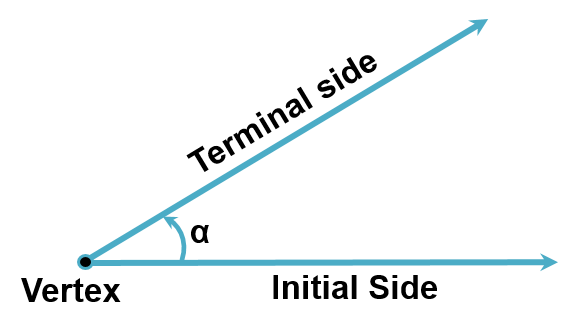
 ray, or half-line, is that portion of a line that starts at a point
  on the line and extends indefinitely in one direction.
of a ray is called its vertex.
on the line and extends indefinitely in one direction.
of a ray is called its vertex.

- Degrees
- Radians
 .
.


 abbreviated.

 is
is  of a revolution.
 or
or  revolution.
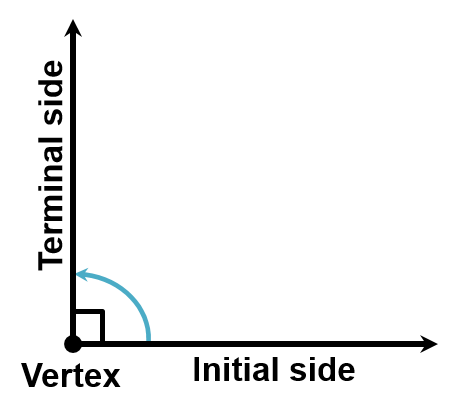
 angle is
  of a revolution.
 , or
, or  revolution.

angle is  of a revolution.
 .
.
- Whose vertex is at the center of this circle, called the central angle.
- Whose rays subtend an arc on the circle whose length is
 .
.
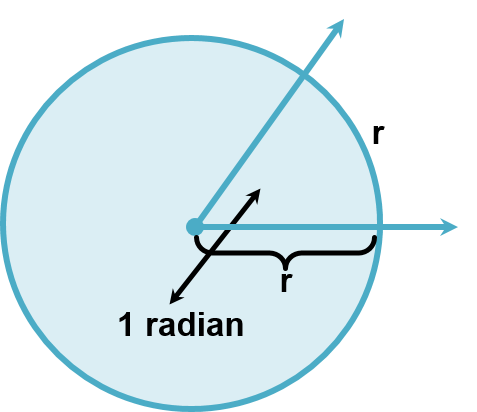
 , a central angle of
  radians subtends an arc whose length
  is
is  .
.
 at a constant speed.
is the distance traveled in time
at a constant speed.
is the distance traveled in time  along this circle, then the linear speed
  of the object is defined as:

is the central angle swept out in time .
.
 of this object is the angle swept out divided by the elapsed time.






is said to be in standard position if its vertex is at the origin of a rectangular coordinate system and its initial side coincides with positive  axis.
axis.
- Positive angle rotate counter clockwise:
 .
.
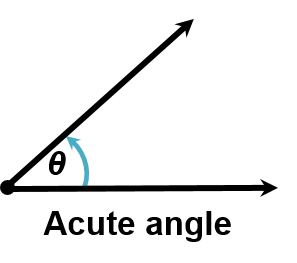
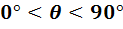
 .
.
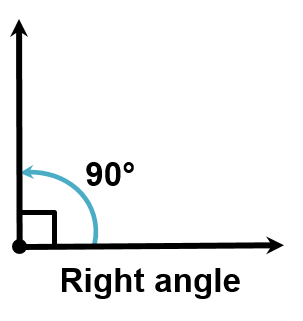

 but less than .


 .
.