Topics covered in this snack-sized chapter:
Vitamin A is a member of the fat-soluble family of vitamins.
Vitamin A is relatively stable to heat but is destroyed by ultraviolet radiation (sunlight).
It is important for normal vision, adequate growth, and for cell division and differentiation.
It is essential for immune system function because it is necessary for the production of white blood cells that help fight infections.
Vitamin A is also needed:
- For normal skeletal and tooth development.
- For the normal progression of the reproductive cycle of the female.
- For formation of the adrenal hormone cortisone from cholesterol.
- For maintenance of the stability of all membranes.
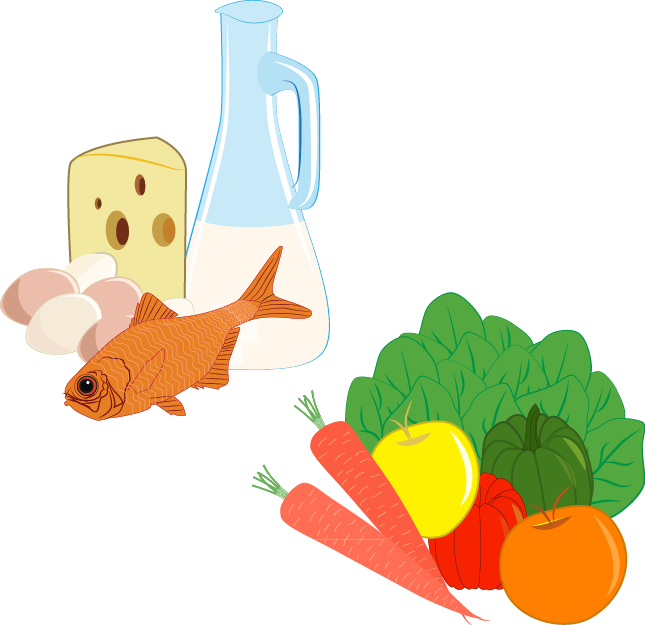
Foods that are high in Vitamin A include both plant and animal sources.
Animal sources of Vitamins A are:

There are several fruits that are also regarded as the best vitamin A sources, such as:

Some of the vegetables that contain high amounts of vitamin A are:
Vitamin A also present in dairy products, like:

Vitamin A is essential for:
Vitamin A is required for night vision, and for a healthy skin.
Vitamin A is a fat-soluble vitamin that helps you see normally in dim light and promotes the growth and health of all body cells and tissues.
- The retina is located at the back of the eye. When light passes through the lens, it is sensed by the retina and converted to a nerve impulse for interpretation by the brain. Retinol is transported to the retina via the circulation, where it moves into retinal pigment epithelial cells.
Retinoic acid and its isomers act as hormones to affect gene expression and thereby influence numerous physiological processes.
It assists the immune system, and because of its antioxidant properties it works to protect against pollution and cancer formation and other diseases.
It is required for development and maintenance of the epithelial cells, in the mucus membranes, and your skin, and is important in the formation of bone and teeth, storage of fat and the synthesis of protein and glycogen.
Assists in maintaining healthy skin and mucous membranes protecting the body's major organs
It also protects against infection by keeping healthy the skin and tissues in the mouth, stomach, intestines and respiratory and uro-genital tract.
It assists your sense of taste as well as helps the digestive and urinary tract and many believe that it helps slow aging.
The specific amount of each vitamin can vary significantly depending on a person’s age, gender, and medical conditions.
For example:
- An infant requires 375 micrograms of Vitamin A daily.
- A breastfeeding woman requires 1,200 micrograms.
- Healthy adult male requires 1,000 micrograms.
Faulty teeth and slow bone formation.
Night blindness (poor vision in dim light).
Prolonged deficiency can cause xerophthalmia (dry eyes) which can ultimately lead to blindness.
Rough dry scaly skin; bumpy skin; increased susceptibility to colds and viral infections.
Sinusitis (chronic inflammation of the sinuses).
Frequent infections of the bladder or urinary tract.
Tendency to abscesses in the ears; rapid weight loss.
Loss of smell, taste or appetite.
Vitamin A overdose and toxicity “danger levels” start to develop when taking in around 25,000 IU or more of vitamin A per day for a long time.
Toxicity occurs by either consuming too much preformed vitamin A (the kind that comes from animal sources such as turkey, liver, eggs) or by taking too many supplements with preformed Vitamin A (usually in the form of retinyl palmitate or retinyl acetate).
Preformed Vitamin A is absorbed quickly and eliminated slowly.
Some of the symptoms include: