Looking for a different chemical? To Chemical Index
67-56-1: Methanol
Chemical details of Methanol
Chemical Identity
- Preferred Name: Methanol
 CASRN: 67-56-1
 Substance Class(es) (from SciFinder): Small Molecule
- E&H Chemical Class L1: Alcohols ; L2: primary and secondary alcohols
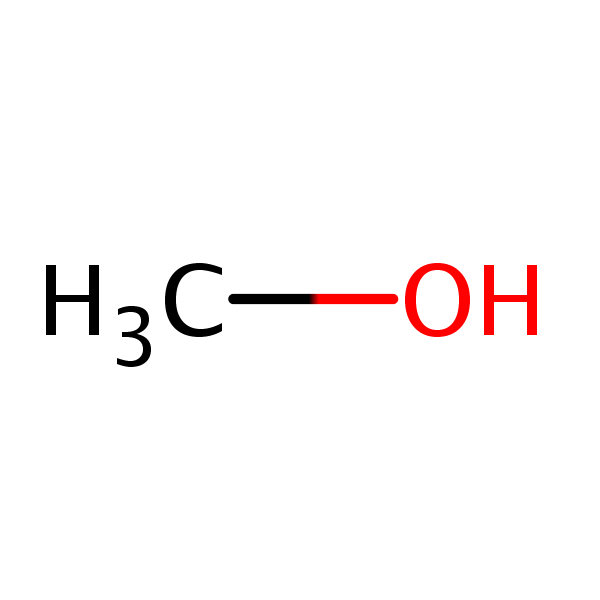
Molecular Structure
HAZARD EVIDENCE
Hazard Tiers
Tier levels(1) Hazard classes(2)
-
Open-FF's Compiled Hazard Summary:
Tier 1: Authoritative GHS record of substantial hazard
Tier 2: Expanded perspective
Tier 3: Demonstrated Low Hazard
Tier 4: Data Deficient
-
Hazard classes:
CMR: Carcinogen, Mutagen or Reproductive hazard
IHL: Inhalation hazards
ORL: Oral hazards
SKN: Dermal and eye hazards
OGN: Organ and systemic hazards
EDC: Endocrine disruption hazards (note that GHS does not yet have comprehensive classification of EDCs. Therefore, the strongest hazard level in this system is effectively level 2)
ENV: Environmental hazards
Our Tier Summary: This chemical has several known hazards (Tier 1), including carcinogenicity, mutagenicity and reproductive toxicity, inhalation toxicity, oral toxicity, dermal and eye hazards, and organ/systemic toxicity. It also shows potential environmental hazards and endocrine disruption hazards (Tier 2) based on expanded scientific data.
Evidence for Tier levels
(Select category below for more detail)
The overall tier level for Methanol is based on its most severe hazard class(es): - Tier 1
Carcinogenic, Mutagenic, or Reproductive Toxicity - Tier 1
- H351: Suspected of causing cancer (ChemInformatics; PubChem)
- H360: May damage fertility or the unborn child (ChemInformatics; Japan; PubChem)
- H360FD: May damage fertility; May damage the unborn child (ChemInformatics)
Endocrine Disruption - Tier 2
- Endocrine_Disruption: High Hazard (ChemInfoHazard)
Environmental Hazard - Tier 2
- Chronic_Aquatic_Toxicity: Very High Hazard (ChemInfoHazard)
Inhalation Hazard - Tier 1
- H331: Toxic if inhaled (Australia; ChemInformatics; ECHA Harmonized; PubChem)
Oral Hazard - Tier 1
- H301: Toxic if swallowed (Australia; ChemInformatics; ECHA Harmonized; PubChem)
Dermal/Eye Hazard - Tier 1
- H311: Toxic in contact with skin (Australia; ChemInformatics; ECHA Harmonized; PubChem)
- H319: Causes serious eye irritation (ChemInformatics; Japan; PubChem)
Organ Hazard - Tier 1
- H370: Causes damage to organs (Australia; ChemInformatics; ECHA Harmonized; PubChem)
- H372: Causes damage to organs through prolonged or repeated exposure (ChemInformatics; PubChem)
Lists of Concern and/or Low Hazard
Methanol appears on several lists of concern, such as California's Proposition 65 and EPA's Hazardous Air Pollutants, indicating significant potential hazards. Its presence on a 'Substances Added to Food' list suggests that while it may be used in certain contexts, this likely refers to very low, tightly regulated quantities, and the chemical can still be hazardous under other conditions.
List of Concerns: Details
Calif. Prop 65 California's Proposition 65: "The law protects the state's drinking water sources from being contaminated with chemicals known to cause cancer, birth defects or other reproductive harm, and requires businesses to inform Californians about exposures to such chemicals"- Link to resource
TEDX list The Endocrine Disruption Exchange: This list of Potential Endocrine Disruptors identifies chemicals that have shown evidence of endocrine disruption in scientific research.- Link to resource
Hazardous Air Pollutants From EPA: "Under the Clean Air Act, EPA is required to regulate emissions of hazardous air pollutants. This is the current list of pollutants (Final rule effective: February 4, 2022)."- Link to resource
National Air Toxics Assessment From EPA: "The National-Scale Air Toxics Assessment (NATA) is EPA's ongoing comprehensive evaluation of air toxics in the United States."- Link to resource
Evidence of Low Hazard: Details
Substances added to Food From EPA: The Substances Added to Food inventory replaces what was previously known as Everything Added to Foods in the United States (EAFUS). The Substances Added to Food inventory includes the following types of ingredients regulated by the U.S. Food and Drug Administration (FDA): -Food additives and color additives that are listed in FDA regulations (21 CFR Parts 172, 173 and Parts 73)"- Link to resource
How complete is the understanding of this chemical?
This chemical is exceptionally well-characterized, with a vast number of scientific literature references (over 580,000) and numerous toxicity records (281) in the EPA ToxValDB. Its specific molecular formula and status as an EPA IRIS-evaluated chemical further confirm a thorough understanding of its properties and hazards.
Links to Profiles and Data Sheets
These badges connect you directly to original chemical profile sheets. Active resources are highlighted in green, while unassessed resources are greyed out and crossed out.
SOURCES
Chemical-specific data for tier generation
Authoritative indicators of hazards (GHS)
Expand for details
- (ORL) H301: Toxic if swallowed
- (ORL) H302: Harmful if swallowed
- (ORL) H303: May be harmful if swallowed
- (SKN) H311: Toxic in contact with skin
- (SKN) H319: Causes serious eye irritation
- (IHL) H331: Toxic if inhaled
- (IHL) H335: May cause respiratory irritation
- (IHL) H336: May cause drowsiness or dizziness
- (CMR) H351: Suspected of causing cancer
- (CMR) H360: May damage fertility or the unborn child
- (OGN) H370: Causes damage to organs
- (OGN) H372: Causes damage to organs through prolonged or repeated exposure
- (ORL) H301: Toxic if swallowed
- (ORL) H302: Harmful if swallowed
- (ORL) H303: May be harmful if swallowed
- (SKN) H311: Toxic in contact with skin
- (SKN) H319: Causes serious eye irritation
- (IHL) H331: Toxic if inhaled
- (IHL) H335: May cause respiratory irritation
- (IHL) H336: May cause drowsiness or dizziness
- (CMR) H360: May damage fertility or the unborn child
- (OGN) H370: Causes damage to organs
- (OGN) H372: Causes damage to organs through prolonged or repeated exposure
- (ORL) H301: Toxic if swallowed
- (SKN) H311: Toxic in contact with skin
- (IHL) H331: Toxic if inhaled
- (OGN) H370: Causes damage to organs
- (OGN) H371: May cause damage to organs
- (ORL) H301: Toxic if swallowed
- (SKN) H311: Toxic in contact with skin
- (IHL) H331: Toxic if inhaled
- (OGN) H370: Causes damage to organs
- (ORL) H302: Harmful if swallowed
- (ORL) H303: May be harmful if swallowed
- (SKN) H319: Causes serious eye irritation
- (CMR) H360: May damage fertility or the unborn child
Other indications of hazards
Expand for details
- (ORL) H301: Toxic if swallowed
- (ORL) H302: Harmful if swallowed
- (SKN) H311: Toxic in contact with skin
- (SKN) H312: Harmful in contact with skin
- (SKN) H314: Causes severe skin burns and eye damage
- (SKN) H315: Causes skin irritation
- (SKN) H317: May cause an allergic skin reaction
- (SKN) H318: Causes serious eye damage
- (SKN) H319: Causes serious eye irritation
- (IHL) H330: Fatal if inhaled
- (IHL) H331: Toxic if inhaled
- (IHL) H332: Harmful if inhaled
- (IHL) H335: May cause respiratory irritation
- (CMR) H341: Suspected of causing genetic defects
- (CMR) H351: Suspected of causing cancer
- (OGN) H370: Causes damage to organs
- (ORL) Oral: high
- (IHL) Inhalation: high
- (SKN) Dermal: high
- (EDC) Endocrine_Disruption: high
- (CMR) Reproductive: high
- (CMR) Developmental: high
- Neurotoxicity:_Repeat_Exposure: high
- Neurotoxicity:_Single_Exposure: high
- Systemic_Toxicity:_Repeat_Exposure: high
- Systemic_Toxicity:_Single_Exposure: high
- (SKN) Eye_Irritation: high
- (CMR) Genotoxicity_Mutagenicity: very high
- Exposure: very high
Affirmative data showing low concern
Expand for details
- Skin_Sensitization: low
- Acute_Aquatic_Toxicity (ENV) : low
- Chronic_Aquatic_Toxicity (ENV) : low
- Persistence: low
- Bioaccumulation: low