Mapping HVAC Choices for Facility Managers Facing Mixed-Use Demands
Assess building needs first by separating occupant comfort goals from equipment limitations, because commercial spaces rarely behave the same from floor to floor. Offices, kitchens, and meeting rooms swing through different loads, and the right approach requires documenting those peaks. In practice, a brief walk-through with recent complaints and utility bills on hand will reveal where air distribution, control logic, or insulation gaps are undermining otherwise capable systems.
Scope mechanical zones with attention to existing duct paths and return-air placement, since poor return balance often masquerades as a capacity problem. Validate airflow with spot measurements and compare to design intent if drawings exist. Then, phase improvements so disruption is minimized: start with air balancing, controls checks, and filtration upgrades before contemplating larger equipment swaps that demand downtime and crane access.
Meanwhile, align replacement timing with the building’s usage calendar to buffer against productivity losses. For example, staging AC Installation during off-peak tenant periods allows electricians and sheet metal crews to work faster and safer. Beyond that, securing temporary cooling mitigates risk if weather spikes arrive mid-project. Sequencing these steps avoids rework when controls, sensors, and dampers must be recalibrated after major changes.
Often, legacy systems benefit from targeted AC Repair that restores sensible and latent capacity without a capital overhaul. Verify that thermostats read accurately, economizers modulate as designed, and condenser coils are free of airflow restrictions. Then, refine setpoints and schedules so equipment idles intelligently outside occupancy. Small corrections here compound into better comfort, lower run-hours, and clearer data for any future design decisions.
Beyond that, consider equipment diversity that matches space diversity. Heat Pumps can serve perimeter zones with variable loads, while a Ductless Mini Split handles an IT closet or after-hours suite without energizing a whole air handler. Inspect structural allowances and electrical service before choosing larger gear, because upgrades to panels, supports, or curbs can rival the equipment cost if they are discovered late.
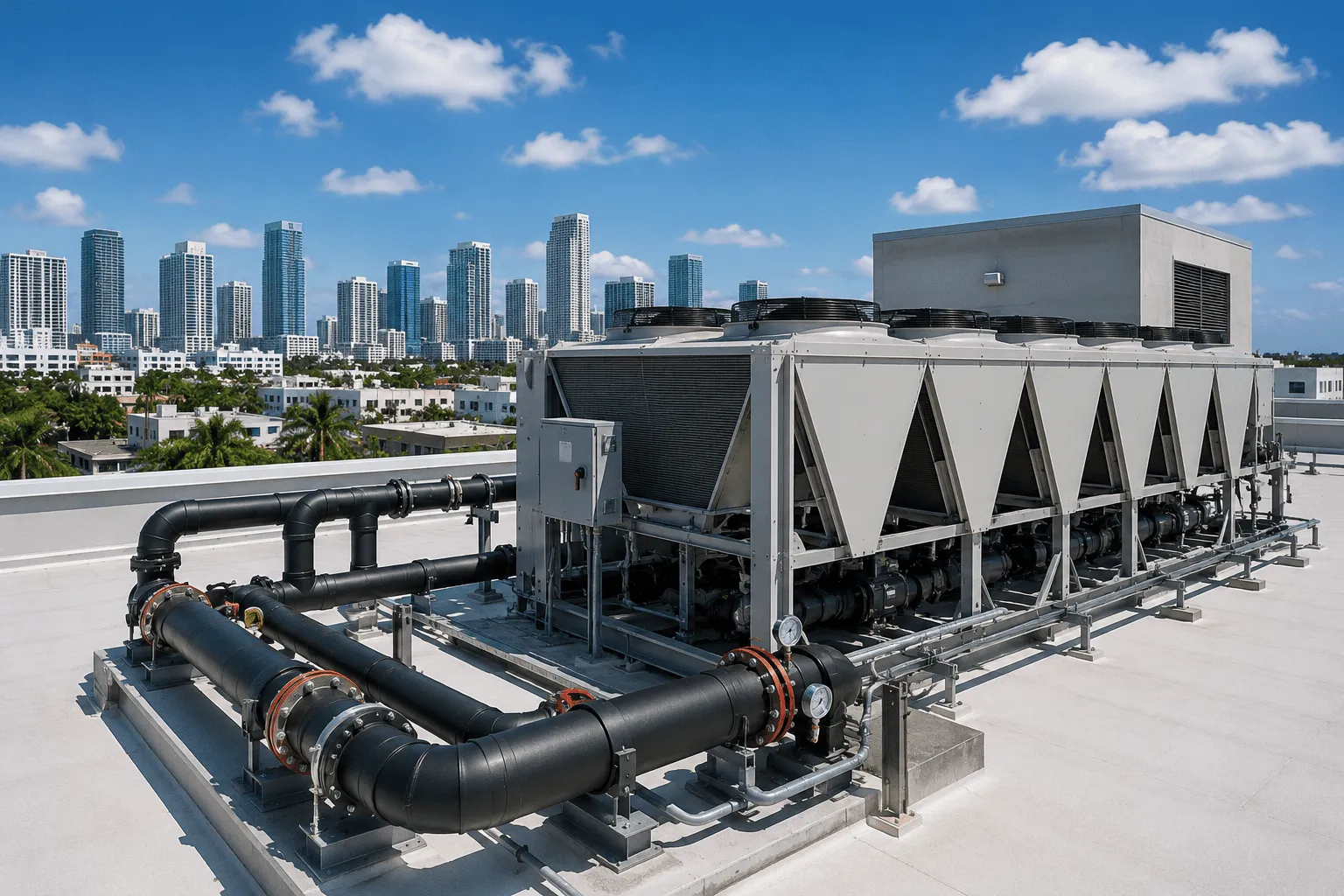
In practice, chilled-water strategies earn their keep in dense footprints. Chiller Installation should be weighed against lifecycle constraints like water quality, condenser water treatment, and the logistics of placing Cooling Towers. Validate access routes for rigging and future tube pulls, and plan redundancy that keeps critical areas online during Chiller Repair or seasonal changeovers, when weather windows are narrow and downtime is expensive.
Then, craft an HVAC Maintenance playbook that assigns owners to tasks rather than leaving everything to a single annual visit. Filter changes, belt inspections, drain treatment, and coil cleaning belong on a rotating calendar. Document readings such as supply air temperature, superheat, subcooling, and differential pressure to spot drift. Finally, review this data quarterly to catch patterns that hint at duct leakage or failing actuators.
However, controls integration can derail even well-chosen equipment if points are mislabeled or trends are missing. Calibrate sensors after any mechanical work, validate valve and damper stroke, and confirm alarms roll up to the right contacts. Sequence occupied, standby, and night purge modes to match each zone’s reality. This digital housekeeping prevents energy waste and reduces nuisance calls that distract on-site staff.
Meanwhile, budgeting should reflect lifecycle rather than sticker price. Account for consumables, water treatment, cleaning access, and training for in-house teams. Inspect warranties alongside parts lead times, and build a spare-parts buffer for fans, contactors, and sensors critical to uptime. When evaluating proposals, ask for commissioning scope and seasonal retuning, not just installation hours, so performance holds under both mild and extreme conditions.
Finally, document every change, from damper positions to control graphics, and archive photos of nameplates and plate heat exchangers. Handoff packages that include as-builts, maintenance schedules, and trend templates shorten the learning curve for new staff. With clarity on zones, workflows, and continuous verification, the HVAC landscape becomes manageable, resilient, and ready for incremental upgrades rather than disruptive overhauls.