
sermon Mar 22nd
Jesus went to Jerusalem, not out of morbidity or self-destruction, but, to serve the world. The practical way to share Christ's purpose: stop organizing life around personal plans and ambitions and instead live for others in agape love. Focus on one concrete starting point: intercessionpray for others as an act of love that gives time, imagination, and desire for their good.
Visit our Library of Sermon Blog Posts
Subscribe to our sermon video clips on YouTube
In the gospel, we encounter the story of the raising of Lazarus. Traditionally, most biblical scholars argue that this event is not the central theme of the story. Instead, they believe that Lazarus's emergence from the tomb serves as a precursor to the significant event known as the Passion of Christ. This is why this particular Sunday has been historically regarded as Passion Sunday.
The Meaning of Passion
Before it acquired romantic connotations, the word "passion" held a strictly religious meaning, derived from the Latin word "passio," referring solely to Jesus's suffering. Historically, the weeks leading up to Easter in the English Church were known as Passion Tide with its own distinct practices and color, crimson. It was customary to cover pictures and statues beginning on this Sunday, although I personally have fondness to always call it Passion Sunday, distinct from Palm Sunday.
A Drama Unfolds
The liturgical events of Holy Week and Easter are often compared to a grand drama. I sometimes wonder if suggesting extending this over more than one week could be considered frivolous, as compressing such profound events into a short time span feels akin to condensing "Hamlet" into a one-act play.
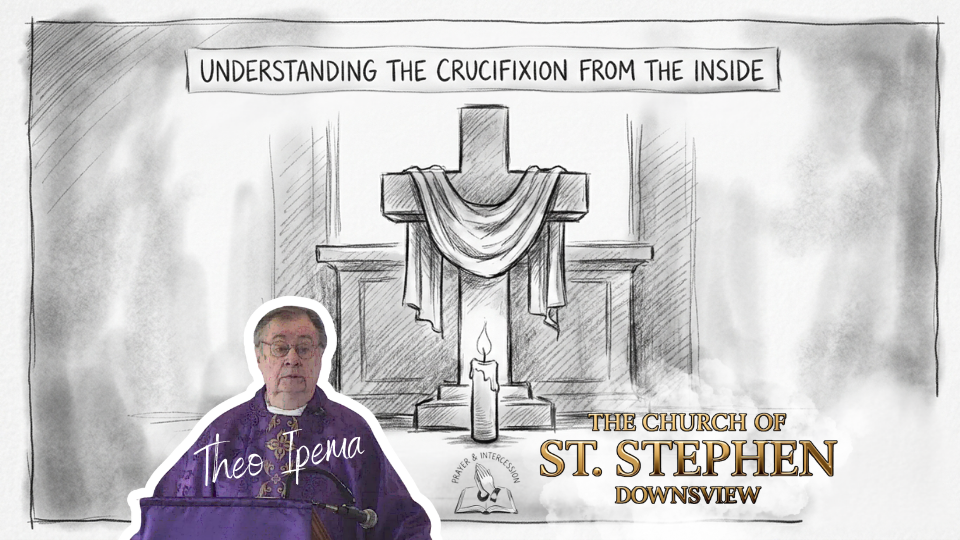
When the metaphorical curtain rises, something unique happens. Part of the set—specifically the cross, seen weekly—is now draped with purple to draw our attention. Historically, items like statues and ornaments were covered to refocus our attention onto the cross, but now we bring the cross itself to the forefront. This shift is meant to concentrate our attention on the words we are about to hear, as they rank among the most critical we've ever encountered.
Crucified with Christ
Some take this role too literally, allowing themselves to be metaphorically crucified. St. Paul, in his letter to the Galatians, states, "I have been crucified with Christ." While neither Paul nor I take this literally, it describes a way of living—a direction of purpose, aligning oneself with Jesus in his crucifixion. This might just offer an authentic understanding of the crucifixion itself.
To understand Jesus's actions in dying, one must share in his death and be crucified with him. Although Jesus did not explicitly teach his disciples the meaning of his death, he invited them—and us—to follow him and share in his death. This shared experience is the only way to truly comprehend it.
Living for Others
Jesus believed that his death wasn't for his own sake but for others. He allowed his crucifixion to unfold because it was for the sake of humanity, for releasing people from oppression. Jesus himself articulated this by saying, "The Son of Man came not to be served, but to serve, and to give his life as a ransom for many." His death had a liberating purpose, portrayed through his sharing of the wine at the Last Supper.
Sharing in Jesus's crucifixion means transcending self-centeredness to live for others. It involves keeping our attention on the external world rather than our own goals or ambitions. This attitude is summed up in the New Testament with the word "agape," meaning selfless love—love that culminates in laying down one's life for others.
Intercession as a Form of Love
One practical way of living for others is through intercession—praying for them with genuine time, imagination, and desire. By interceding, we engage in profound love, substituting ourselves for others as Jesus did. It involves entering into the lives of others, bearing their burdens, and offering oneself to God on their behalf.
Practicing intercession leads us closer to Jesus in his crucifixion, allowing us to understand his sacrifice more intimately. By continuously living for others, we avoid becoming busybodies or meddling in others' affairs. Instead, we experience Jesus's love and sacrifice, comprehending the crucifixion from within.
Through this understanding, we find ourselves resonating more deeply with Jesus's words and actions, as well as embracing the true essence of his sacrificial love. Thanks be to God.