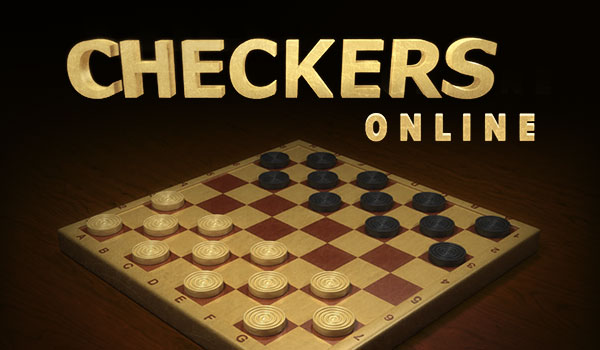
- • Instant browser launch with zero installation
- • Smooth framerate on Chromebooks and laptops
- • Engaging progression and accessible controls
- • Requires active internet connection for web audio
- • High sensitivity controls may take 1-2 rounds to master
About Checkers
Checkers is one of the most popular and critically acclaimed web games on Coolmath Games. Designed with responsive controls and engaging progression, this unblocked edition brings the complete casual gameplay experience directly to your modern web browser with zero installation.
How To Play Checkers
Play vs. the computer, or against an online opponent.
The goal of Checkers, or "Draughts", is to remove all your opponent's pieces from the board. Use your finger to move your pieces around the board. Your pieces can only move forward one tile diagonally (they always stay on the brown tiles).
To capture an opponent's online piece and remove it from the board, you need to "jump" over their piece with one of yours. If after jumping, your piece could make another jump, it is allowed to make additional jumps. If one of your pieces gets to the opposite side of the board (your opponent's back row), it will turn into a King. Kings can move and jump diagonally in any direction. They can even combine jumps forward and backward on the same turn!
You can win this Checkers game by removing all of your opponent's pieces from the board, or if your opponent can't make a move.
While Checkers is not quite as popular as a game like Chess, there is still a lot of strategy involved. Not to worry though, there are a few key strategies that you can use to win some games.
Rookie players sometimes rely on the sides of the board for safety, since pieces on the sides cannot be jumped. However, it’s best to advance your pieces toward the center. It may seem like you’re more vulnerable to attacks from this position, but ultimately, claiming the center will give you more mobility.
The back row of checkers on either side is called the “home row.” It’s best to keep this row in reserve until you need the pieces most. Keeping your home row occupied will prevent your opponent from making Kings and gives you an opportunity to jump and capture any opposing pieces that come too close.
At the start of the game, you should put all your focus on moving as many pieces as you can to the other side of the board to build a team of Kings. In Checkers, the player with more kinged pieces on the table is the one most likely to win the match, so it’s best to start early!
Your opponent loses when you capture all of their pieces or if they can no longer make any moves. It may be a bit tricky, but as you move your pieces across the board, look for opportunities to create a wall around your opponent’s checkers. Blocking the enemy will automatically hand you the victory.
If you’re ahead in the game, it may be beneficial to sacrifice or trade some of your pieces if it means obtaining more opposing pieces and advancing further across the board.
Playing Checkers teaches basic spatial awareness and boosts problem-solving skills and memory recall.
Play vs. the computer, or against an online opponent.
The goal of Checkers, or "Draughts" is to remove all your opponent's pieces from the board. Use your mouse to move your pieces around the board. Your pieces can only move forward one tile diagonally (they always stay on the brown tiles).
To capture an opponent's online piece and remove it from the board, you need to "jump" over their piece with one of yours. If after jumping, your piece could make another jump, it is allowed to make additional jumps. If one of your pieces gets to the opposite side of the board (your opponent's back row), it will turn into a King. Kings can move and jump diagonally in any direction. They can even combine jumps forward and backward on the same turn!
You win by removing all of your opponent's pieces from the board, or if your opponent can't make a move.
While Checkers is not quite as popular as a game like Chess, there is still a lot of strategy involved. Not to worry though, there are a few key strategies that you can use to win some games.
Rookie players sometimes rely on the sides of the board for safety, since pieces on the sides cannot be jumped. However, it’s best to advance your pieces toward the center. It may seem like you’re more vulnerable to attacks from this position, but ultimately, claiming the center will give you more mobility.
The back row of online Checkers on either side is called the “home row.” It’s best to keep this row in reserve until you need the pieces most. Keeping your home row occupied will prevent your opponent from making Kings and gives you an opportunity to jump and capture any opposing pieces that come too close.
At the start of the game, you should put all your focus on moving as many pieces as you can to the other side of the board to build a team of Kings. In Checkers, the player with more kinged pieces on the table is the one most likely to win the match, so it’s best to start early!
Your opponent loses when you capture all of their pieces or if they can no longer make any moves. It may be a bit tricky, but as you move your pieces across the board, look for opportunities to create a wall around your opponent’s Checkers. Blocking the enemy will automatically hand you the victory.
If you’re ahead in the game, it may be beneficial to sacrifice or trade some of your pieces if it means obtaining more opposing pieces and advancing further across the board.
Playing Checkers teaches basic spatial awareness and boosts problem-solving skills and memory recall.
While they are played on the same board, Chess and Checkers are extremely different. It’s really the case of apples and oranges. While Chess does have more variables to consider, it’s kind of like comparing apples and oranges. They’re so different, so unique to one another, so there’s not much point in even trying to decide which is easier.
Of course you can! As long as you can take out another piece after jumping, it is completely legal to double jump. You can even make a triple jump if the pieces are lined up properly for it. Make sure to be on the lookout for double and triple jumps, they are extremely important to execute if you want to win.
Checkers goes back an incredibly long way. In fact, most historians think that it goes back thousands of years, all the way back to the predynastic period.
There are 24 pieces in Checkers, with 12 on the white side and 12 on the black side. Each team has its pieces divided equally among 3 rows, which means that there are 4 pieces on each row.
The best first move in Chess is to immediately move your piece in the front row to the edge of the board and establish the outside attack. This is useful because pieces that are on the very edge are unable to get taken by your opponent, making this a very powerful position to move to.
Did you know you can also play Checkers on your phone? It’s a great way to play without worrying about losing your save data.For iOS devices, simply tap the "Share" icon in Safari and select "Add to Home Screen". For Android devices, tap the “Menu” icon and select "Install App".
Play vs. the computer, or against an online opponent.
The goal of Checkers, or "Draughts", is to remove all your opponent's pieces from the board. Use your finger to move your pieces around the board. Your pieces can only move forward one tile diagonally (they always stay on the brown tiles).
To capture an opponent's online piece and remove it from the board, you need to "jump" over their piece with one of yours. If after jumping, your piece could make another jump, it is allowed to make additional jumps. If one of your pieces gets to the opposite side of the board (your opponent's back row), it will turn into a King. Kings can move and jump diagonally in any direction. They can even combine jumps forward and backward on the same turn!
You can win this Checkers game by removing all of your opponent's pieces from the board, or if your opponent can't make a move.
While Checkers is not quite as popular as a game like Chess, there is still a lot of strategy involved. Not to worry though, there are a few key strategies that you can use to win some games.
Rookie players sometimes rely on the sides of the board for safety, since pieces on the sides cannot be jumped. However, it’s best to advance your pieces toward the center. It may seem like you’re more vulnerable to attacks from this position, but ultimately, claiming the center will give you more mobility.
The back row of checkers on either side is called the “home row.” It’s best to keep this row in reserve until you need the pieces most. Keeping your home row occupied will prevent your opponent from making Kings and gives you an opportunity to jump and capture any opposing pieces that come too close.
At the start of the game, you should put all your focus on moving as many pieces as you can to the other side of the board to build a team of Kings. In Checkers, the player with more kinged pieces on the table is the one most likely to win the match, so it’s best to start early!
Your opponent loses when you capture all of their pieces or if they can no longer make any moves. It may be a bit tricky, but as you move your pieces across the board, look for opportunities to create a wall around your opponent’s checkers. Blocking the enemy will automatically hand you the victory.
If you’re ahead in the game, it may be beneficial to sacrifice or trade some of your pieces if it means obtaining more opposing pieces and advancing further across the board.
Playing Checkers teaches basic spatial awareness and boosts problem-solving skills and memory recall.
While they are played on the same board, Chess and Checkers are extremely different. It’s really the case of apples and oranges. While Chess does have more variables to consider, it’s kind of like comparing apples and oranges. They’re so different, so unique to one another, so there’s not much point in even trying to decide which is easier.
Of course you can! As long as you can take out another piece after jumping, it is completely legal to double jump. You can even make a triple jump if the pieces are lined up properly for it. Make sure to be on the lookout for double and triple jumps, they are extremely important to execute if you want to win.
Checkers goes back an incredibly long way. In fact, most historians think that it goes back thousands of years, all the way back to the predynastic period.
There are 24 pieces in Checkers, with 12 on the white side and 12 on the black side. Each team has its pieces divided equally among 3 rows, which means that there are 4 pieces on each row.
The best first move in Chess is to immediately move your piece in the front row to the edge of the board and establish the outside attack. This is useful because pieces that are on the very edge are unable to get taken by your opponent, making this a very powerful position to move to.
To play Checkers easily any time, you can add it directly to your phone as an app. It’s a great way to play without worrying about losing your game save data.For iOS devices, simply tap the "Share" icon in Safari and select "Add to Home Screen". For Android devices, tap the “Menu” icon and select "Install App".
Play vs. the computer, or against an online opponent.
The goal of Checkers, or "Draughts" is to remove all your opponent's pieces from the board. Use your mouse to move your pieces around the board. Your pieces can only move forward one tile diagonally (they always stay on the brown tiles).
To capture an opponent's online piece and remove it from the board, you need to "jump" over their piece with one of yours. If after jumping, your piece could make another jump, it is allowed to make additional jumps. If one of your pieces gets to the opposite side of the board (your opponent's back row), it will turn into a King. Kings can move and jump diagonally in any direction. They can even combine jumps forward and backward on the same turn!
You win by removing all of your opponent's pieces from the board, or if your opponent can't make a move.
While Checkers is not quite as popular as a game like Chess, there is still a lot of strategy involved. Not to worry though, there are a few key strategies that you can use to win some games.
Rookie players sometimes rely on the sides of the board for safety, since pieces on the sides cannot be jumped. However, it’s best to advance your pieces toward the center. It may seem like you’re more vulnerable to attacks from this position, but ultimately, claiming the center will give you more mobility.
The back row of online Checkers on either side is called the “home row.” It’s best to keep this row in reserve until you need the pieces most. Keeping your home row occupied will prevent your opponent from making Kings and gives you an opportunity to jump and capture any opposing pieces that come too close.
At the start of the game, you should put all your focus on moving as many pieces as you can to the other side of the board to build a team of Kings. In Checkers, the player with more kinged pieces on the table is the one most likely to win the match, so it’s best to start early!
Your opponent loses when you capture all of their pieces or if they can no longer make any moves. It may be a bit tricky, but as you move your pieces across the board, look for opportunities to create a wall around your opponent’s Checkers. Blocking the enemy will automatically hand you the victory.
If you’re ahead in the game, it may be beneficial to sacrifice or trade some of your pieces if it means obtaining more opposing pieces and advancing further across the board.
Playing Checkers teaches basic spatial awareness and boosts problem-solving skills and memory recall.
Controls And Strategy Guide
- Primary Controls: Use your Arrow Keys or WASD for directional movement, and Mouse Left Click or Screen Tap to interact.
- Strategic Pacing: Observe obstacle timings and enemy movement cycles before making decisive maneuvers.
- Continuous Progression: Take advantage of checkpoints, upgrade paths, and skill masteries to increase your high score.
Checkers In-Depth Review And Gameplay Analysis
Whether you are enjoying a quick gaming break at school, work, or relaxing at home, Checkers offers an intuitive learning curve paired with deep replayability. The game runs smoothly across Chromebooks, Windows PCs, Mac, and mobile devices at 60 FPS.
Comparison: Checkers Vs Classic Browser Games
| Feature | Checkers | Standard Web Game |
|---|---|---|
| Instant Browser Play | Yes (Zero Download) | Requires Plugins |
| Mobile & Touch Support | Optimized HTML5 | Desktop Only |
| Difficulty Curve | Dynamic & Rewarding | Static / Repetitive |
Pros And Cons
- Pros: Instant loading, high replay value, engaging progression, family-friendly theme.
- Cons: Requires steady focus in higher difficulty levels.
