FuzzBench: 2023-09-06-libafl-3 report
experiment summary
We show two different aggregate (cross-benchmark) rankings of fuzzers. The first is based on the average of per-benchmarks scores, where the score represents the percentage of the highest reached median code-coverage on a given benchmark (higher value is better). The second ranking shows the average rank of fuzzers, after we rank them on each benchmark according to their median reached code-covereges (lower value is better).By avg. score
| average normalized score | |
|---|---|
| fuzzer | |
| libafl_fuzzbench_naive_ctx | 97.48 |
| honggfuzz | 50.00 |
| libafl_fuzzbench_ngram8 | 50.00 |
| aflplusplus | 49.75 |
| afl | 47.50 |
| libfuzzer | 46.51 |
By avg. rank
| average rank | |
|---|---|
| fuzzer | |
| honggfuzz | 2.0 |
| aflplusplus | 2.5 |
| libafl_fuzzbench_naive_ctx | 2.5 |
| afl | 3.5 |
| libafl_fuzzbench_ngram8 | 3.5 |
| libfuzzer | 4.0 |
-
Critical difference diagramThe diagram visualizes the average rank of fuzzers (second ranking above) while showing the significance of the differences as well. What is considered a "critical difference" (CD) is based on the Friedman/Nemenyi post-hoc test. See more in the documentation.
Note: If a fuzzer does not support all benchmarks, its ranking as shown in this diagram can be lower than it should be. So please check the list of supported benchmarks for the fuzzer(s) of your interest. The list could be specified in the fuzzer's README.md like this.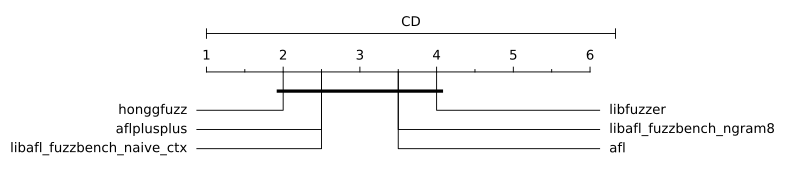
-
Median relative code-coverages on each benchmark
Note: The relative coverage summary table shows the median relative performance of each fuzzer to the experiment maximum. Thus the highest relative performance may not be 100%.
trial_relative_coverage = trial_coverage / experiment_max_coverage
libafl_fuzzbench_ngram8 honggfuzz libafl_fuzzbench_naive_ctx aflplusplus afl libfuzzer FuzzerMedian 99.00 94.00 94.00 93.00 89.00 87.00 FuzzerMean 99.00 94.00 94.00 93.00 89.00 87.00 brotli_decode_fuzzer 99.00 nan 99.00 nan nan nan libaom_av1_dec_fuzzer nan 94.00 89.00 93.00 89.00 87.00 - Fuzzers are sorted by "FuzzerMean" (average median relative coverage), highest on the left.
- Green background = highest relative median coverage.
- Blue gradient background = greater than 95% relative median coverage.
brotli_decode_fuzzer summary
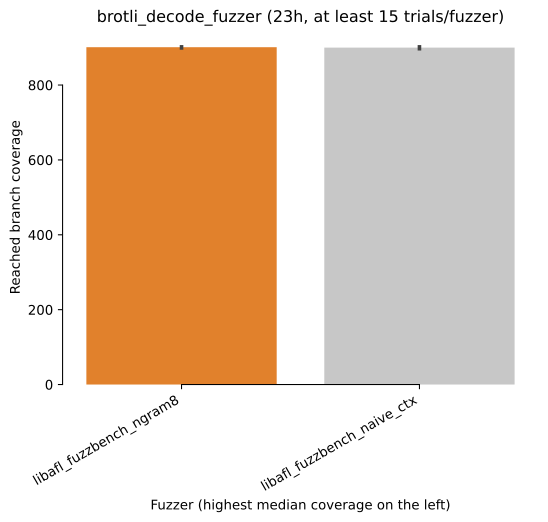
Ranking by median reached code coverage
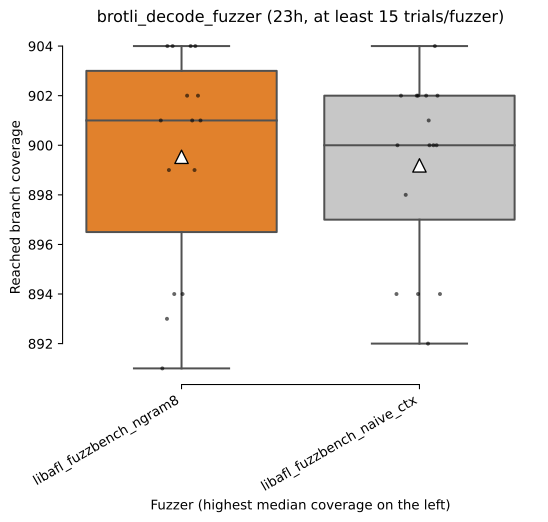
Reached code coverage distribution
Mean code coverage growth over time
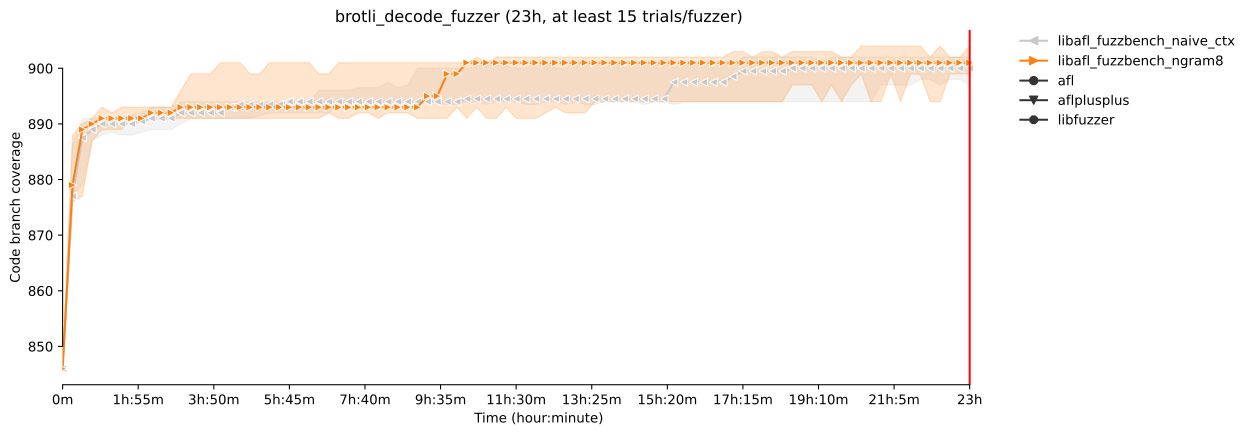
Mean code coverage growth over time
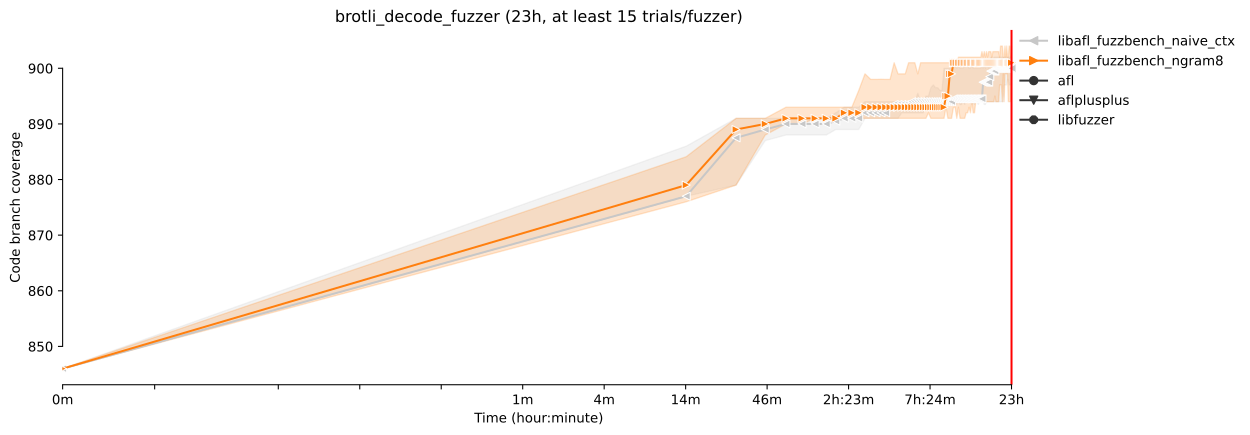
* The error bands show the 95% confidence interval
around the mean code coverage.
-
Sample statistics and statistical significance (code coverage)
Code coverage sample statistics
count mean std min 25% median 75% max fuzzer time libafl_fuzzbench_ngram8 82800 15.0 899.533333 4.437932 891.0 896.5 901.0 903.0 904.0 libafl_fuzzbench_naive_ctx 82800 16.0 899.187500 3.673668 892.0 897.0 900.0 902.0 904.0
Vargha-Delaney A12 measure
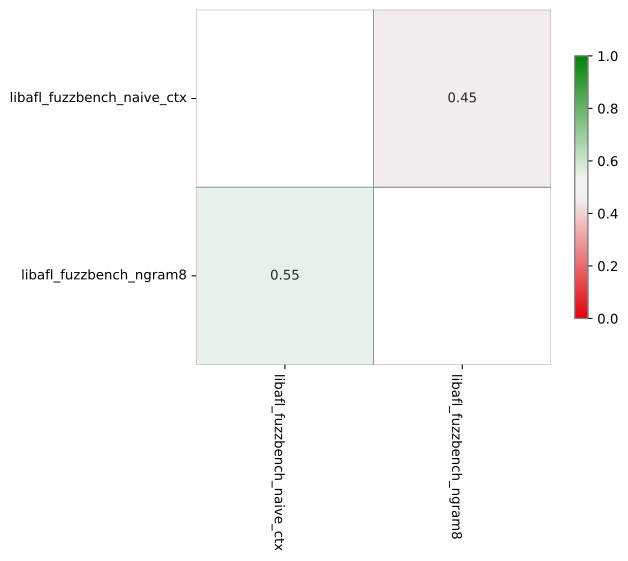 The table summarizes the A12 values from the
pairwise Vargha-Delaney A measure of effect size.
Green cells indicate the probability the fuzzer in the
row will outperform the fuzzer in the column.
The table summarizes the A12 values from the
pairwise Vargha-Delaney A measure of effect size.
Green cells indicate the probability the fuzzer in the
row will outperform the fuzzer in the column.
Mann-Whitney U test
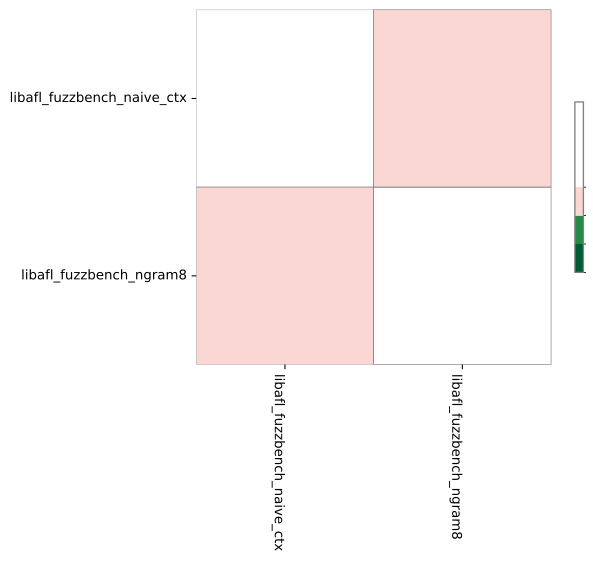 The table summarizes the p values of
pairwise Mann-Whitney U tests.
Green cells indicate that the reached
coverage distribution of a given fuzzer pair
is significantly different.
The table summarizes the p values of
pairwise Mann-Whitney U tests.
Green cells indicate that the reached
coverage distribution of a given fuzzer pair
is significantly different.
-
Unique code coverage plots
Ranking by unique code branches covered
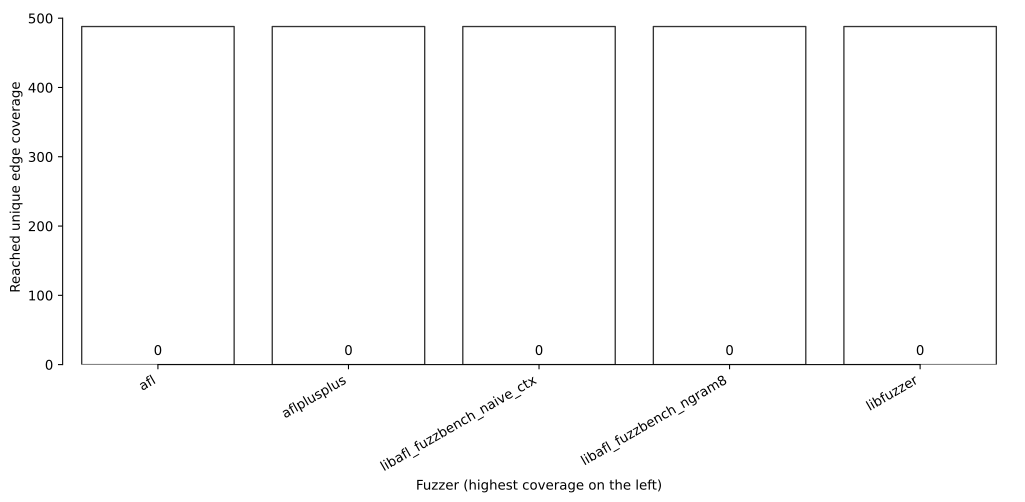 Each bar shows the total number of code branches found by a given fuzzer.
The colored area shows the number of unique code branches
(i.e., branches that were not covered by any other fuzzers).
Each bar shows the total number of code branches found by a given fuzzer.
The colored area shows the number of unique code branches
(i.e., branches that were not covered by any other fuzzers).
Pairwise unique code coverage
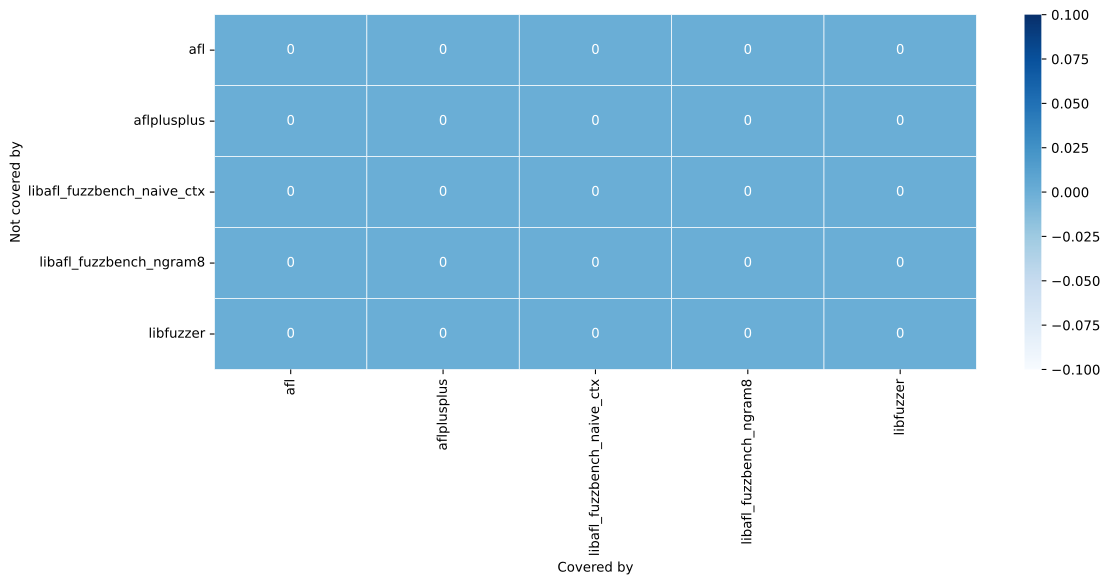 Each cell represents the number of code branches covered by the fuzzer
of the column but not by the fuzzer of the row
Each cell represents the number of code branches covered by the fuzzer
of the column but not by the fuzzer of the row
-
Code coverage reports for each fuzzer on this benchmark
libaom_av1_dec_fuzzer summary
Ranking by median reached code coverage
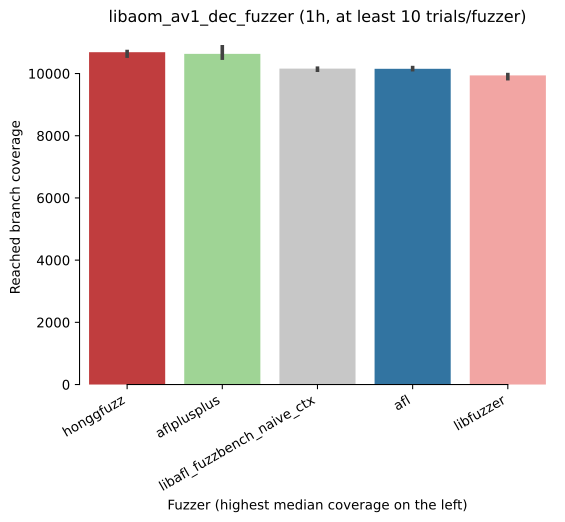
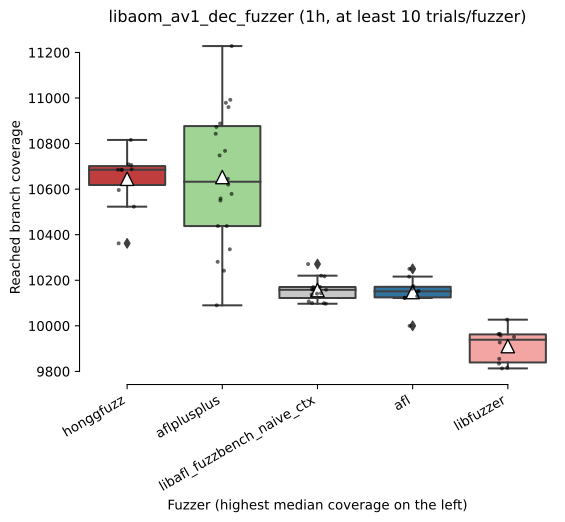
Reached code coverage distribution
Mean code coverage growth over time
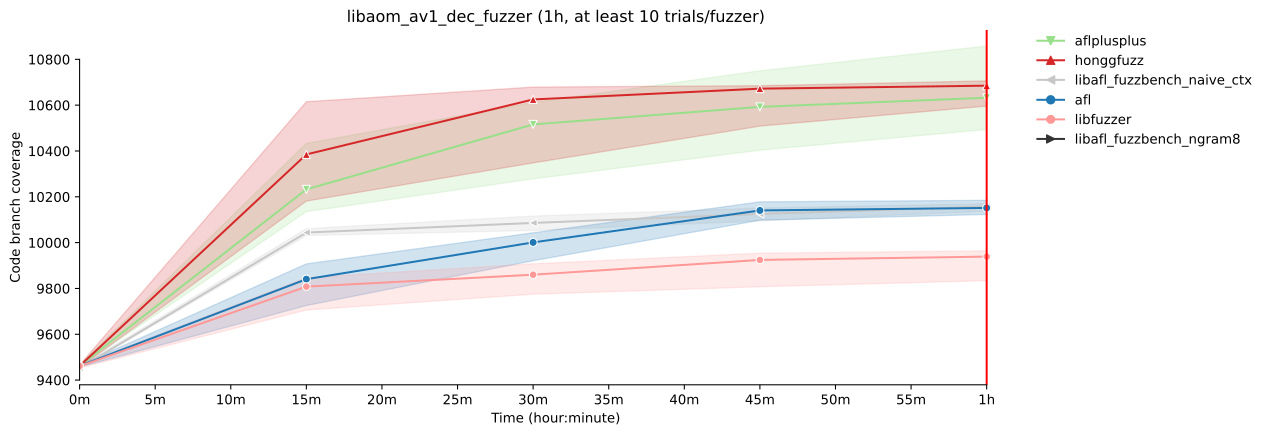
Mean code coverage growth over time
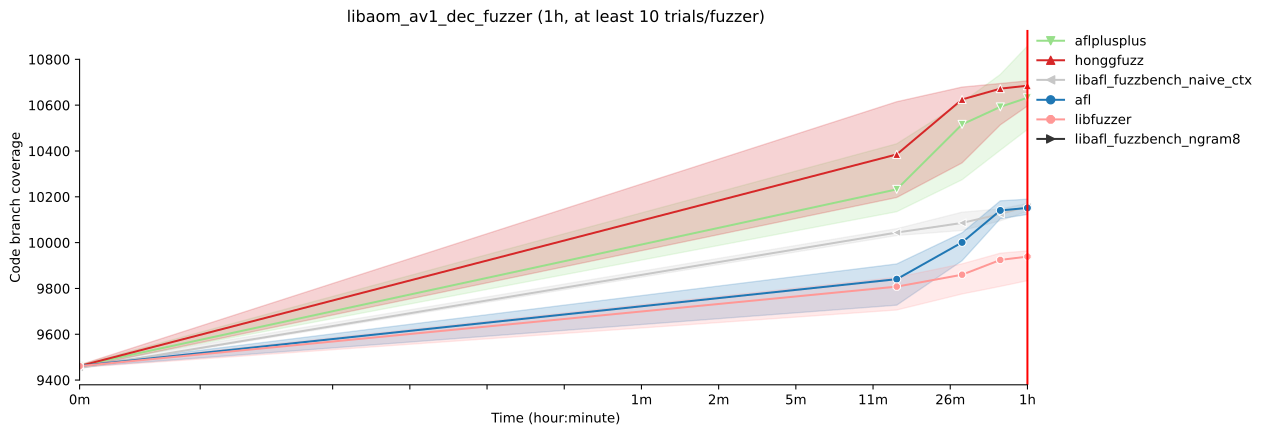
* The error bands show the 95% confidence interval
around the mean code coverage.
error
The following fuzzers do not have enough samples:
libafl_fuzzbench_naive_ctx, afl, honggfuzz, libfuzzer.
-
Sample statistics and statistical significance (code coverage)
Code coverage sample statistics
count mean std min 25% median 75% max fuzzer time honggfuzz 3600 10.0 10645.400000 125.164070 10362.0 10618.25 10685.0 10701.25 10816.0 aflplusplus 3600 20.0 10652.850000 294.808819 10090.0 10438.00 10632.5 10876.75 11228.0 libafl_fuzzbench_naive_ctx 3600 15.0 10156.666667 49.646848 10097.0 10122.00 10158.0 10170.50 10271.0 afl 3600 10.0 10148.100000 66.237703 10000.0 10124.75 10151.5 10171.25 10250.0 libfuzzer 3600 10.0 9910.900000 75.164191 9813.0 9839.25 9939.0 9962.25 10027.0
Vargha-Delaney A12 measure
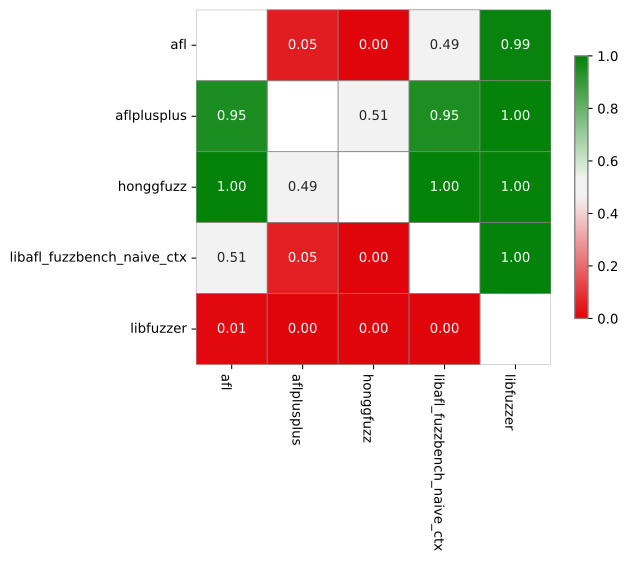 The table summarizes the A12 values from the
pairwise Vargha-Delaney A measure of effect size.
Green cells indicate the probability the fuzzer in the
row will outperform the fuzzer in the column.
The table summarizes the A12 values from the
pairwise Vargha-Delaney A measure of effect size.
Green cells indicate the probability the fuzzer in the
row will outperform the fuzzer in the column.
Mann-Whitney U test
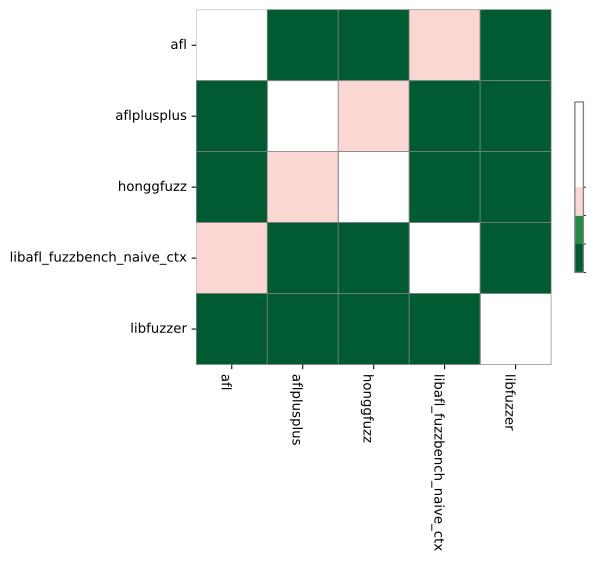 The table summarizes the p values of
pairwise Mann-Whitney U tests.
Green cells indicate that the reached
coverage distribution of a given fuzzer pair
is significantly different.
The table summarizes the p values of
pairwise Mann-Whitney U tests.
Green cells indicate that the reached
coverage distribution of a given fuzzer pair
is significantly different.
-
Unique code coverage plots
Ranking by unique code branches covered
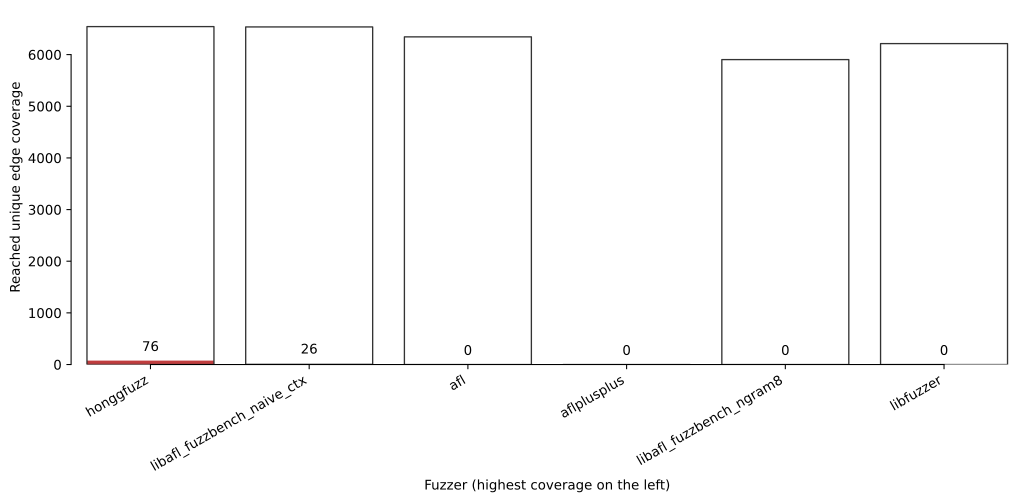 Each bar shows the total number of code branches found by a given fuzzer.
The colored area shows the number of unique code branches
(i.e., branches that were not covered by any other fuzzers).
Each bar shows the total number of code branches found by a given fuzzer.
The colored area shows the number of unique code branches
(i.e., branches that were not covered by any other fuzzers).
Pairwise unique code coverage
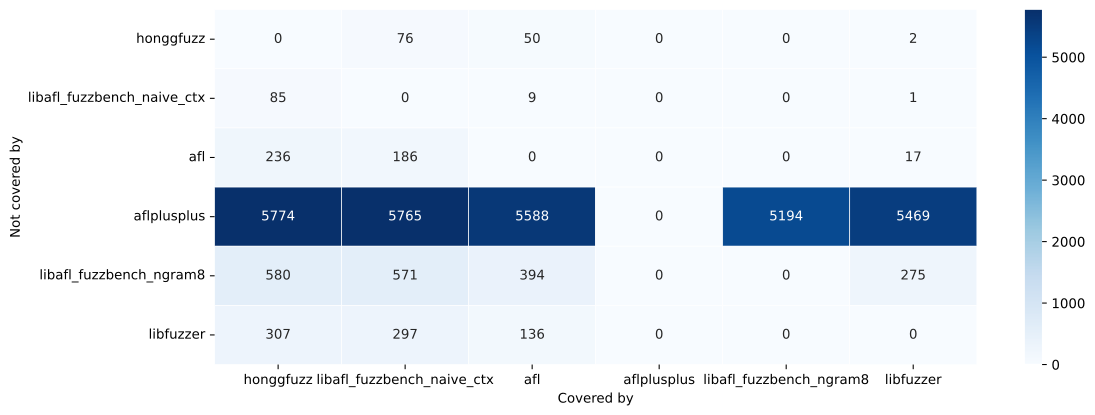 Each cell represents the number of code branches covered by the fuzzer
of the column but not by the fuzzer of the row
Each cell represents the number of code branches covered by the fuzzer
of the column but not by the fuzzer of the row
-
Code coverage reports for each fuzzer on this benchmark
experiment data
You can download the raw data for this report here.Check out the documentation on how to create customized reports using this data. Also see some example Colab notebooks for doing custom analysis on the data here.
Experiment Description:
(None,)