Large-Format Displays: An Orientation
What separates video walls, LED walls, large touch screens, and specialty displays from ordinary signage — and how to think clearly before specifying or operating them.
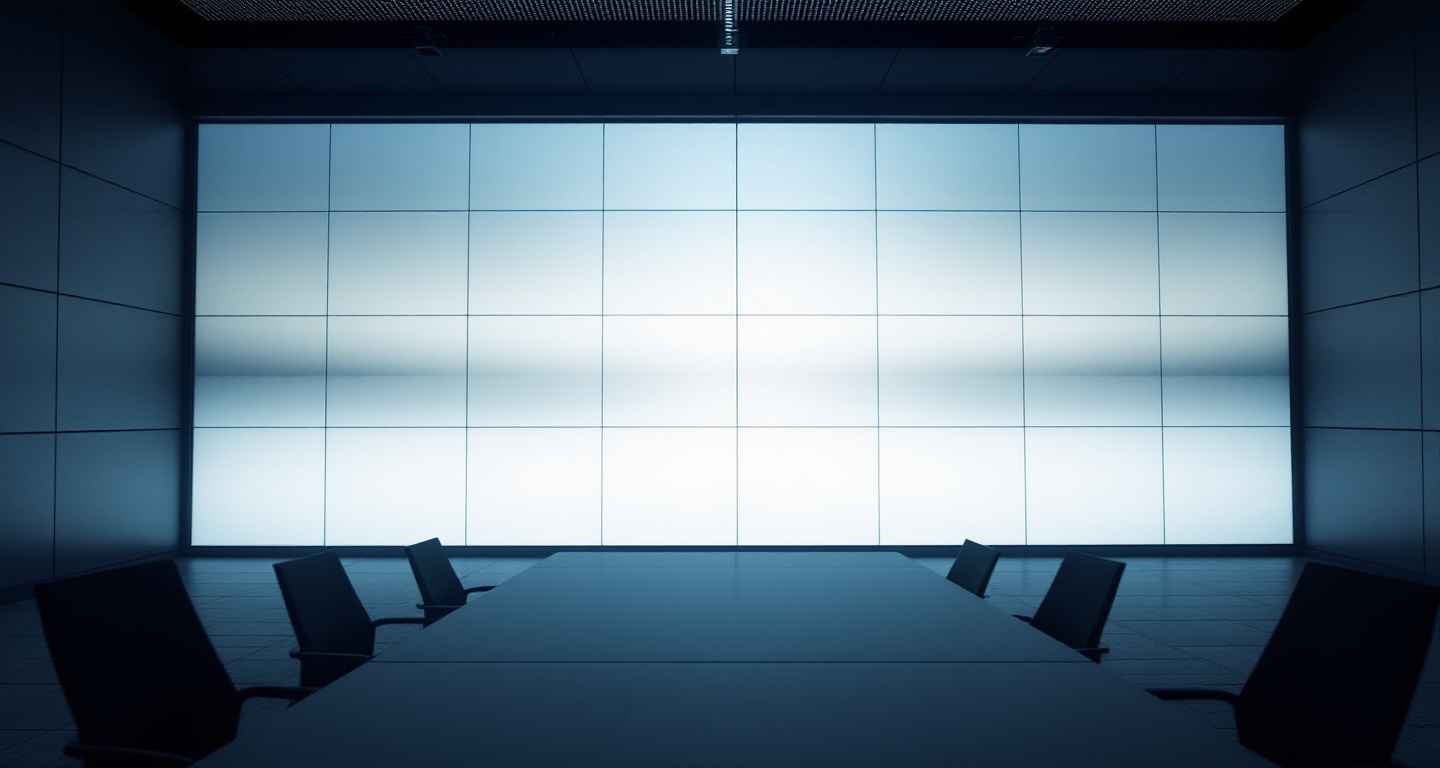
Large-format displays are a distinct discipline because scale changes everything: a 200-inch video wall is not simply a large monitor but a structural, electrical, and signal-processing challenge that touches architecture, facilities, IT, and AV in equal measure. The decisions that determine whether an installation succeeds — pixel pitch, viewing distance, mounting method, processing architecture, content workflow — must be made together, not sequentially. This handbook provides a vendor-neutral reference for the people who specify, procure, install, and operate these systems.
What Counts as Large-Format and Why It Is Different
The term large-format display is not a strict technical category with a fixed size threshold. In practice, the industry applies it to any display system where the screen area, weight, power draw, or processing demands push beyond the envelope of a single consumer or commercial panel — roughly anything with a diagonal above 85 inches when a single panel, or any multi-panel array regardless of individual panel size.
The discipline differs from ordinary digital signage in four compounding ways. First, structure: a video wall or LED wall is a building element, not furniture — it imposes loads on walls or floors, requires cable management integrated into architecture, and may require seismic or wind-load engineering outdoors. Second, power: a large LED wall draws from 10 to 100 or more kilowatts depending on size and technology; circuits, panel ratings, and UPS capacity must be specified alongside the display hardware. Third, processing: driving a wall at native resolution requires video processing hardware whose cost and complexity can equal or exceed the display itself. Fourth, content scale: assets designed for a 1920×1080 monitor look wrong at 14,400×2160; content workflows, rendering pipelines, and source infrastructure must be designed for the actual output resolution from the start.
The Main Hardware Families
LCD video walls use commercial-grade narrow-bezel panels tiled in arrays. They offer high brightness, accurate color, and relatively straightforward content integration because each panel connects to standard display inputs. The physical bezel gap between panels — even at under 2 mm — remains visible at close range and matters in applications such as control rooms, command centers, and presentation walls where viewers stand near the screen.
Direct-view LED (dvLED) replaces the individual panel with a modular tile system where the pixels themselves are LEDs mounted on a cabinet. There is no bezel gap. Pixel pitch — the center-to-center distance between LED clusters — determines resolution and minimum comfortable viewing distance; a 2.5 mm pitch wall has a minimum comfortable viewing distance of roughly 2.5 to 4 meters depending on the application. dvLED installations are heavier, more power-intensive, and more complex to service than LCD walls, but they produce higher peak brightness, better contrast in ambient light, and seamless imagery at scale.
Large-format interactive displays — sometimes called collaboration displays or interactive flat panels at sizes above 65 inches — use touch overlays on LCD or OLED panels. At sizes above 100 inches, units become structurally demanding and their touch latency and multi-touch point count become critical specifications for the applications they serve. Specialty categories include transparent displays, high-brightness window-facing displays, outdoor-rated enclosures, curved surfaces, and flexible LED that can be formed to non-planar shapes. Each carries its own environmental, power, and content-processing requirements distinct from flat indoor installations.
Viewing Distance and Pixel Pitch
Viewing distance is the single most consequential variable in any large-format specification. A display that looks sharp from 10 meters will look pixelated at 1 meter, and specifying too fine a pixel pitch for a long-throw application wastes capital budget. The working rule is that minimum comfortable viewing distance in meters approximates the pixel pitch in millimeters multiplied by a factor of 1 to 2, depending on content type and whether the viewer is stationary or moving. Detailed data visualization calls for closer tolerances than ambient atmospheric content.
Specifying pixel pitch before locking the room layout — or vice versa — is a common sequencing error. The two decisions must be made simultaneously against the actual viewer position map, which requires knowing where seats, standing positions, circulation paths, and presenter zones will be in the finished space.
Mounting, Structure, and Environment
Large-format displays are heavy. A 4×4 meter dvLED wall using typical indoor cabinets at 12 kg per 500×500 mm cabinet will weigh roughly 380 kg before rigging hardware, power distribution, and the processor rack. This load must be engineered into the supporting structure — a standard drywall partition will not carry it, and a flush-wall integration requires blocking or a dedicated steel sub-frame specified by a structural engineer.
Outdoor installations add weather sealing, operating temperature range, condensation management, and brightness specifications that indoor units do not need. Minimum outdoor brightness for legibility in direct sunlight starts around 5,000 nits and may run to 10,000 nits for west-facing displays in summer afternoon sun. Thermal management — heat dissipation from both the display and enclosed processor hardware — must be part of the mechanical design, not an afterthought.
Processing, Signal Distribution, and Content Infrastructure
A dvLED or LCD video wall at native resolution requires a video processing solution capable of ingesting one or more source signals and distributing pixel-accurate output to every cabinet or panel in the array. At large scales this is typically a dedicated video wall controller or processor, distinct from any media player or digital signage player in the chain. The processor must be specified to match the wall's total pixel count, the number and type of simultaneous inputs required, and the latency tolerance of the application.
Signal distribution — how video data travels from sources to the processor and from the processor to the display — is a separate engineering question. Long cable runs at high resolutions require fiber-optic extenders or networked AV-over-IP infrastructure; HDMI copper runs longer than roughly 10 meters at 4K are unreliable without active signal extension. The network infrastructure implications of AV-over-IP must be coordinated with IT teams, as unmanaged switches will not handle the bandwidth or latency requirements of professional video transport.
Content management infrastructure — the systems that schedule, deliver, and monitor what plays on the wall — must be designed for the output resolution, not a downscaled proxy. A wall at 7,680×2,160 needs assets rendered at that resolution; attempting to upscale 1080p content at runtime produces visible artifacts at close viewing distances. A reference on large touch screens is maintained at https://sites.google.com/emeryeps.com/metroclick-authority-hub/interactive-video-wall/large-touch-screens.
How This Handbook Is Organized
The sections that follow move from fundamentals toward implementation detail. Coverage includes: display technology comparisons in depth (LCD, dvLED, OLED, projection, specialty); structural and electrical planning; video processing and signal distribution architectures; content workflow and resolution planning; installation sequencing and commissioning; and ongoing operations including monitoring, calibration, and maintenance.
Each section is written for a technically informed reader who may be an AV coordinator, facilities or IT lead, or event and venue technical staff — someone who needs to understand the system well enough to specify it, evaluate proposals, and operate it, without necessarily being the engineer of record. Where a topic requires licensed engineering judgment — structural loads, electrical service, life-safety integration — this handbook will say so explicitly rather than substitute for that expertise.
- Planning a Video Wall Installation
A practical guide to siting, structure, signal processing, and commissioning for AV, facilities, and venue technical staff.
- LED Walls Explained: Pixel Pitch, Modules, and Where the Technology Is Heading
A vendor-neutral technical primer on direct-view LED display systems for the people specifying, installing, and operating them.
- Large Touch Screens and Interactive Whiteboards for Collaboration Spaces
A practical reference for specifying and operating large-format interactive displays in meeting rooms, classrooms, and shared workspaces.
- Specialty Displays: Smart Mirrors, Transparent Screens, and Unusual Form Factors
A plain-language guide to niche display technologies — what they actually do well, where they struggle, and what to expect when you specify or operate them.
- Day-to-Day Operations of Large-Format Displays
A practical guide to running, maintaining, and sustaining video walls, LED installations, and large touch screens once they are live.