
Read a granted patent from the beginning and the experience is oddly reassuring. There is a summary of the field, an account of the problem, a description of how the invention solves it, and a set of drawings with numbered parts. Then, at the very end, come a dozen or so long, strangely punctuated sentences that appear to restate what has already been said. Those sentences are the patent. Everything before them is context.
This is the single most consequential misunderstanding in the field. An inventor who believes the description defines the protection will consistently over-estimate what they own — and will be genuinely surprised when a competitor's near-identical product turns out to be entirely lawful.
The Instrument
A Negative Right, Not a Licence to Build
A patent confers the right to exclude others from making, using, selling or importing what the claims define. It does not confer the right to make anything. Those are different powers, and the gap between them catches people out.
An improvement to an existing patented machine is a good illustration. The improvement may be perfectly patentable in its own right, and the improver may hold a valid patent on it — while still being unable to manufacture the improved machine, because doing so would infringe the underlying patent that the improvement sits on top of. Both parties hold real rights; neither can proceed alone. This is exactly the situation cross-licensing exists to resolve, and a broader account of what a patent is makes the exclusionary character of the right clearer than most summaries manage.

The Claims
Every Word Is a Limitation
Claims are read as strict conjunctions. To infringe an independent claim, an accused product must contain every element it recites. Miss one, and there is no infringement of that claim — however close the product is in spirit, however obviously it was copied.
The consequence is counter-intuitive but absolute: each additional word in a claim makes it easier to design around. "A fastener" covers more ground than "a threaded steel fastener", which covers more than "a threaded stainless steel fastener of hexagonal head profile". Inventors, understandably proud of the specifics, tend to push toward detail. Attorneys push the other way, because the broadest claim that survives the prior art is the most valuable one on the page.
Hence the layered structure of a claim set. Claim 1 is written as broadly as the art allows. Dependent claims add limitations in stages, each one a fallback position: if the broadest claim is invalidated during examination or litigation, the narrower ones may still stand. A claim set is designed to be partially destroyed and remain useful.
Every word added to a claim is a word a competitor can build around. Breadth is not vagueness — it is the whole objective.
Why attorneys resist detail
The Boundaries
What Falls Outside the System Entirely
Some things cannot be claimed at all. Abstract ideas, laws of nature and natural phenomena are excluded as such, which is why a mathematical relationship is unpatentable while a specific technical application of it may not be. Printed matter, purely aesthetic creations and anything lacking a practical use fall outside as well — appearance is the province of design filings, and expression belongs to copyright.
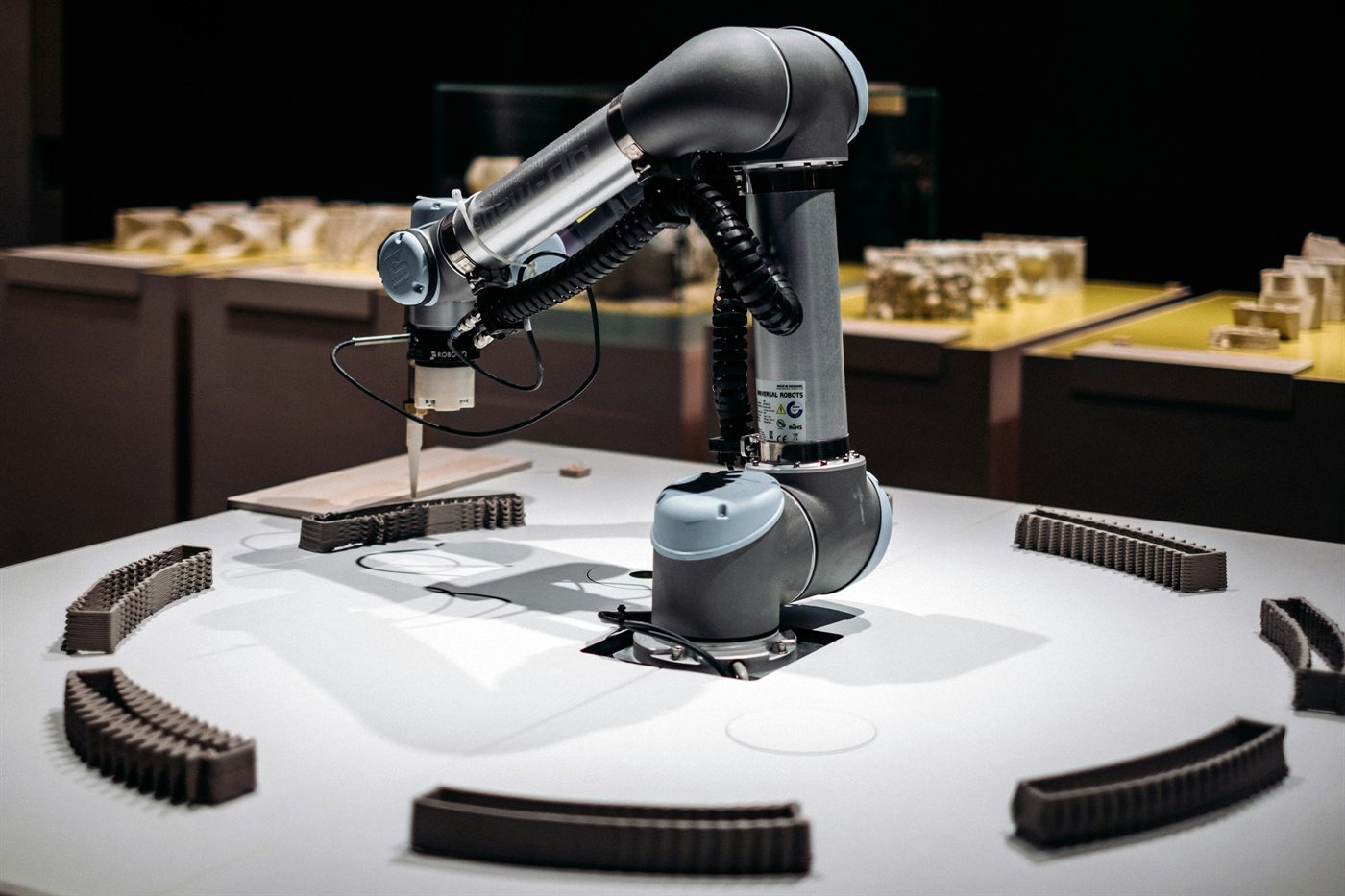
There is also a category of technical subject matter that could be patented but arguably should not be. A patent is a bargain: twenty years of exclusivity in exchange for full public disclosure. Publication is not a side effect; it is the consideration. For an invention that cannot be reverse-engineered from the product — a manufacturing process, a formulation — trade secrecy may protect it indefinitely, where a patent would hand the method to every competitor on the day it publishes and again, permanently, on the day it expires. Fields where the underlying technique is invisible in the finished object, from inventor-led design in architecture to industrial chemistry, make this trade-off unusually stark.
The Territory
Rights Stop at the Border, and at the Renewal Date
Patents are national. A patent restrains conduct only within the territory that granted it; manufacture in a territory where no equivalent patent was obtained is lawful, and the only remedy is to stop the goods at import. Deciding which territories to file in is a commercial calculation about where a product will actually be made and sold, not a completeness exercise.
They also lapse. Maintenance fees fall due at set intervals, and a missed payment ends the right. A meaningful proportion of granted patents are abandoned this way, usually because the product never found a market and the holder concluded — often correctly — that the renewal was not worth paying.
What survives all of this is narrower than most inventors expect and more durable than they fear. A well-drafted claim set is a boundary drawn deliberately: wide enough that a competitor cannot step around it with a trivial substitution, specific enough to have survived an examiner. Getting that boundary right is the substance of the work — and it starts long before the application is written, in the record-keeping and searching that make up the earlier stages of turning an idea into a filed application. The wider culture of invention, from science fiction to consumer products, keeps returning to the same theme: the story people tell is about the idea, while the value sits in the paperwork. Discussions of how speculative fiction has inspired real inventors make the contrast plain enough.
End of report