
For the first time in Kyrgyzstan, a social media user has been convicted for sharing content produced by a media outlet whose work has been declared extremist by a Kyrgyz court. Baktybek Moldaliev was sentenced to three years in prison for reposting a Kloop video.

Baktybek Moldaliev, a 48-year-old family man, spent his days working long hours at a construction site in Bishkek, mostly laying bricks. When he returned home, he would read the news online and write posts on Facebook.
“In the posts I expressed my personal views on political and social issues in the Kyrgyz Republic, particularly about rising prices, unemployment and corruption,” Moldaliev told police on May 8, 2026, when he was questioned as a witness.
The day before, investigator S. Taalaibek uulu had reviewed posts on Moldaliev’s Facebook account published between April 29 and May 8. By midday on May 8, he opened a criminal case on charges of calling for mass unrest

Just four hours after being questioned as a witness, Moldaliev became a suspect and was soon charged. He spent the next six months in pretrial detention. On November 11, Judge Baktyyar Alibaev found him guilty of distributing extremist materials for reposting a Kloop video and sentenced him to three years in prison.
One Charge Or Another
At the time of Moldaliev’s arrest, the investigator had only a collection of screenshots of Facebook posts and the conviction that the defendant’s posts could “pose a threat to public safety and are systematically aimed at undermining the authority of government institutions and negatively affecting the country’s stable socio-political environment.”
And investigator Taalaibek uulu took issue not only with Moldaliev’s posts themselves, but also the comments they attracted.
“Various provocative opinions, comments calling for unlawful actions, and statements capable of inciting violations of public order are regularly posted in response to the publications of this account,” Taalaibek uulu wrote in the order opening the criminal investigation.
“The materials published by B. K. Moldaliev were actively discussed by social media users. Some of the comments also contained statements that could lead to violations of public order, increase negative attitudes toward government authorities, and distortion of public opinion,” the investigator wrote in the order formally charging Moldaliev.
On May 11, after Moldaliev had already been placed in pretrial detention, the investigator sent the screenshots for a forensic linguistic examination. Its findings would become the prosecution’s main piece of evidence at trial. The materials were assigned to expert Taalaibek Abdykozhoyev.
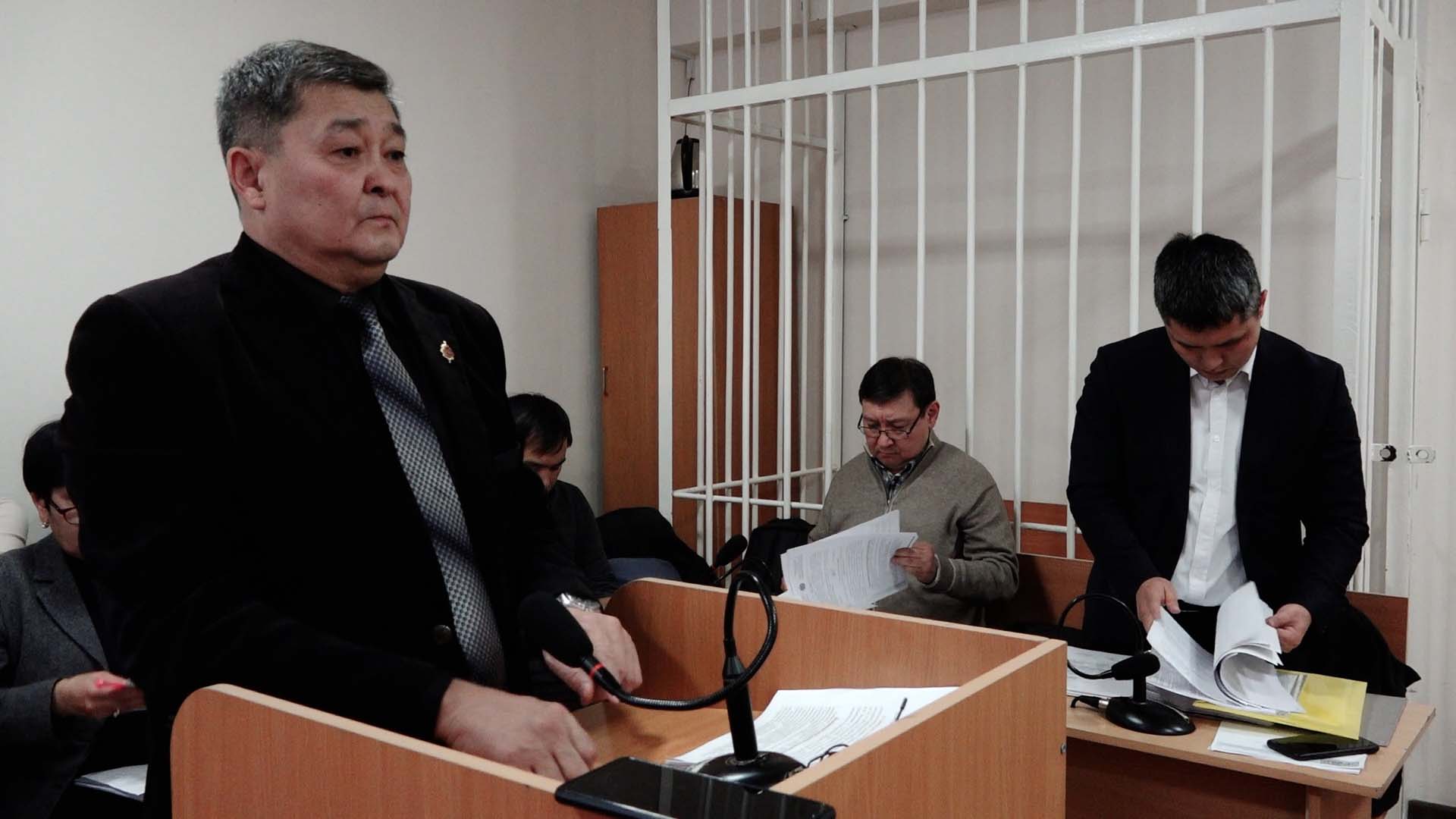
Although Abdykozhoyev found no calls for massive unrest or statements advocating the violent overthrow of the constitutional order in Moldaliev’s posts, the criminal case was not dropped, and Moldaliev was not released from detention.
Instead, the investigator reclassified the charges from “Mass Riots” to “Distribution of Extremist Materials” and kept the case going.
The reason lies in the fact that when investigator Taalaibek uulu initially submitted the materials for examination, he asked the expert, among other things, whether Moldaliev’s posts showed signs of the distribution of extremist materials. Abdykozhoyev’s answer was positive.
Although the expert was provided with eight pages of screenshots of Moldaliev’s posts, his report examines in detail only two of them. One of these — a repost of a Kloop video — receives particular scrutiny.
The analytical section of the report spans just two pages, one of which is devoted entirely to the repost of Kloop’s material. The other page covers all of Moldaliev’s remaining posts.
Abdykozhoyev pays particular attention to the text accompanying Kloop’s video, which is visible in Moldaliev’s repost. It includes a disclaimer that the outlet began adding to its publications after a Kyrgyz court declared its materials extremist: “Liking, commenting on and sharing Kloop videos can be dangerous. But you can still watch them.”
“The author [Moldaliev] seemingly warns of the danger, but at the same time, through manipulation, provides information that encourages recipients to watch video materials of Kloop media portal,” Abdykozhoyev writes in his report.
The disclaimer was not part of Moldaliev’s publication. It appeared in the post only as the caption Kloop added to its video and was in the third paragraph of the video’s description.
In his analysis, Abdykozhoyev relies on a ruling by Bishkek District Court, which declared Kloop’s materials extremist. The charges against the outlet were also based on an expert’s report written by Abdykozhoyev.
Beyond The Expert’s Competence
According to human rights activist Rita Karasartova, who attended hearings in Moldaliev’s case, the investigator’s question to the linguistic expert — whether Moldaliev’s posts showed signs of distributing extremist materials — was improperly framed.
“A linguistic expert had no right to answer a legal question. If the police officers formulated the question incorrectly, the expert Taalaibek Abdykozhoyev, unable to go beyond the scope of the assignment, produced an opinion on a legal matter. If he would have said that he could provide an opinion on a linguistic question but was not qualified to answer a legal one, he would have demonstrated his competence,” she wrote on Facebook.
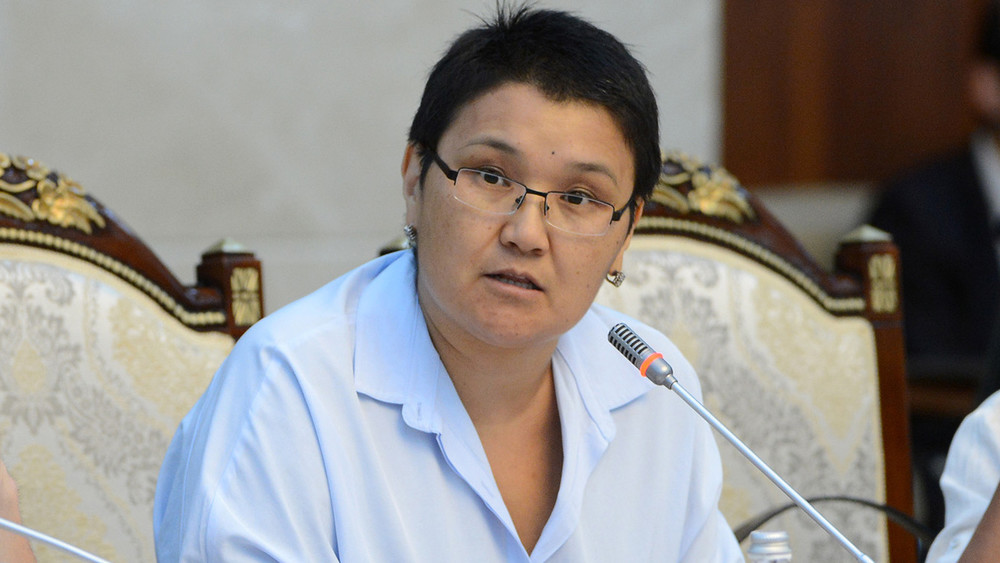
Karasartova believes the court should not have relied solely on the expert’s opinion when reaching its verdict.
“The court made its ruling based on the linguistic expert’s opinion. There is no other evidence. Yet the expert examination is not evidence,” she wrote.
For years, the authorities have used expert assessments as a tool to prosecute their critics. Abdykozhoyev’s reports have already served as key evidence in criminal cases against independent journalists and various activists. His assessments have been used in cases involving journalists from Temirov Live and Ait Ait Dese, Kloop, and April, as well as in the case of Kanyshai Mamyrkulova, and others. And now his assessment has also become a key part of the case against Moldaliev.
Who Made The Repost?
“Bakyt told the court that he knew the websites had been declared extremist and therefore would not have shared their materials. He also said that his phones had been in the hands of the police from the very beginning,” his wife, Elvira Zhusupova, told Radio Azattyk in an interview.
According to the criminal case file, Moldaliev was first summoned to the police for questioning in November 2025. The reason was again his Facebook posts, in which, according to Moldaliev, he “expressed his personal views on political and social issues in the Kyrgyz Republic, including rising prices, unemployment and corruption.”

Police searched his apartment and seized the phone he was using at the time. After questioning by the police officers, Moldaliev was released. But, according to Zhusupova, the phone was never returned. It is not known whether Moldaliev had logged out of his Facebook account on that device.
“When we later asked for it back, they [the police] refused, saying it was ‘evidence.’ I also have a letter from the investigator,” his wife said.
At the interrogation by the investigator, on May 8, Moldaliev said that after leaving the police following the November 2025 questioning, he had regained access to his Facebook account using another phone.
“After I was previously summoned for questioning, they spoke with me and explained that I was not allowed to express critical opinions about the authorities. I agreed, restored my Facebook account and continued expressing only my views,” Moldaliev told the investigator, describing his earlier conversation with law enforcement officers about his social media posts.
The repost of Kloop’s publication for which Moldaliev was convicted was made on April 29, 2026 — after police had already seized his first phone. His wife suspects that the repost of the outlet’s video may not have been made by her husband, but by police officers who could have had access to the phone seized in November 2025.
“In September this year, we noticed that Baktybek, who was in the pretrial detention centre, had ‘left’ our family chat. This suggests that investigators are still accessing his accounts from the phone, even though the investigation has already been completed. Bakyt also raised this issue in court. He expressed concern that the police or other people could have posted material from his accounts in his name to frame him,” Moldaliev’s wife told Radio Azattyk.
Moldaliev pleaded not guilty at trial and plans to appeal the verdict.
“Corrupt officials who have plundered state funds, taken bribes and betrayed the people’s trust end up escaping punishment and walking free after being detained. Yet I, who wrote criticism of them, have been branded a criminal and am sitting behind the bars. We have reached the peak of injustice,” Moldaliev wrote in a letter from pretrial detention while awaiting the verdict.
The Beginning of a New Wave of Repression
Since President Sadyr Japarov came to power in 2020, the authorities have increasingly targeted independent media outlets and activists critical of the government, bringing criminal cases against them, often on allegations of calling for mass unrest.
In October 2025, Kyrgyzstan for the first time declared media outlets’ materials extremist. The ruling affected Kloop, Temirov Live and Ait Ait Dese. Later, the activities of the opposition movement Shumkar were also declared extremist. Its members criticize the authorities during their YouTube livestreams.

The verdict against Moldaliev also set a precedent: no one in Kyrgyzstan had previously been prosecuted for reposting material produced by media outlets whose work had been declared extremist.
“First Bolot Temirov and Kloop, then Shumkar. I wouldn’t rule out that tomorrow I could be declared an extremist too. Now people are being arrested even for liking and reposting publications by these organizations. Are they really going to silence us completely, stripping us of our constitutionally guaranteed freedoms of speech, thought and association? If so, what is the Constitution even for?” human rights activist Rita Karasartova said in an interview with Radio Azattyk.
Leila Nazgul Seiitbek, chairwoman of the human rights organization Freedom for Eurasia, considers Moldaliev’s sentence a new stage in the repression taking place in Kyrgyzstan.

“Until now, the authorities have targeted those who create content they find inconvenient. Now criminal liability extends to the readers themselves. A man has been sentenced to three years in prison not for something he wrote himself, but for sharing material from an outlet that has spent years exposing corruption,” Nazgul Seiitbek said.
She believes that charges under Article 332, “Production and Distribution of Extremist Materials,” could be used as a substitute for charges of calling for mass unrest, which the Kyrgyz authorities have often used to prosecute their critics.
“Under Article 332, there is no need to prove the content: the court has already done that by declaring the materials extremist, without even listing the specific publications. All that remains is to establish the fact of the repost,” Seiitbek said. “That is why the case began with accusations of ‘calls’ and ended with ‘distribution’: if the first charge does not hold up, the second is almost impossible to challenge.”
Seiitbek believes it is no coincidence that Moldaliev was sentenced shortly before the start of campaigning for the presidential election.
“The aim is not to punish one person, but to intimidate hundreds of thousands of readers ahead of the presidential election in January 2027 and leave them with just one ‘safe’ source of information: the state media,” she said.