Why a Rockwall Roof Leak Should Never Wait Until Morning
A roof leak has bad timing by nature. It shows up during the storm, in the dark, usually as a stain spreading on a ceiling or a drip finding the floor. The temptation is to put a bucket under it and deal with it in the morning. That instinct is what turns a small roof repair in Rockwall into a large one, because the hours between the first drip and the next sunrise are exactly when a leak does its worst work. A roof leak should never wait until morning, and understanding why comes down to where the water goes once it is inside.
Mold Can Start Within 24 to 48 Hours
Once water saturates insulation or drywall, mold growth can begin within 24 to 48 hours in Texas humidity. That short window is why stopping an active roof leak and drying the area quickly matters as much as the eventual repair itself.
A Tarp Buys 60 to 90 Days, Not Forever
A properly installed emergency tarp protects a roof for roughly 60 to 90 days before ultraviolet exposure degrades it. It is a bridge to a permanent repair, not a solution on its own, which is why reputable crews install the tarp and schedule the real fix together.
Water and Electricity Share the Attic
A roof leak often runs into the same attic space as junction boxes, light fixtures, and wiring. Water reaching an electrical junction box or breaker panel is a fire and shock hazard, which is one reason an active leak is treated as an emergency rather than a next-day repair.
What Water Does in the First Few Hours
The drip on the ceiling is the end of the story, not the beginning. By the time water reaches a visible point inside the house, it has already come through a break in the roof surface, soaked into the underlayment, spread across the decking, and traveled along a rafter or a run of insulation until it found a low point to fall from. The stain a homeowner sees is small. The wet area above it, hidden in the attic, is usually much larger. Water does not fall straight down through a roof; it follows the structure, which is why the leak inside is rarely under the hole outside.
That spreading is the danger. A single break can wet a wide section of decking and a long run of insulation in a few hours. Insulation that gets saturated loses its value and holds the water against the drywall and framing. Drywall swells and stains. Framing stays damp. None of this stops on its own while the homeowner sleeps. It keeps spreading as long as the roof is open and the rain is falling, which is why the size of the eventual repair is set largely by how fast the water is stopped.
Rockwall sits in a humid part of Texas, and humidity is what makes a wet attic a mold problem fast. Once water saturates insulation or drywall, mold can begin within 24 to 48 hours. That is not a figure of speech. It means a leak that starts during an evening storm can seed mold in the insulation before the homeowner has even called for a repair. Drying the area quickly is as much a part of emergency roof repair as patching the roof, because a dry patch over a wet attic trades a water problem for a mold one.
This is the practical reason SCR runs a 24/7 line rather than a next-business-day schedule. A leak reported at ten at night and dried in by midnight is a different repair, and a different bill, from the same leak left until a crew can come Tuesday. The water that spreads overnight is water a homeowner pays to remove, in materials and in labor, on top of the roof work itself.
The Hazard Homeowners Do Not See
There is a safety reason an active leak is treated as an emergency, beyond the damage to materials. A roof leak drains into the attic, and the attic is where a home's electrical runs: junction boxes, wiring, recessed light housings, and sometimes the path to the breaker panel. Water reaching an energized junction box or fixture is a shock and fire hazard, not a cosmetic one. A ceiling stain near a light fixture is a reason to keep people away from it and to treat the leak as urgent, not a reason to wait and watch it grow.
When SCR responds to an active leak, part of the first assessment is where the water is tracking relative to the home's electrical, because that can change what is safe to touch and how the dry-in is handled. A homeowner looking at a drip cannot see that risk from the living room. It is one more argument against the bucket-and-wait approach a storm night invites.
What Emergency Roof Repair Actually Involves
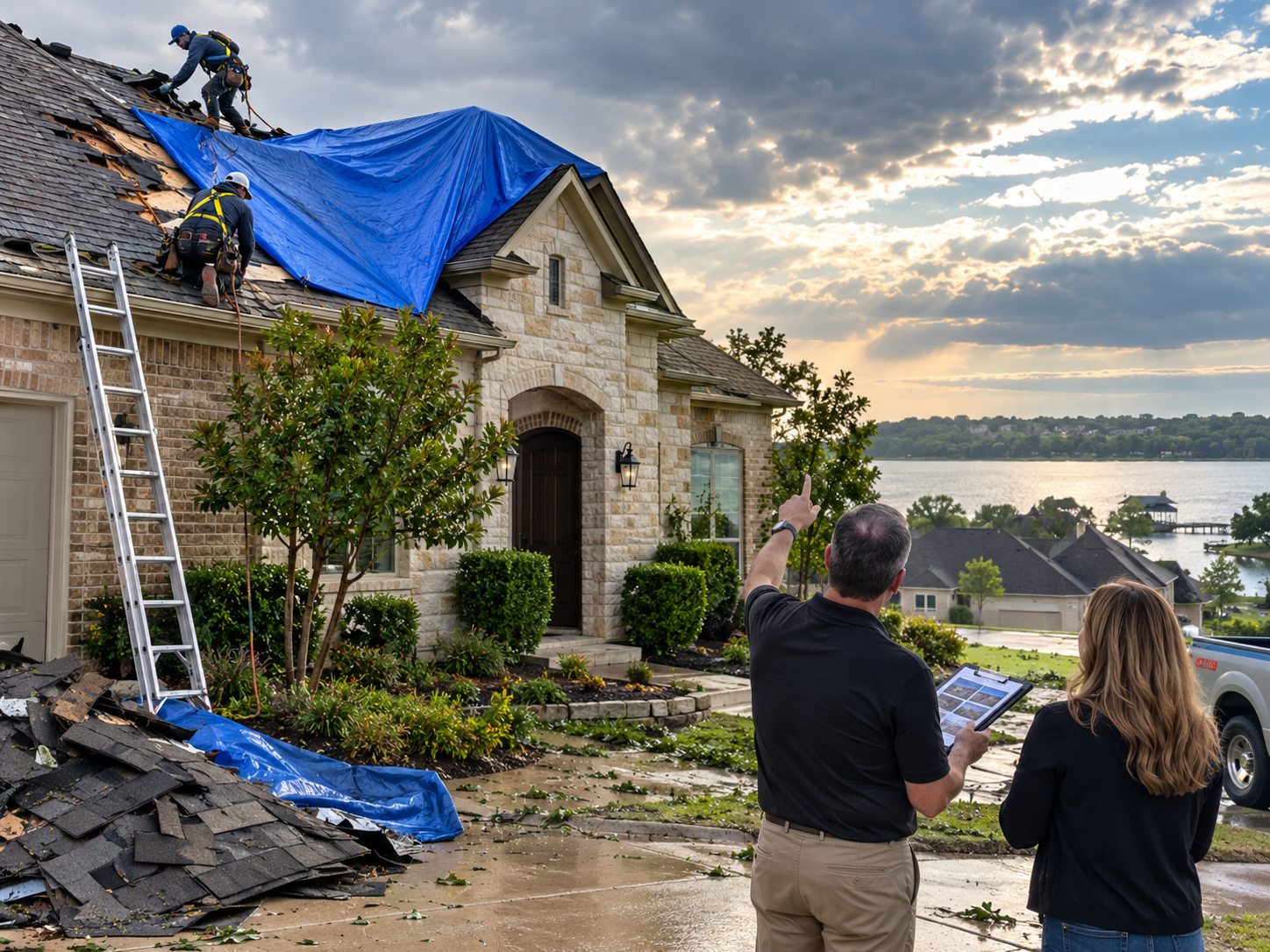
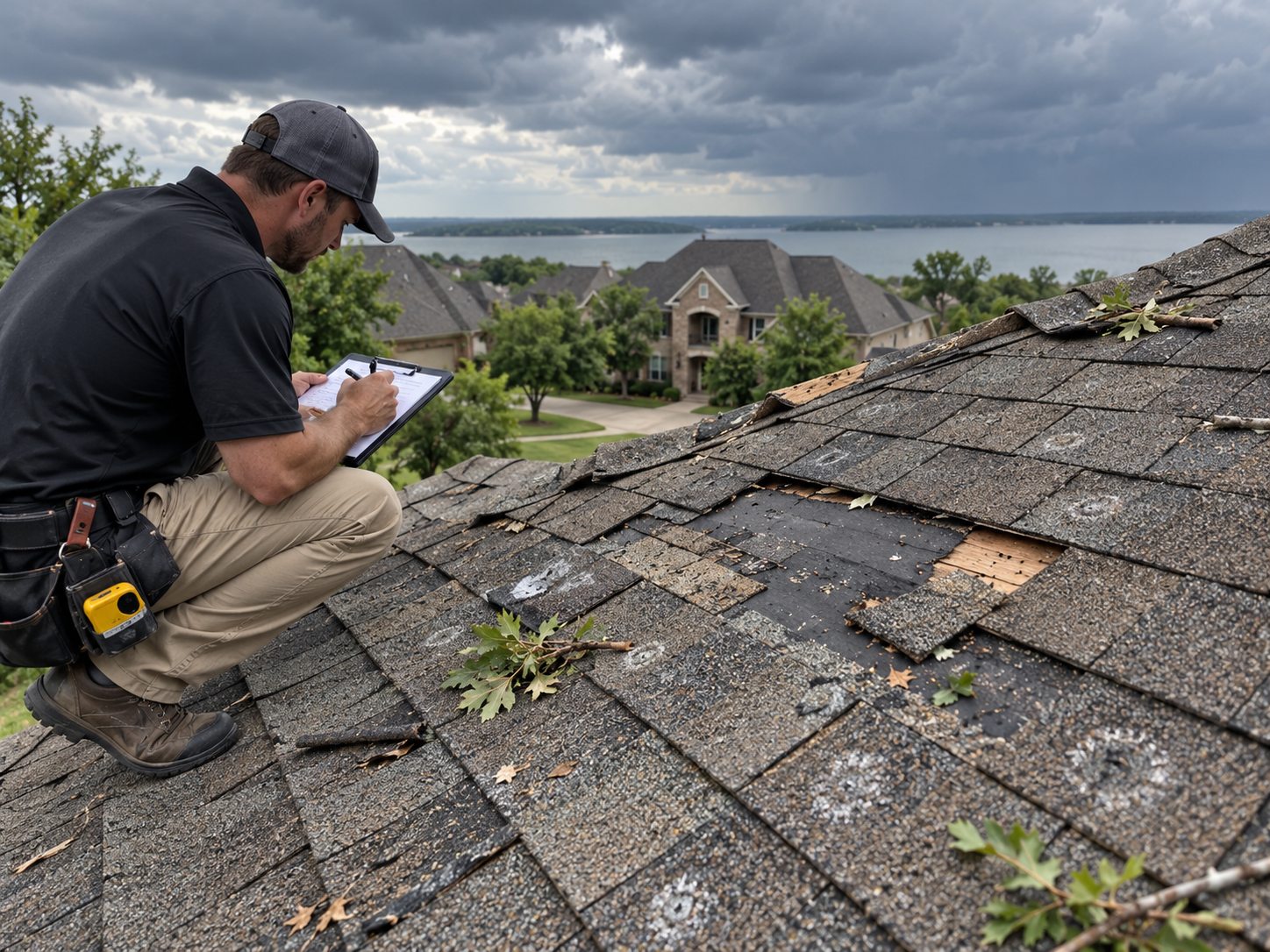
Emergency roof repair in Rockwall is a two-part job: stop the water now, fix the roof right after. The first visit is about control. A heavy-duty tarp goes over the opening, anchored so wind does not take it, creating a temporary dry-in that stops more water from entering. The crew documents the damage with dated photos while they are up there, which matters if the leak came from a storm and a claim is coming. Where the source is a simple break, a temporary repair with roofing cement and replacement shingles can sometimes hold on its own.
The tarp is a bridge, not a destination. A properly installed tarp protects a roof for about 60 to 90 days before the Texas sun degrades it, which is enough time to schedule the permanent repair and, if a storm caused the damage, to let an insurance claim run its course. A crew that installs a tarp and never comes back to do the real work has left the homeowner with a countdown, which is why the tarp and the permanent repair are planned together from the first visit.
What It Costs to Act Fast in Rockwall
Homeowners hesitate on emergency calls partly because they do not know what one costs. In the Texas market the ranges are reasonable relative to the damage they prevent. Emergency tarping generally runs from about $300 to $1,500 depending on the roof's size, pitch, and how hard it is to reach. A small leak repair often falls between $150 and $600. Larger emergency work, where a storm has opened a wide section or decking is involved, can run $1,000 to $5,000. Set against the cost of replacing soaked insulation, stained drywall, and mold-damaged framing, fast action is usually the cheaper path.
When the leak traces to a storm, much of this can fall under an insurance claim, and SCR documents the emergency work in writing so it can be submitted. A homeowner acting at the first drip, rather than after a week of spreading water, also keeps the damage inside the scope a carrier will tie to a single storm event.
The Local Reasons Rockwall Roofs Leak at Night
Rockwall roofs tend to fail during the same spring and fall storms that drive the county's hail and wind. A storm lifts a shingle, cracks a sealant strip, or drops a limb from the mature tree canopy in an older neighborhood, and the leak opens while the rain is still coming down. Lakefront homes along Lake Ray Hubbard take wind that lifts shingles from the edge in. Homes under old trees take the branches. In every case the leak starts at the worst moment, in the dark and in the wet, which is precisely when waiting does the most harm.
That pattern is why a 24/7 emergency line is a service and not a slogan in this county. The storms do not keep business hours, and neither does the water once it is inside.
Stopping the Water in Rockwall
What a Homeowner Can Safely Do Before the Crew Arrives
While a crew is on the way, a Rockwall homeowner can take a few safe steps that limit the damage, none of which involve climbing the roof. Moving furniture and electronics clear of the water, pulling up a rug before it soaks, and placing a container under the drip all protect property. Puncturing a small hole in the center of a bulging, water-filled ceiling bulge, with a bucket underneath, can relieve the pressure and let the water drain in one controlled spot rather than bringing down a whole section of ceiling. Beyond that, the roof itself waits for people with fall protection.
The one place caution matters most is electricity. If water is tracking near a light fixture, a ceiling fan, or an outlet, keeping clear and shutting that circuit off at the breaker is the careful move, because a roof leak and a home's wiring share the attic. A homeowner who protects property and stays clear of the electrical has done everything useful that can be done from inside, and has kept the situation controlled until the crew arrives to stop the water at its source.
How the Permanent Repair Follows the Tarp
The tarp is the first act; the permanent repair is the one that matters for the long run. Once the roof is dried in and the weather has passed, the crew returns to open the affected area, assess the decking for water damage, and rebuild the roof system from the deck up where needed. That means replacing soaked underlayment, any cracked or soft decking, and the shingles over the repair, then resetting the flashing and seals that failed. A repair done to this depth returns the roof to a sound condition rather than hiding wet materials under new shingles, which is the difference between a lasting fix and a repeat leak.
Where the leak traces to a storm, the permanent repair is documented alongside the emergency work so the whole scope can go to the insurance claim. A homeowner who called at the first drip usually finds the permanent repair is smaller than it would have been after a week of spreading water, because the tarp stopped the damage where it was. The emergency response and the permanent repair are one connected job, planned together from the first visit.
Choosing an Emergency Roofer in the Middle of the Night
A roof emergency is a bad time to vet a contractor, which is why a few markers help. A company that answers a real 24/7 line with a person, carries local roots rather than a stormfront address, and will put a written temporary estimate in the homeowner's hand before doing permanent work is operating the way a legitimate contractor does. The opposite signs, a high-pressure pitch, a demand to sign for the full roof before the water is even stopped, and promises about the insurance company, are the same storm-chaser markers that follow every North Texas hail season.
SCR runs its emergency line out of a local Rockwall office and has since 1998, which means the company answering at two in the morning is the same one standing behind the repair months later. For a homeowner making a fast decision in a stressful night, that continuity is the practical reassurance that the emergency call and the lasting repair come from the same hands.
The single idea worth remembering is that a roof leak is a timed problem. The water spreads by the hour, mold can start within a day or two, and the cost of the repair grows the whole time the roof stays open. A homeowner who protects property, stays clear of electrical, and calls a 24/7 crew at the first drip holds the damage to the leak itself rather than paying later for everything the delay added.
Rockwall homeowners sometimes wait on an emergency call because they assume the cost will be worse than the damage. The opposite is usually true. A tarp and a dried-in roof tonight cost a fraction of the soaked insulation, stained drywall, and mold remediation that a week of spreading water brings, and when a storm caused the leak, much of the emergency work can go to the insurance claim. Acting fast is the cheaper decision, not the more expensive one, and it keeps the whole repair inside the scope a carrier will tie to one storm.
A roof leak is one of the few home problems where the clock genuinely matters, and where waiting until morning changes the size of the repair. Rockwall homeowners with an active leak can reach SCR, Inc. General Contractors on a 24/7 line for same-day emergency roof repair, tarping, and leak stopping, with the damage documented for an insurance claim if a storm caused it. To get a crew moving tonight, call (972) 839-6834 or visit scr247.com/roof-repair-rockwall-tx.
The association of Paleo-Indianartifacts with extinct Pleistocenemammal remains in various archeological sites within the Texas Prairie-Savannah Region of eastern North Central Texas, including a site in Collin County, and Clovis points recovered from the Brushy Creek Clovis Site in Hunt County demonstrates that the Rockwall region was occupied by prehistoric Native American cultures at least as far back as 13,500 to 13,000 years ago.[7][8][9] More recently, the Rockwall region was occupied by Caddo Indians. Creek Indians moved to the area in the early 19th century. In 1925, Byron Khun de Prorok claimed that the wall was built by a prehistoric race, though this has been widely dismissed .[10][11][12][13]
In 1851, the first Anglo-American settlers moved to the area, and wells were dug. During the digging, they found large underground rock walls that were initially believed to be man-made. Later study of the wall-like features by geologists and archaeologists found them to be jointed, natural sandstone dikes that had intruded Cretaceousmarl.[11][12] The wall, when viewed from above, runs in long straight lines with angles that form a near perfect rectangle. The eastern wall has several deviations that run in straight lines with sharp angles, which would be unusual for a natural formation in an already unusual closed loop wall formation.
The town was established April 17, 1854 and named after these natural rock walls. While originally part of Kaufman County, in 1873, Rockwall County was formed with Rockwall being the county seat.[14]
According to the United States Census Bureau, the city has a total area of 31.6 square miles (82 km2), of which 22.3 square miles (58 km2) is land and 0.4 square miles (1.0 km2) (1.63%) is water.
The climate in this area is characterized by hot, humid summers and generally mild to cool winters. According to the Köppen Climate Classification system, Rockwall has a humid subtropical climate, abbreviated "Cfa" on climate maps.[16]
As of the 2020 census, there were 47,251 people, 16,798 households, and 12,771 families residing in the city. The median age was 39.3 years, with 25.8% of residents under the age of 18 and 15.2% 65 years of age or older. For every 100 females there were 95.0 males, and for every 100 females age 18 and over there were 91.7 males age 18 and over.[19]
97.9% of residents lived in urban areas, while 2.1% lived in rural areas.[20]
There were 16,798 households in Rockwall, of which 38.6% had children under the age of 18 living in them. Of all households, 60.8% were married-couple households, 12.1% were households with a male householder and no spouse or partner present, and 23.0% were households with a female householder and no spouse or partner present. About 20.9% of all households were made up of individuals and 10.2% had someone living alone who was 65 years of age or older.[19]
There were 17,772 housing units, of which 5.5% were vacant. The homeowner vacancy rate was 2.3% and the rental vacancy rate was 8.1%.[19]
According to the city's 2009 Comprehensive Annual Financial Report Fund Financial Statements, the city's various funds had $39.0 million in revenues, $42.2 million in expenditures, $32.3 million in total assets, $3.6 million in total liabilities, and $25.9 million in investments.[22]
The structure of the management and coordination of city services is:[23]
Department
Director
City Manager
Mary Smith
Assistant City Manager
Joey Boyd
Director of Public Works/City Engineer
Amy Williams, PE
Director of Parks and Recreation
Travis Sales, MCPTM
Chief of Police
Ed Fowler
Fire Chief
Kenneth Cullins
Director of Planning
Ryan Miller, AICP
The city of Rockwall is a voluntary member of the North Central Texas Council of Governments association, the purpose of which is to coordinate individual and collective local governments and facilitate regional solutions, eliminate unnecessary duplication, and enable joint decisions.
The city is home to the Higher Education Center at Rockwall, which is part of the community college district, Collin College. The campus is the District's first campus outside of Collin County itself. Texas A&M University-Commerce holds classes at the center.
Rockwall offers many different sports complexes as well as activities. Airport Road boasts baseball fields, as well as the Landing Point complex containing the Texas International Fencing Center, zipline and dance facilities. The Rockwall Indoor Sports Expo is located on South 205. Lake Ray Hubbard has several boating marinas and is used for jet skiing.
Rockwall also offers 2 different Golf Courses [27] within 17 miles of the center of Rockwall.
^Crook, W.W. III, M.D. Hughston and J.L. McCraw, 2009, The Brushy Creek Clovis Site (41HU74): An Early Paleoindian Occupation in Hunt County, Texas. The Record, Dallas Archeological Society 56(1):1-18.
^Crook, W. W., III, 2011, A Possible Association of Worked Flakes with Probosidian Bones near Lake Lavon, Collin County, Texas. Archeological Journal of the Texas Prairie-Savannah 1(1):4-8.
^Ferring, C.R., 2000, The Archeology and Paleoecology of the Aubrey Clovis Site (41DN79) Denton County, Texas. Center for Environmental Archeology, Department of Geography, University of North Texas, Denton.
^ abMonroe, J.N., 1950, Origin of the clastic dikes in the Rockwall area, Texas. Field and Laboratory. v. 18, no. 4, pp. 133-143.
^ abEllwood, B.B., J. Payne, and G.J. Long, 1989, The Rockwall, Texas: A study of unusual natural magnetic effects in geoarcheological surveys produced by mineral oxidation.[link removed] Geoarchaeology. v. 4, no. 2, pp. 103-118.
How fast can water from a roof leak cause real damage?
Many Texas policies allow about one year to file a hail claim, though terms vary, so timely documentation matters. Hail damage that is not claimed in time becomes the homeowner's problem when it finally causes a leak. SCR, with former insurance adjusters on staff, documents storm damage quickly to support a Wills Point homeowner's claim.
What does emergency roof tarping cost in Rockwall?
A local roofing contractor with a permanent presence is the safer choice. Out-of-state storm chasers follow hail events, do quick work, and leave, often with no one to honor a warranty. SCR has served North Texas since 1998 with local offices, so it is there before the storm and long after to stand behind the work.
Is a roof leak an emergency if it is only a small drip?
Often yes. A small drip at the ceiling usually means water has already traveled across decking and insulation to reach that point, so the visible drip is the end of the path, not the start. Stopping it early keeps a minor repair from becoming a decking, insulation, and drywall job.