Types of Hernias Addressed by Gastrointestinal Surgery
Gastrointestinal surgery for hernia repair is a specialized field that addresses the repair and correction of hernias-a condition where an organ or tissue protrudes through a weak spot or tear in the surrounding muscle or connective tissue. Hernias can occur in various parts of the body, but those related to the gastrointestinal system are among the most common and are typically the focus of such surgeries. The types of hernias addressed by gastrointestinal surgery include:
Inguinal hernias are the most common type of hernia and occur when tissue, such as part of the intestine, protrudes through a weak spot in the abdominal muscles, often into the inguinal canal in the groin area. These are more common in men than women.
Femoral hernias are similar to inguinal hernias but occur when the intestine enters the canal carrying the femoral artery into the upper thigh. Femoral hernias are less common than inguinal hernias and tend to occur more in women.
Umbilical hernias are seen when part of the small intestine passes through the abdominal wall near the navel. This type of hernia is common in newborns and usually resolves itself. However, it can also occur in adults, often due to repeated strain on the abdomen.
Incisional hernias can develop after abdominal surgery, where the intestine pushes through the incision scar or the surrounding, weakened tissue. These are a risk associated with any abdominal procedure and can occur at any time after surgery.
Hiatal hernias occur when the upper part of the stomach bulges through the diaphragm into the chest cavity. This type of hernia is associated with gastroesophageal reflux disease (GERD) and is different from other types, as it involves the stomach rather than the intestine.
Epigastric hernias occur between the navel and the lower part of the rib cage in the midline of the abdomen. These hernias can be small and often contain fat rather than intestine.
Spigelian hernias are rare and occur along the outer edge of the rectus abdominis muscle, which is found on the side of the abdomen.
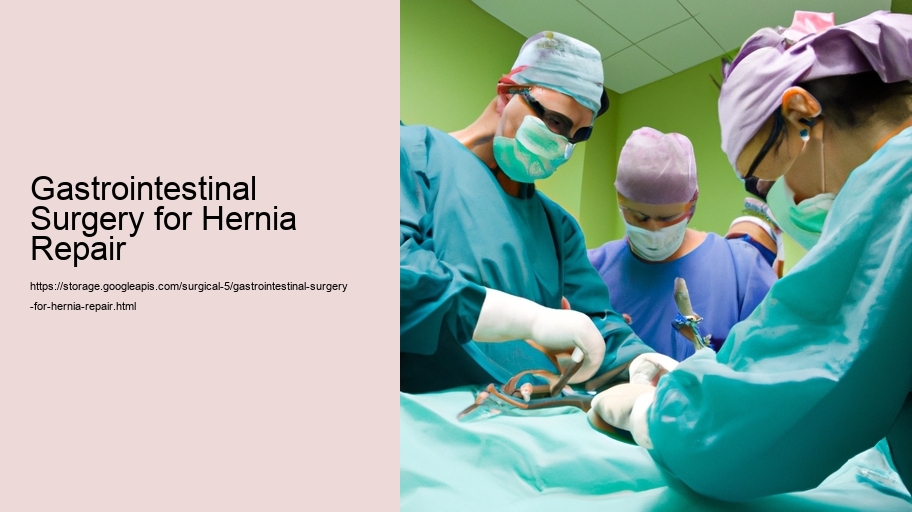
Gastrointestinal surgeons perform hernia repair surgery using various techniques, including open surgery and minimally invasive approaches like laparoscopic or robotic surgery. The goal of the surgery is to return the protruding organ or tissue to its proper place and repair the hernia defect to prevent recurrence. This is typically done by sewing the tissue back together and often reinforcing it with synthetic mesh.
The type of surgery selected depends on the hernia's size, type, and location, as well as the patient's overall health and preferences. Gastrointestinal surgery for hernia repair is generally safe and effective, offering patients relief from discomfort and the potential complications associated with hernias, such as obstruction or strangulation of the intestine. Recovery times vary depending on the type of surgery and the individual, but with advancements in surgical techniques, many patients experience a swift return to normal activities.
Preoperative Assessment and Preparation for Hernia Surgery
Preoperative Assessment and Preparation for Hernia Surgery
Hernia surgery is a commonly performed procedure to repair a weakness or defect in the abdominal wall or groin area through which organs or tissue can protrude. Like any surgical procedure, hernia repair requires careful preoperative assessment and preparation to ensure the best possible outcomes and minimize the risk of complications.
The preoperative assessment begins with a thorough medical history and physical examination. During the medical history, the surgeon will inquire about the patient's symptoms, the duration and progression of the hernia, and any previous hernia repairs. It's also essential to discuss any other medical conditions the patient has, such as cardiovascular disease, diabetes, or respiratory issues, as these may affect the surgical approach and anesthesia considerations.
The physical exam allows the surgeon to assess the size and type of the hernia and to determine whether it is reducible (can be pushed back into the abdomen) or incarcerated (trapped and cannot be pushed back). Incarcerated hernias may require more urgent surgical intervention, especially if there is a risk of strangulation, where the blood supply to the trapped tissue is compromised.
Diagnostic imaging, such as ultrasound, CT scan, or MRI, may be used to evaluate the hernia's size and content and to plan the surgical approach. These imaging studies are particularly helpful for complex or recurrent hernias and can provide detailed information about the surrounding anatomy.
Patients are typically advised to cease smoking, as smoking can impair healing and increase the risk of complications. Those on blood-thinning medications may need to adjust their regimen under the guidance of their physician to reduce the risk of excessive bleeding during and after surgery.
The night before surgery, patients are usually instructed to fast, avoiding food and drink for a specified period to reduce the risk of aspiration during anesthesia. It's also important for patients to arrange for someone to drive them home after the surgery, as they will not be able to drive themselves due to the effects of anesthesia.
On the day of surgery, patients will meet with the anesthesiologist to discuss the anesthesia plan. Most hernia repairs are performed under general anesthesia, but some may be done under local or regional anesthesia, especially for smaller hernias or in patients with significant medical comorbidities.
In preparation for the surgical procedure, the skin over the hernia site is cleaned and sterilized to reduce the risk of infection. The patient is then taken to the operating room, where they are monitored closely throughout the surgery.
After the surgery, patients receive detailed postoperative care instructions, which may include guidance on activity restrictions, pain management, wound care, and signs of complications to watch for. Follow-up appointments are scheduled to monitor the healing process and to address any concerns.
In summary, the preoperative assessment and preparation for hernia surgery involve a meticulous approach to understanding the patient's medical history, evaluating the hernia, and planning the surgical and anesthetic approach. By adhering to these steps, surgeons can optimize the chances for a successful repair and swift recovery.
Surgical Techniques for Hernia Repair
Surgical Techniques for Hernia Repair
Hernia repair is a common procedure in the field of gastrointestinal surgery, confronting surgeons with a variety of cases, from simple to complex. A hernia occurs when an organ or fatty tissue squeezes through a weak spot in a surrounding muscle or connective tissue called fascia. The most common types of hernias are in the abdomen, particularly the inguinal (inner groin), femoral (outer groin), umbilical (belly button), and hiatal (upper stomach) areas.
Traditional Open Hernia Repair (Herniorrhaphy)
The conventional approach to hernia repair has been the open surgical technique, known as herniorrhaphy. During this procedure, the surgeon makes an incision near the hernia site and the protruding tissue is pushed back into the abdomen. The weakened area is then repaired with stitches, and often reinforced with a synthetic mesh to provide additional support. Patients usually go home the same day of surgery but may need several weeks to fully recover.
Laparoscopic Hernia Repair
Laparoscopic hernia repair is a minimally invasive alternative where the surgeon makes several small incisions and uses a laparoscope – a thin tube with a camera at the end – to guide the procedure. The surgeon operates with instruments inserted through the other incisions, repairs the hernia in a similar fashion to open repair, and often uses mesh. The benefits of this approach include less postoperative pain, quicker return to normal activities, and smaller scars.
Robotic Hernia Repair
Building on the principles of laparoscopic surgery, robotic hernia repair is an advanced technique utilizing robotic systems like the da Vinci Surgical System. The surgeon controls the robotic arms from a console, which provides high-definition, 3D visualization of the surgical site and greater precision in movement. This method combines the advantages of laparoscopic surgery with enhanced dexterity and control for the surgeon, potentially improving outcomes for complex hernias.
Tension-Free Mesh Repair
A tension-free mesh repair is a technique often used in both open and laparoscopic surgeries. Instead of sewing the edges of the muscle tissue together under tension, a synthetic mesh is placed over the defect to reinforce the abdominal wall. Tension-free repairs have significantly reduced the rate of hernia recurrence because the mesh acts as a scaffold for new tissue growth, which eventually incorporates the mesh into the surrounding tissue.
Component Separation
For very large or complex abdominal wall hernias, a technique called component separation may be employed. This method involves an open surgical approach where the surgeon separates the different layers of the abdominal wall muscles so they can be stretched and repositioned to cover the hernia defect. This technique is particularly useful when there is a need to reconstruct the abdominal wall due to previous surgeries or large defects.
No matter the technique, the goal of hernia surgery is to provide a durable repair that minimizes the chance of recurrence, alleviates symptoms, and allows patients to return to their normal activities as soon as possible. Patient-specific factors such as the type and size of the hernia, the patient's overall health, and the surgeon's expertise and preference will determine the most suitable approach for hernia repair. Advances in surgical technology continue to improve the outcomes and recovery times of hernia operations, making it a generally safe and effective treatment option.
Postoperative Care and Recovery Process
Postoperative Care and Recovery Process for Gastrointestinal Surgery for Hernia Repair
Gastrointestinal surgery for hernia repair is a common procedure intended to correct an abnormal bulge that can occur in the abdominal wall or groin area. This surgical intervention aims to provide relief from discomfort and prevent potential complications associated with hernias, such as strangulation. The postoperative care and recovery process is a critical phase that greatly influences the outcome and the patient's return to normal activities.
Immediately following the surgery, patients are typically taken to a recovery room where they are closely monitored as they emerge from anesthesia. Vital signs such as heart rate, blood pressure, and respiratory rate are observed to ensure stability. Pain management is a priority, and patients may be given medications to help control discomfort. It is common for patients to experience some pain and grogginess at this stage.
Once stable, patients are moved to a hospital room where the recovery process continues. Nurses and healthcare professionals provide instructions on how to care for the surgical site, recognizing signs of infection, and managing pain. Patients are encouraged to engage in light activities such as walking as soon as they are able, as movement is crucial for preventing blood clots and promoting healing. However, strenuous activities and heavy lifting are prohibited during the initial recovery phase.
Diet plays an essential role in postoperative care for gastrointestinal surgery. Patients may initially be placed on a liquid diet, progressively transitioning to soft foods, and eventually returning to their regular diet as tolerated. This gradual reintroduction of food allows the digestive system to recover without being overburdened.
Patients are typically educated on the importance of maintaining proper hygiene and wound care to prevent infection. They may be instructed on how to clean the incision site and change dressings appropriately. Regular follow-up appointments are scheduled to monitor the healing process, and sutures or staples are removed when the surgeon deems the wound sufficiently healed.
The recovery time can vary depending on the type of hernia repair (open surgery or laparoscopic surgery) and the individual's overall health. Most patients can expect to return to normal activities within a few weeks, but complete healing may take longer. Patients are advised to listen to their bodies and not rush the recovery process, as doing too much too soon can lead to complications.
Throughout the recovery period, it is vital for patients to communicate with their healthcare providers. They should report any concerns such as increased pain, fever, redness or swelling at the surgery site, or any other unusual symptoms. Prompt attention to these issues can prevent complications and ensure a smooth recovery.
In conclusion, the postoperative care and recovery process for gastrointestinal surgery for hernia repair is a multidimensional approach that requires patient cooperation, adherence to healthcare professional's advice, and gradual re-introduction to daily activities. With proper care and attention, most patients can look forward to a successful recovery and a return to a comfortable, hernia-free life.
Potential Risks and Complications of Hernia Surgery
Hernia surgery is a common procedure performed to repair a hernia, which is a condition where an organ or tissue protrudes through a weak spot in the surrounding muscle or connective tissue. While hernia repair surgery is generally safe and effective, as with any surgical procedure, there are potential risks and complications that patients should be aware of before undergoing the operation.
Firstly, there is the risk of infection, which can occur at the site of the incision. Although surgeons take great care to maintain a sterile environment during the procedure, bacteria can sometimes enter the wound, leading to an infection that may require antibiotics or additional surgical intervention to resolve.
Another potential complication is bleeding or hematoma formation, where blood accumulates near the surgical site. This may cause swelling, pain, and bruising, and in some cases, may necessitate a return to surgery to control the bleeding and remove the accumulated blood.
There is also the risk of damage to surrounding tissues and organs. During hernia repair, inadvertent injury to nearby structures such as blood vessels, nerves, or the intestines can occur. Such injuries may lead to complications like chronic pain, numbness, or bowel obstruction, and might require further treatment to correct.
One specific concern in hernia surgery is the possibility of recurrence, which means the hernia could come back. Factors that contribute to recurrence include the size of the hernia, the patient's age, the surgical technique used, and the patient's postoperative activities. Engaging in strenuous activity too soon after surgery, for example, can increase the risk of recurrence.
Chronic pain is another issue that some patients experience after hernia surgery. This may arise from nerve damage or entrapment, scar tissue formation, or the mesh material used in some hernia repairs. Chronic pain can be difficult to treat and may significantly impact the patient's quality of life.
Furthermore, patients may have an adverse reaction to anesthesia, which is necessary for most hernia surgeries. Though rare, these reactions can be serious and require immediate medical attention.
Postoperative complications such as seroma formation, where a pocket of clear fluid collects near the surgical site, can also occur. While seromas often resolve on their own, they can sometimes become infected or require drainage.
Lastly, for hernias repaired with mesh, there's the risk of mesh-related complications. The mesh can sometimes cause a foreign body reaction, leading to inflammation and chronic pain. In rare cases, the mesh can erode into adjacent tissues or migrate, necessitating further surgery to remove or reposition it.
In conclusion, hernia surgery is a common and generally safe procedure with a high success rate. However, potential risks and complications do exist, and it's important for patients to discuss these with their surgeon prior to surgery. Understanding the risks allows patients to make informed decisions about their healthcare and to recognize postoperative symptoms that may require prompt medical attention. With proper care before, during, and after surgery, many of the risks can be minimized, leading to a successful hernia repair and recovery.
Long-term Outcomes and Recurrence Prevention
Gastrointestinal surgery for hernia repair is a common procedure aimed at correcting an abnormal protrusion of an organ or tissue through a weak spot in the surrounding muscle or connective tissue. Hernias can occur in various locations, but the most common sites are the abdominal wall, groin (inguinal), and diaphragm (hiatal). The long-term outcomes and recurrence prevention of hernia repairs are significant considerations for both patients and surgeons, as they directly impact the patient's quality of life and the overall success of the surgery.
Long-term outcomes following hernia repair are generally favorable, with many patients experiencing a complete resolution of symptoms and a return to their normal activities. The success of the surgery largely depends on the type of hernia, the repair method used, and the patient's overall health. For instance, open surgery has been the traditional approach for many years, but with advancements in medical technology, laparoscopic surgery has become an increasingly popular option due to its minimally invasive nature, reduced pain, and shorter recovery time.
Nevertheless, one of the most significant concerns after hernia repair is the risk of recurrence, which can occur in a small percentage of cases. Recurrence typically happens when the repaired hernia reopens due to factors such as improper healing, surgical site infection, or excessive strain on the area during the recovery period. To prevent recurrence, several strategies can be employed.
Firstly, the choice of repair technique plays a crucial role in minimizing the risk of recurrence. The use of surgical mesh, for instance, has been shown to reinforce the repaired area and reduce the rate of hernia recurrence compared to suture-only repairs. While the use of mesh has its own set of potential complications, such as infection or mesh rejection, the overall benefits in preventing recurrence are considered substantial in appropriate cases.
Secondly, patient education and postoperative care are vital components of recurrence prevention. Patients should be informed about the importance of following their surgeon's instructions regarding activity levels, lifting restrictions, and wound care. Gradually increasing activity levels and avoiding heavy lifting or strenuous exercise for the recommended period can help ensure proper healing and reduce the risk of the hernia reappearing.
Moreover, addressing modifiable risk factors is key to improving long-term outcomes. Obesity, poor nutrition, smoking, and certain medical conditions can impair wound healing and increase the likelihood of recurrence. Patients should be encouraged to maintain a healthy weight, eat a balanced diet rich in proteins and vitamins that promote healing, quit smoking, and manage any underlying health issues with the help of their healthcare provider.
In conclusion, gastrointestinal surgery for hernia repair has a high success rate, and most patients enjoy favorable long-term outcomes with a low risk of recurrence. However, the success of the procedure is not solely dependent on the surgery itself but also on the careful selection of repair techniques, thorough patient education, postoperative care, and lifestyle modifications. By taking a comprehensive approach to hernia repair and recovery, the risk of recurrence can be significantly minimized, leading to improved patient satisfaction and outcomes.
Advances and Innovations in Hernia Repair Surgery
Advances and Innovations in Hernia Repair Surgery
Hernia repair surgery is a critical aspect of gastrointestinal surgery that has seen significant advancements and innovations in recent years. The evolution of hernia repair techniques and the introduction of new materials have greatly improved patient outcomes, reduced recovery times, and minimized the risk of recurrence.
A hernia occurs when an organ or fatty tissue squeezes through a weak spot in a surrounding muscle or connective tissue called fascia. The most common types of hernias are in the abdomen, specifically inguinal (inner groin), incisional (resulting from an incision), femoral (outer groin), umbilical (belly button), and hiatal (upper stomach). Traditional open hernia repair was once the standard, but with the advent of minimally invasive techniques, the landscape of hernia surgery has changed dramatically.
Laparoscopic hernia repair is one of the foremost innovations in this field. During a laparoscopic procedure, surgeons make several small incisions through which they insert a camera and specialized instruments to repair the hernia. This approach has numerous advantages, including less postoperative pain, shorter hospital stays, quicker return to normal activities, and smaller scars. Furthermore, the reduced size of the incisions decreases the risk of infection and postoperative complications.
The use of robotic-assisted surgery has further refined minimally invasive hernia repairs. Robotic systems provide surgeons with enhanced dexterity, precision, and control, allowing for more complex and delicate procedures to be performed. The three-dimensional visualization and magnification offered by robotic systems also contribute to more accurate repairs, particularly in hard-to-reach areas.
Another significant advancement in hernia surgery is the development of new mesh materials and fixation devices. Surgical mesh, which is used to reinforce the weakened area, has evolved from simple synthetic models to biologically compatible materials that integrate better with the patient's tissue. These newer meshes reduce the foreign body sensation and have lower infection rates, which is a remarkable step forward since mesh-related complications used to be a significant concern.
Additionally, self-fixating meshes that do not require sutures, staples, or tacks to hold them in place are now available. This innovation minimizes the risk of chronic pain that could result from nerve entrapment due to fixation.
Enhanced recovery protocols have also been implemented in hernia surgery. These protocols are designed to reduce stress on the body, manage pain effectively, and expedite recovery. Elements of enhanced recovery include preoperative counseling, optimized nutrition, minimal use of drains and catheters, and multimodal pain management strategies. Such protocols have been shown to improve patient satisfaction and outcomes.
In the realm of complex or recurrent hernias, component separation techniques have been refined to allow for tension-free closure of large defects. This technique involves incisions along the lateral abdominal wall to mobilize the muscles and provide coverage for the hernia without undue tension. When performed correctly, this technique has significantly reduced the rate of recurrence.
In conclusion, the field of hernia repair surgery has witnessed considerable progress over recent years. Minimally invasive techniques like laparoscopic and robotic-assisted surgery, alongside the development of advanced mesh materials and fixation devices, have revolutionized patient care in this area. Enhanced recovery protocols and improved techniques for complex hernias further illustrate the dynamic nature of hernia repair surgery, ensuring that patients have access to safer, more effective treatment options with better long-term results.