Buckhead residential lots sit on the Piedmont Plateau at roughly 1,050 feet elevation, with grade changes of 5 to 15 feet or more from front to back on most parcels. Combined with Buckhead residential zoning that caps lot coverage at 40 to 50 percent and enforces side setbacks of 10 to 15 feet plus rear setbacks of 35 to 40 feet, horizontal ground-floor additions frequently hit a zoning variance wall before construction can begin. This is why second-story additions, master suite additions over existing garages, and bump-outs that stay within the lot coverage ratio dominate the Buckhead addition market. The Piedmont clay soil under these lots (known geologically as Georgia red clay) has pronounced shrink-swell cycles across the wet spring and dry late summer, which drives foundation reinforcement requirements that most out-of-state contractors are not trained to specify.
Portions of Buckhead fall under historic district designation, and home additions in these areas require a Certificate of Appropriateness review through the Atlanta Historic Preservation Studio before the City of Atlanta Office of Buildings will issue a building permit. The Certificate of Appropriateness review (which evaluates window proportions, cornice and eave details, roof pitch, exterior materials, siding width and exposure, door and window trim profiles, and chimney treatment against the established architectural character of the district) adds 4 to 8 weeks to the permit timeline on top of the standard 3 to 4 week building permit review. Adjacent to historic districts, many Buckhead streets fall under Special Public Interest District (SPI) designation (Atlanta has over 20 SPI districts citywide), which can require a Special Administrative Permit on top of the standard building permit.
Second-story additions in Buckhead run $350 to $600+ per square foot in 2026 depending on footprint size, foundation reinforcement needs, HVAC and electrical system extension, finish level, and architectural style matching. A full second story on an average 1,500 square foot ranch home in North Buckhead or Peachtree Heights East commonly totals $500,000 to $900,000+ by the time structural engineering reports, architectural plans, City of Atlanta permit fees ($100 base plus $1,000 to $5,000 square footage fees plus 50 percent plan review fee), and construction are complete. Room-over-garage additions deliver a lower cost-per-square-foot path at $180,000 to $360,000 all-in for 400 to 600 square feet of premium space, and bump-outs run $150 to $350 per square foot for scope-contained projects like kitchen extensions in Garden Hills or master suite expansions in Brookwood Hills.
Most Buckhead homes fall into one of three structural archetypes. The first is the 1920s through 1940s original period home, built with plaster-and-lath interior walls, heart pine structural framing, poured concrete or stone foundations, and steep slate or tile roofs. These homes sit in the 30305 zip code core and extend through Garden Hills, Peachtree Heights West, Peachtree Heights East, Tuxedo Park, Paces, and Brookwood Hills. The second archetype is the 1950s through 1970s ranch or split-level, concentrated in North Buckhead, Chastain Park, and parts of Brookwood Hills. These homes have smaller footprints, slab-on-grade or partial basement foundations, and lot configurations that often support second-story additions or significant bump-outs. The third archetype is modern infill construction, which covers the tear-down-and-rebuild custom homes from the 2000s onward, built with full daylight basements and multiple stories already in place.
Each archetype calls for a different addition strategy. A 1938 Georgian in Peachtree Heights West with original slate roof and stucco chimneys needs an addition that matches original cornice profiles, window muntins, and brick coursing. A 1965 ranch in North Buckhead off Roswell Road can often carry a full second story with foundation reinforcement, delivering the square footage gain Buckhead homeowners need without sacrificing yard space. A 2005 custom home on Blackland Road near the Atlanta History Center usually has the structural capacity already built in for future vertical expansion.

Buckhead lot coverage ratios and setback requirements frequently constrain horizontal expansion. Lot coverage ratio is the maximum percentage of a lot that can be covered by the home and any accessory structures, and in most Buckhead residential zoning categories the ratio sits at 40 to 50 percent. A 1.2 acre lot in 30327 Paces might already be at 35 percent coverage with the house, driveway, and pool. A ground-floor addition that adds 800 square feet can push the lot over the coverage ratio and trigger a zoning variance process with the City of Atlanta Office of Zoning and Development. Side and rear setbacks add another layer. Most Buckhead residential parcels carry 10 to 15 foot side setbacks and 35 to 40 foot rear setbacks. An addition that crosses a setback line requires a variance, which adds 3 to 6 months to the project timeline before construction can begin.
The third constraint is the Atlanta Tree Ordinance. Buckhead's mature tree canopy, which gives the neighborhood its distinctive character, is protected by the Atlanta Arborist Division. Any construction that disturbs protected tree root zones or requires removing specimen trees (trees of a certain diameter or species designation) triggers recompense fees, replacement planting requirements, or both. Second-story additions and room-over-garage additions avoid these issues because they build on existing foundations and rarely impact the tree protection zone. Ground-level additions often cannot avoid them.
The practical result is that most Buckhead home additions follow a vertical logic. Second-story additions, master suite additions built over existing garages, bump-outs that stay within the lot coverage ratio, and porch conversions that use existing foundations dominate the Buckhead addition market. Horizontal ground-floor expansions are less common and usually require variance work that extends the project timeline significantly.
Portions of Buckhead fall under historic district designation, and additions in these areas trigger a Certificate of Appropriateness review through the Atlanta Historic Preservation Studio before the City of Atlanta Office of Buildings will issue a building permit. A Certificate of Appropriateness, which is the approval document that confirms an addition matches the architectural character of the historic district, adds 4 to 8 weeks to the permit timeline on top of the standard 3 to 4 week building permit review. The review looks at window proportions, cornice and eave details, roof pitch, exterior materials, siding width and exposure, door and window trim profiles, and chimney treatment.
Architectural style matching is not optional in these districts. A Georgian home in a designated historic area cannot receive a modern farmhouse addition, even if the homeowner prefers that aesthetic. A Craftsman bungalow in a conservation area cannot receive an addition with colonial trim profiles. The Atlanta Historic Preservation Studio reviews drawings, elevations, and material specifications, and can require revisions before approval. This is one of the areas where out-of-town contractors frequently struggle, because the review process demands specific knowledge of early 20th century Atlanta architecture and the material vocabulary that appears in the city's historic housing stock.
Adjacent to historic districts, many Buckhead streets fall under Special Public Interest District (SPI) designation, which the City of Atlanta uses to protect the visual character of specific corridors and neighborhoods. There are more than 20 SPI districts across the city. Projects in SPI areas may require a Special Administrative Permit before the standard building permit can move forward. Heide Contracting in Atlanta handles this review layer as part of the permit package, which removes the research and coordination burden from the homeowner.
Atlanta sits on the Piedmont Plateau at roughly 1,050 feet elevation, and Buckhead residential lots frequently carry grade changes of 5 to 15 feet or more from front to back. The soil under most Buckhead homes is Georgia red clay, known geologically as Piedmont clay, which has pronounced shrink-swell cycles across the wet spring and dry late summer. This matters for additions because foundation loads behave differently on clay than on sandy or rocky soil. A second-story addition adds roof load, floor load, and wall load to the existing foundation. If the original foundation was sized for a single story, structural engineering analysis is required to confirm the foundation can carry the new load or to specify the reinforcement that will be needed.
Foundation reinforcement for second-story additions on Buckhead homes commonly involves installing underpinning piers (helical piers or push piers driven to bearing strata below the active shrink-swell zone), pouring new concrete footings, or adding reinforced steel beams at key load transfer points. LVL beams, which are laminated veneer lumber beams used to carry concentrated loads over openings, replace or supplement original framing where the new structural load demands it. The structural engineering report that specifies these reinforcements is the document the City of Atlanta plan review requires before the permit is issued.
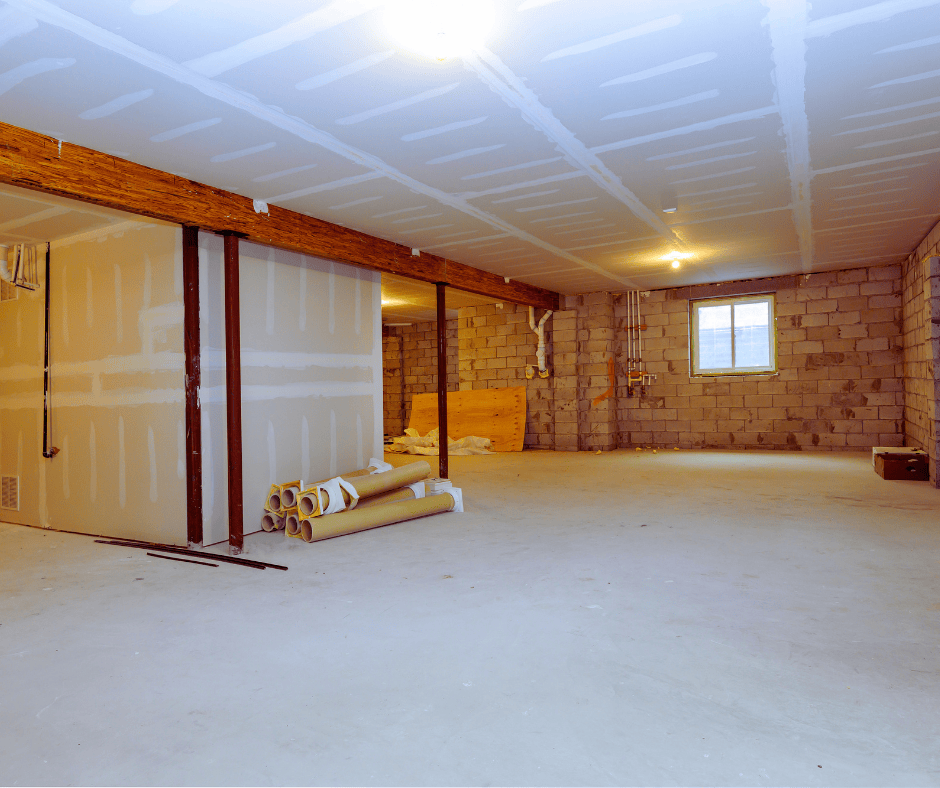
Heide Contracting completed a 1,450 square foot basement excavation project in Buckhead that demonstrates the kind of structural work the neighborhood's addition market often demands. The project lowered the existing basement floor while installing underpinning piers to reinforce the original foundation, gaining 2 to 4 feet of additional ceiling height and delivering full daylight basement square footage. Work at this level combines structural engineering coordination, excavation capability, waterproofing integration, and permit management under one team, which is why most Atlanta general contractors do not accept projects of this scope.
Cost ranges in Buckhead run at the premium end of the Atlanta market because the housing stock supports premium square footage pricing and because the architectural style matching, structural reinforcement, and permit coordination requirements add scope that simpler markets do not carry. Second-story additions in Buckhead run $350 to $600+ per square foot depending on footprint size, foundation reinforcement needs, HVAC and electrical system extension, finish level, and architectural style matching. A full second story on an average 1,500 square foot ranch in North Buckhead or Peachtree Heights East commonly totals $500,000 to $900,000+ by the time structural engineering, architectural plans, City of Atlanta permit fees, and construction are complete.
Bump-out additions and room-over-garage projects run lower, typically $150 to $350 per square foot. A 300 square foot kitchen bump-out in Garden Hills or a master suite bump-out in Brookwood Hills usually totals $45,000 to $105,000. Room-over-garage additions that convert unused air rights above an existing attached garage into bonus living space can deliver 400 to 600 square feet of premium space at $180,000 to $360,000 all-in, which often represents the lowest cost-per-square-foot path to meaningful Buckhead expansion. Porch conversions on existing Buckhead decks or covered porches run $15,000 to $40,000 for three-season enclosures and $40,000 to $80,000+ for four-season conditioned spaces with insulated walls and energy-efficient windows.
City of Atlanta permit fees for Buckhead additions start with a $100 base permit fee, add $1,000 to $5,000 in square footage fees depending on project size, and include a plan review fee equal to roughly 50 percent of the permit fee. Certificate of Appropriateness review in historic districts adds no direct fee but extends the permit timeline by 4 to 8 weeks. These numbers are part of the total project budget that families planning a Buckhead addition need to understand before construction begins.


Buckhead home addition projects traditionally followed the architect-plus-contractor model, where the homeowner first hired an architect to produce drawings and specifications, then bid the completed design to general contractors for construction. This model frequently produces what the construction industry calls the "design it twice" problem. The architect specifies a design that exceeds the construction budget, bids come back 30 to 50 percent over the homeowner's number, and the architect has to redesign or the homeowner has to accept value engineering that compromises the original vision.
The design-build model avoids this problem by putting design and construction under one contract with one accountable team. Pricing is developed alongside design rather than after design, which keeps the homeowner within the budget throughout the process. Permit management, structural engineering coordination, and Atlanta Historic Preservation Studio coordination happen under one roof rather than across separate firms that may or may not communicate cleanly. For Buckhead homeowners who want a single point of accountability on a major capital project, design-build delivery removes the coordination burden that architect-plus-contractor arrangements frequently fail to manage.
Heide Contracting operates under the design-build model. Architectural plans, structural engineering drawings, City of Atlanta permit submissions through the Accela Citizen Access portal, Certificate of Appropriateness coordination, Atlanta Arborist Division tree protection reviews, and construction management all happen under one team with one accountable project manager. Design-build integration is not the right fit for every project, but for Buckhead additions in the $250,000 and up range it consistently delivers faster timelines and tighter budget control than separated delivery.
The same design-build team handles garage construction , which solves the parking and storage challenge on Buckhead lots where lot coverage ratios and tree canopy protection rule out traditional detached garages. The 5 to 15 feet of grade change on hillside lots along Tuxedo Road, Habersham Road, and West Paces Ferry Road often supports drive-in entry at grade to a below-grade structure. Underground garage projects combine excavation, underpinning, waterproofing, and structural deck framing, and they typically run $400,000 to $1.5 million+ depending on square footage and interior finish.
Heide Contracting serves Buckhead, Virginia Highland, Morningside, Ansley Park, Garden Hills, Peachtree Heights West, Tuxedo Park, Paces, North Buckhead, Brookwood Hills, Inman Park, Grant Park, Druid Hills, Decatur, Brookhaven, Sandy Springs, and the broader metro Atlanta corridor from an Atlanta-based operation. Licensed Georgia contractor with Georgia State Residential General Contractor designation verified through the Georgia Secretary of State Professional Licensing Division. Fully insured and bonded. Structural engineering coordination on every addition project that requires foundation reinforcement or load-bearing wall modification. Design-build project delivery that keeps design, permit management, and construction under one accountable team. In-house City of Atlanta Office of Buildings permit management that removes the permit burden from the homeowner. Documented 1,450 square foot basement excavation completed in Buckhead as track record on complex structural work that falls outside the scope most general remodeling contractors accept.
Consultations scheduled Monday through Friday, 9:00 AM to 5:00 PM. Call (470) 469-5627 to schedule a no-cost evaluation for Buckhead home addition, second-story addition, master suite addition, room-over-garage expansion, bump-out, basement excavation, basement conversion, or porch conversion projects in 30305, 30327, 30342, or the surrounding Buckhead residential corridor.
Redirect to:
|
This page is a redirect. The following categories are used to track and monitor this redirect:
|
Redirect to:
|
This page is a redirect. The following categories are used to track and monitor this redirect:
|