
Non-surgical treatments, delivered in your own home
Most people who look into body contouring or intimate wellness treatments do the same thing first: they search, they read, and then they quietly put it off. Not because they have changed their minds, but because the practical side of it feels like a hurdle. Finding a clinic, booking around work, arranging childcare, sitting in a waiting room in a gown, travelling home afterwards — it all adds friction to something that is already a slightly nervous decision. Lipo Freeze exists to remove that friction entirely. Every treatment described on this page is carried out by an experienced consultant who travels to you, sets up in your own living room or bedroom, and works around your day rather than the other way round.
This service covers England, Scotland and Wales, and the home visit itself is included at no additional cost. Whether you are in a city centre flat or a rural village, the treatment comes to you on the same terms. It means people who live a long way from a clinic, people with limited mobility, people on irregular shifts and people who would rather not be seen walking into a treatment room all get the same technology and the same standard of care from Lipo Freeze.
Who this page is for
This is a long, detailed guide rather than a brochure. It is written for someone who wants to understand what these treatments actually do at a physical level, what the realistic timelines look like, who they suit, and — just as importantly — who they do not suit. There is no attempt here to talk anybody into anything. Some of the most useful sections below are the ones explaining when a treatment is the wrong choice, because a treatment carried out on the wrong candidate is a waste of that person's time and money, and no responsible practitioner wants that outcome.
The core range covers four main areas: fat freezing (cryolipolysis) for stubborn localised fat, body toning for muscle definition and tone, incontinence treatment for pelvic floor strength and bladder control, and vaginal tightening for intimate rejuvenation. Alongside those sit several additional treatments covered briefly further down. If you would rather see what the outcomes look like before reading the technical detail, the results page is the better starting point, and costs are set out separately on the prices page.

What "non-surgical" really means here
Non-surgical is a phrase that gets used loosely across the industry, so it is worth being precise. In the context of this service it means no incisions, no needles for the four main treatments, no anaesthetic, no sedation and no stitches. The technologies used work from outside the body — controlled cooling, focused electromagnetic energy and focused ultrasound — and they rely on the body's own biological responses to produce a change over the following weeks. Nothing is removed on the day. Nothing is implanted. You are not recovering from anything, which is why you can go back to work, collect the children or go to the gym straight afterwards.
That also sets a realistic ceiling on what these treatments can do, and it is only fair to say so upfront. Non-surgical body contouring refines and reshapes. It does not replicate liposuction, it does not tighten significantly loose skin, and it is not a substitute for weight loss. Used on the right person for the right reason, the change can be genuinely satisfying. Used as a shortcut around diet, exercise or medical advice, it will disappoint. A proper consultation exists precisely to sort one situation from the other before any money changes hands.
How an at-home treatment actually works
People are often more curious about the logistics than the science. How much space is needed? What do I have to provide? Is it awkward having someone in my house? In practice the process is straightforward and has been refined over more than ten years of industry experience. What follows is the sequence a typical appointment takes, from first contact to the days that follow.
Consultation and assessment
Nothing is booked until there has been a proper conversation covering your goals, your general health, any medical conditions or medications, previous treatments and whether you are pregnant or breastfeeding. It also covers what you are hoping to change and whether the treatment you have in mind is the one most likely to achieve it. If you would like to discuss your suitability, goals and treatment options first, you can arrange a Lipo Freeze 2U Consultation.
Arrival and setting up
Your consultant arrives with the equipment and sets up in whichever room you feel most comfortable in. A sofa or a bed works perfectly well; there is no need for a clinical couch. What is needed is a mains socket, a little floor space beside where you will be lying, and privacy. You will be told beforehand exactly what to have ready, so nothing is a surprise on the day.
Preparation and marking up
The area is assessed again in person, because seeing and feeling the tissue tells the practitioner things a description over the phone cannot. Applicator sizes and placement are chosen, reference photographs may be taken, and the skin is cleaned. For fat freezing, a protective gel pad is placed on the skin before anything cold touches you. For intimate treatments, a topical numbing cream is applied and given time to work.
The session itself
This is generally the easiest part. Sessions are commonly around thirty minutes per area, and multiple areas can often be treated in one visit. You stay lying down and, for body toning and incontinence work, fully clothed. Your consultant stays with you throughout, checks how the sensation feels, and adjusts intensity where the device allows it.
Aftercare and packing away
Afterwards the area may be massaged, the skin is cleaned, and you are talked through what to expect over the following days and weeks. Everything is packed away and your room goes back to being your room. There is no recovery period to sit through, so you can carry straight on with the day.
Follow-up and planning
Because most of these treatments work over weeks rather than hours, the plan matters as much as the session. Spacing for further appointments is agreed, and you know what to look for and roughly when. If you want to discuss timings or availability before committing to anything, the contact page is the place to start.
Home visits are discreet. Equipment is carried in ordinary cases, there is no branding on display at your door, and nothing about the visit announces itself to neighbours. For intimate treatments in particular, this is one of the reasons people choose a home appointment over a clinic.
Fat freezing (cryolipolysis)
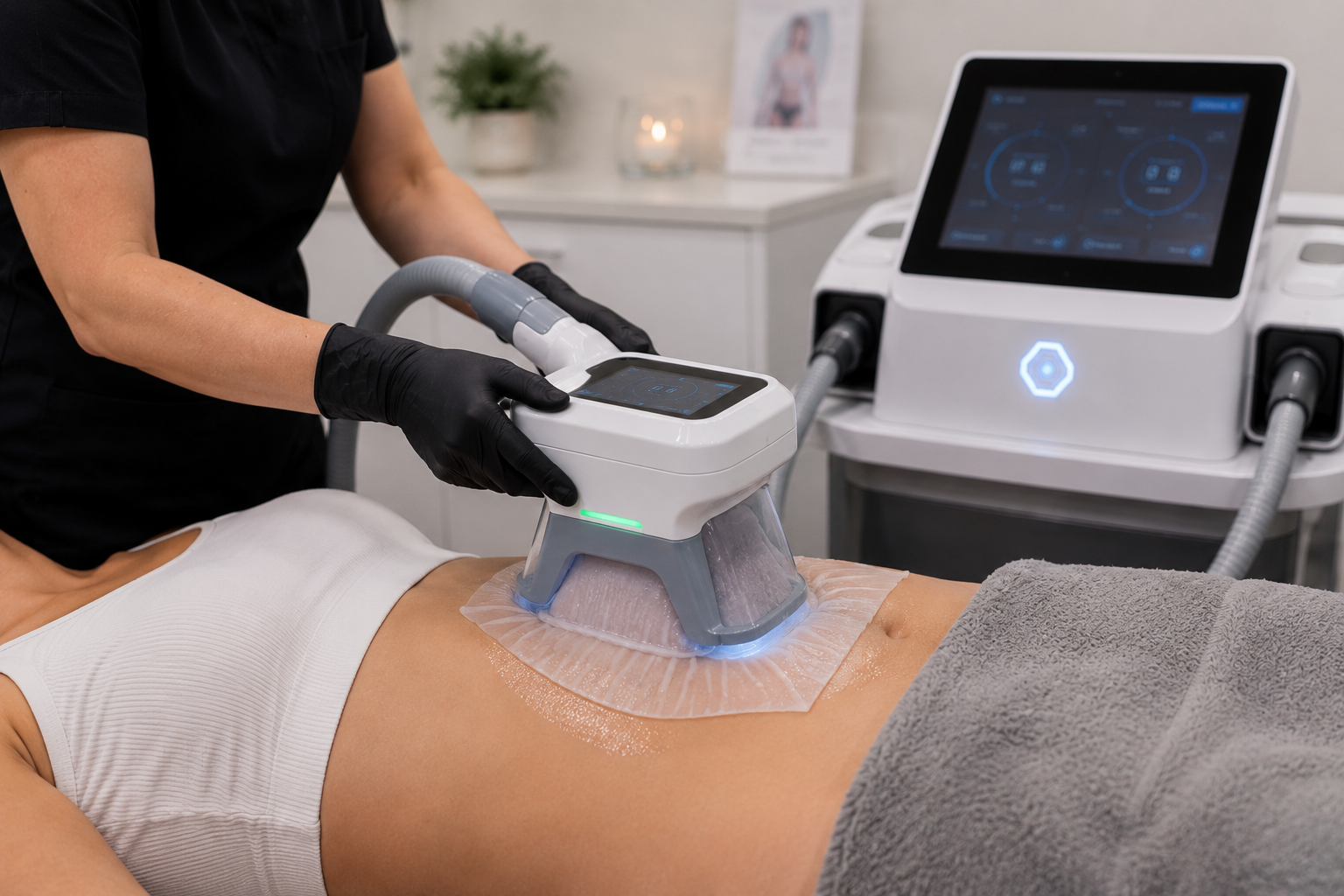
Fat freezing is the treatment most people come across first, and it is the one that generates the most questions. The principle behind it is unusually elegant: fat cells are more sensitive to cold than the skin, nerves, blood vessels and muscle that surround them. If you cool a pocket of tissue in a carefully controlled way, you can reach a temperature at which fat cells begin to break down while everything else in that area is left intact. That difference in sensitivity is what makes the treatment selective, and it is why controlled cooling can be used on the body without damaging the structures sitting above and below the fat layer.
What happens inside the tissue
During treatment a gel pad is placed on the skin to protect it, and an applicator is positioned over the area. The applicator draws the fat pocket gently towards it and cools the tissue. As the fat cells reach the target temperature they are triggered into apoptosis, which is the body's ordinary process of programmed cell death — the same tidy, controlled mechanism the body uses to retire cells all the time. Nothing is sucked out or drained away. Over the following weeks the damaged fat cells are gradually broken down and cleared by the body's own systems, and the treated layer becomes thinner as a result.
The important consequence of this is that the destroyed fat cells do not regenerate. Once a fat cell has gone through this process it is gone permanently. That said, this is not the same as saying the area can never change again. The fat cells that remain in the area are still perfectly capable of expanding if your overall body fat increases, which is why the result holds best in people whose weight stays broadly stable afterwards. The treatment reduces the number of cells in a stubborn pocket; your habits determine what the remaining ones do.
Areas that can be treated
Cryolipolysis is used on discrete, pinchable pockets of fat rather than across broad regions. Commonly treated areas include the stomach and lower abdomen, love handles, the back, upper back and lower back, the arms, and the thighs including both the inner and outer thigh. In many cases more than one area can be addressed in the same session, which is one of the practical advantages of a home appointment where there is no clinic clock running in the background.
Who it suits, and who it does not
The ideal candidate is someone already close to their target weight who has one or two localised areas that have refused to shift despite sensible eating and regular exercise. For those people the treatment does something diet cannot easily do, because it targets one specific deposit rather than reducing fat generally across the body.
It is worth stating the reverse just as clearly. Fat freezing is not a weight-loss treatment. If someone is significantly overweight, it is not the right starting point, and no honest practitioner should suggest otherwise. It also will not tighten excessively loose skin; in fact reducing the volume underneath loose skin can occasionally make laxity more noticeable rather than less. There are firm contraindications too. The treatment is not suitable for anyone with Raynaud's phenomenon, cold urticaria or cryoglobulinemia, all of which involve an abnormal reaction to cold. It is not suitable where there is a hernia at or near the treatment site, and it is not carried out during pregnancy or while breastfeeding. Every one of these is checked at consultation, which is why the consultation is not a formality.
What a session feels like
There are no needles and no anaesthetic. The first few minutes are the most noticeable: an intense cold and a firm drawing sensation as the applicator settles. Within a short time the area usually goes numb, and from that point most people describe the session as uneventful and easy to sit through. When the applicator comes off, the tissue is cold and firm, and a brief massage of the area is normal. Some redness and a temporary change in skin appearance immediately afterwards is expected and settles quickly.
Timeline and realistic expectations
This is where patience matters. Because the body is clearing the treated cells gradually, nothing changes overnight. Visible improvements typically begin to appear from around three to four weeks, and results are generally considered to be at their optimum somewhere between eight and twelve weeks after treatment. Some people notice the change first in how clothes fit rather than in the mirror. Comparison photographs taken at the start are genuinely useful for this reason, and examples of the kind of change to expect can be seen on the results page.
Side effects and safety
The technology used is FDA-cleared, and the treatment has a well-established safety profile, but no procedure is entirely without effects. Common and temporary reactions include redness, swelling, bruising, tingling and numbness in the treated area. Numbness in particular can linger for a few weeks and then resolve on its own. Rare complications do exist and should be mentioned rather than glossed over: paradoxical adipose hyperplasia, in which the treated area increases in firmness and volume rather than reducing, changes in skin pigmentation, and frostbite. These are uncommon, but they are the reason the treatment should only be carried out by an experienced practitioner using properly maintained equipment, with a gel pad correctly applied every time.
Aftercare
There is no recovery period, so you return to normal activity immediately, including exercise. Gently massaging the treated area in the days afterwards is often suggested, drinking plenty of water supports the body's clearance processes, and keeping your usual routine of sensible eating and activity gives the result the best chance of showing well. Bruising, where it occurs, fades on its own timescale. If anything feels unusual or does not settle, it should be raised rather than waited out.
Body toning and muscle sculpting
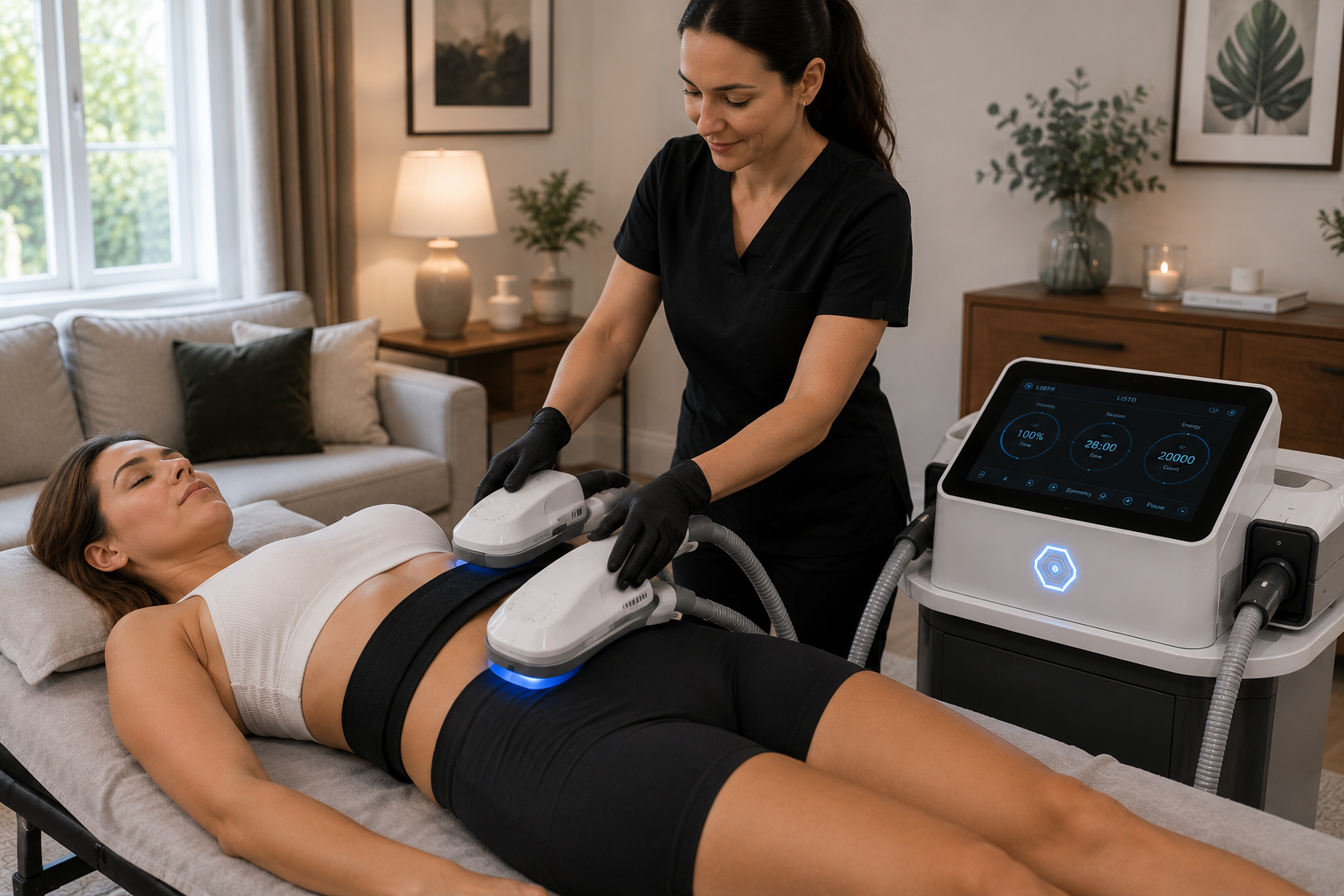
Where fat freezing removes, body toning builds. It uses High-Intensity Focused Electromagnetic energy — usually shortened to HIFEM — to trigger muscle contractions far deeper and far more frequent than anything voluntary effort can produce. A single thirty-minute session can generate up to 20,000 contractions. No amount of time in a gym replicates that, because a voluntary contraction is limited by what the nervous system will safely ask of the muscle; the electromagnetic field bypasses that limit and drives the muscle directly.
The muscle responds to that workload the way muscle always does — by adapting. Fibres remodel and thicken, and the surrounding fat is also affected as the energy demand of the contractions is met. Manufacturers of this technology cite reductions in fat of up to 19% or more and increases in muscle mass of 16% or more, with visible results possible in as little as three weeks. Those are the figures associated with the technology rather than a promise about any individual, and it is fair to say that starting condition, consistency and lifestyle all influence where a given person lands.
Sessions, areas and timeline
A session runs for thirty minutes and you remain fully clothed throughout. The recommended protocol is a minimum of four to six sessions, spaced at least two days apart so the muscle has recovery time between them. Treatable areas include the abdomen, buttocks, hips, arms, thighs and calves. If your main goal is improving the appearance and definition of the upper arms, you can read more about the Lipo Freeze 2U Arm Toning Treatment and how the treatment is used specifically for this area.
Who it suits
Body toning suits people who are reasonably active and want definition and strength in an area that resists it, and it has two applications that deserve particular mention. The first is diastasis recti, the separation of the abdominal muscles that commonly follows pregnancy and which conventional core exercise can sometimes aggravate rather than help. The second is supporting recovery from injury, where rebuilding muscle through normal training is not yet possible. Being a home-based treatment makes both of these considerably easier to commit to across a multi-session course.
The contraindications are firm. It is not suitable for anyone with metal implants, during pregnancy, for those with bleeding disorders or cardiac issues, or where there is an active hernia. Anything electronic or metallic implanted in the body needs to be disclosed at consultation without exception, including devices you may not think of as relevant.
What it feels like
The sensation is unmistakable but not painful — a strong, rhythmic pulling as the muscle contracts, building through the session, with intervals designed to clear the by-products of the contractions. Most people find it strange for the first few minutes and then get used to it. Afterwards the muscle can feel as it does the day after a hard session in the gym, which is a reasonable sign that the work was done. There is no downtime and you can carry on as normal.
Incontinence treatment
Incontinence is far more common than public conversation suggests, and the silence around it is the main reason people put up with it for years. It affects women after childbirth and around the menopause, and it affects men, particularly following prostate treatment. It is not an inevitable part of getting older and it is not something to be embarrassed about. Discussing it with a consultant in your own home, rather than in a clinic, is one of the things that makes people willing to address it at all.
How it works
The treatment uses the same HIFEM energy as body toning, applied to the deep muscles of the pelvic floor. These are muscles most people cannot isolate reliably even when they are trying, which is why conventional pelvic floor exercises so often fail — not because the exercise is wrong, but because the technique is difficult to get right unsupervised and easy to abandon. One thirty-minute session is equivalent to thousands of Kegel exercises, performed at full contraction, without you having to do anything. You remain fully clothed for the entire session.
Conditions it addresses and the course structure
It is used for stress incontinence, overactive bladder incontinence, faecal incontinence and erectile dysfunction. For men specifically, those interested in understanding the approach in more detail can read about the Lipo Freeze 2U ED Treatment before deciding whether to arrange a consultation.
The treatment is non-invasive and painless, with no downtime, and it is suitable for both men and women. As with everything in the range, suitability is assessed properly beforehand, and where symptoms suggest something that needs medical investigation you will be encouraged to see your GP first. A treatment that strengthens muscle is not a substitute for a diagnosis.
Vaginal tightening and intimate rejuvenation
Intimate rejuvenation is approached here in exactly the same clinical register as any other treatment: what it does, how, for whom, and with what limits. It uses HIFU — High-Intensity Focused Ultrasound — to deliver energy to internal tissue at a controlled depth. That energy gently heats the tissue, which stimulates the production of collagen and elastin, the two proteins responsible for firmness and elasticity. As the body lays down new collagen over the weeks that follow, the tissue becomes tighter and better supported, and pelvic floor function can improve alongside it. There is no surgery and nothing is cut or removed.

The treatment step by step
The process runs through six stages. It begins with a consultation covering medical history and goals. Preparation follows, with a topical numbing cream applied. The treatment session itself delivers focused ultrasound through a specially designed wand and takes around thirty minutes. Collagen activation then happens quietly in the background over the following weeks — this is the stage that does the real work and the one you cannot feel. Recovery is minimal, though slight soreness or mild swelling for a few days is possible. Finally, results develop over several weeks and may last anywhere from a few months to over a year.
Many women benefit from a course of three treatments spaced four to six weeks apart, though this varies according to individual goals and how the tissue responds. Most clients describe the sensation during treatment as warm or tingling rather than painful, and the numbing cream is applied precisely so that the session is comfortable to sit through.
Who it is for
It is generally considered for laxity following childbirth, minor stress urinary incontinence, dryness associated with lower oestrogen levels, increased sensitivity or pain during intercourse, and loss of collagen and tone related to age or the menopause. Reported benefits include improved tightness and elasticity, greater sexual satisfaction, reduced dryness, some alleviation of incontinence, relief from painful intercourse and a meaningful boost in confidence, all with no downtime. It is not recommended during pregnancy or for those with certain specific medical conditions, which is one of the reasons medical history is gone through carefully beforehand.
A 2023 review of the literature found that HIFU studies show promising results when the treatment is performed by trained professionals. Promising is the right word — outcomes and risks vary from person to person, results are not permanent, and maintenance sessions are often recommended, frequently on an annual basis.
Aftercare
Tenderness, slight swelling or a little spotting for a few days afterwards is within the expected range. You should refrain from sex for twenty-four to forty-eight hours, or longer if you are advised to, and keep your fluid intake frequent and adequate while the tissue settles. Anything that feels out of keeping with that description is worth raising promptly rather than waiting to see.
The wider treatment range
Beyond the four treatments covered in depth above, several other options sit within the range. They are listed here at a high level rather than described in detail, because the specifics of each are best discussed in a consultation where your skin, your goals and your medical history are in front of the practitioner.
- Fat dissolving injections (Aqualyx) — an injectable approach to small, localised fat deposits, used where an injectable is more appropriate than cooling.
- HIFU non-surgical facelift — focused ultrasound applied to the face and neck to stimulate collagen and lift, without surgery.
- RF microneedling — combines microneedling with radiofrequency energy to work on skin texture and firmness.
- Signature skin lift — a treatment aimed at overall skin tone and lift.
- CryoPen cryotherapy — precise, controlled freezing used for the removal of moles, warts and skin tags.
If one of these is what brought you here, the sensible next step is a conversation rather than a decision. Costs for the full range are set out on the prices page, and the background to how the service operates is covered on the choose us page.
Combining treatments and building a plan
The treatments in this range are not rivals, and the most satisfying outcomes usually come from pairing them thoughtfully rather than doing one thing intensively. Fat freezing reduces a stubborn deposit; body toning strengthens and defines the muscle beneath it. Used together on the abdomen, for example, one addresses the layer you can pinch and the other addresses the shape underneath. Because the two work on different tissue over different timescales, sequencing matters, and a plan is built around your calendar as much as around the biology.
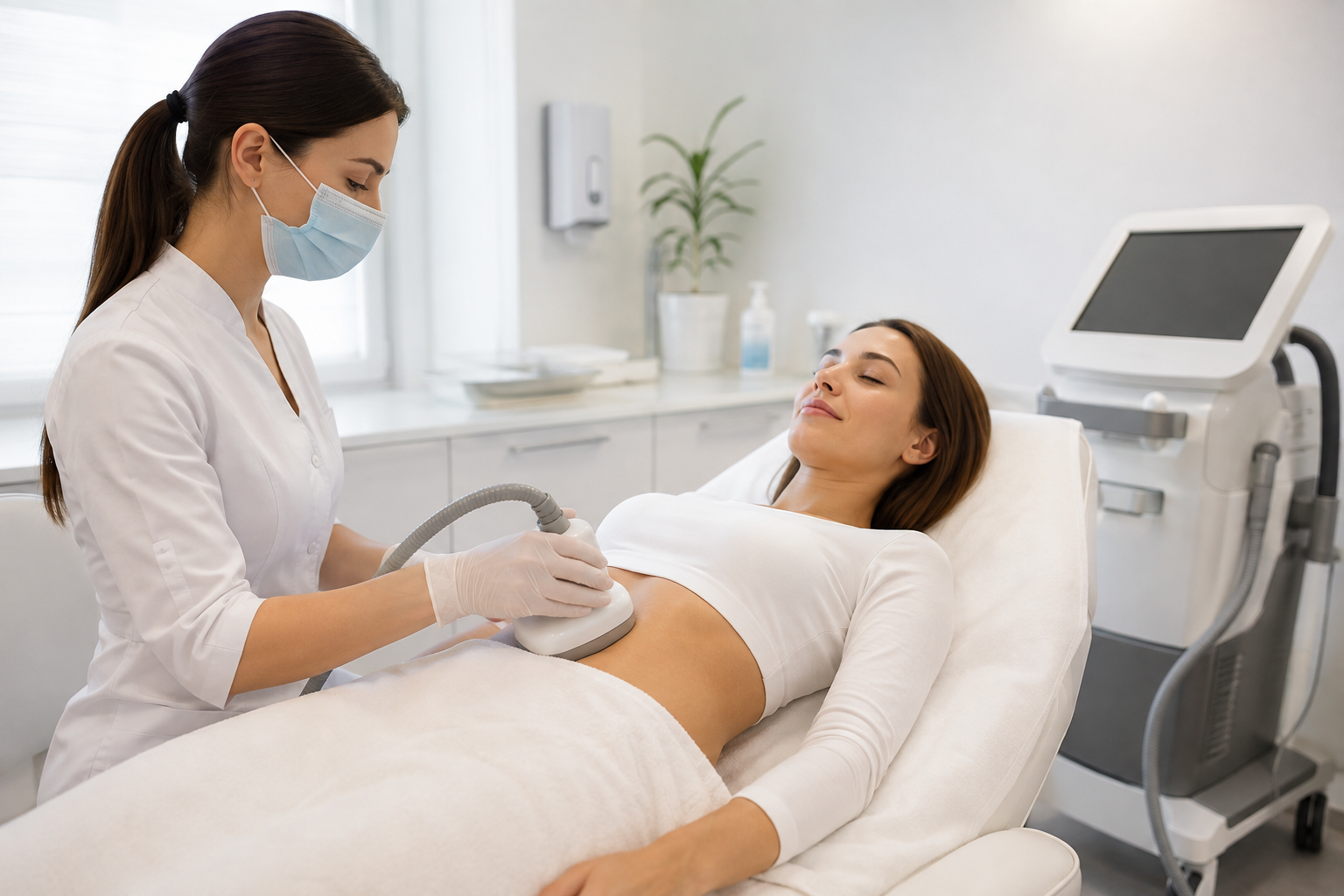
Plans are tailored rather than sold off a shelf. That means a realistic number of sessions, spacing that respects the recovery each treatment needs, and honest guidance about which areas will repay the effort and which will not. If your goals change halfway through, the plan changes with them. More about the approach behind that is on the home page.
Safety, suitability and consultation standards
Every treatment described here is delivered by experienced consultants with over ten years of industry experience, using FDA-approved equipment. That combination matters: good technology in inexperienced hands and poor technology in skilled hands are both bad outcomes waiting to happen. The consultation exists to establish suitability, not to close a sale, and it is thorough by design.
FDA-cleared devices used within their intended parameters, maintained properly and operated by trained hands.
Over a decade in the industry, which shows most in the judgement calls: applicator choice, placement and knowing when to decline.
If a treatment is unlikely to give you what you want, you will be told so before you commit to anything.
The same standard of care across England, Scotland and Wales, in your own home, at no extra cost.
No treatment here cures a medical condition, and none carries a guarantee of a particular result. Where symptoms point towards something that needs a doctor — persistent pain, unexplained bleeding, sudden changes in continence — you will be asked to see your GP before proceeding. That is the standard any responsible practitioner should hold, and it is the reason candidates are turned away when the honest answer calls for it.
After treatment: aftercare and everyday habits
Because none of these treatments involves surgery, aftercare is more about supporting a process than protecting a wound. Hydration helps across the board, since the body is clearing broken-down cells and metabolic by-products in the weeks afterwards. Ordinary movement helps too, and there is no reason to avoid exercise unless you have been told otherwise for a specific reason.
The habits around the treatment shape how well the result shows and how long it lasts. Fat freezing permanently removes treated cells, but the remaining ones can still expand if overall body fat rises. Muscle built through HIFEM behaves like any other muscle and responds to being used. Pelvic floor and intimate results benefit from maintenance, and neither is permanent. None of this requires an extreme regime — steady eating, regular activity and reasonable sleep are enough. Progress is easiest to judge over months rather than days, and photographs taken at the start are far more reliable than memory.
Frequently asked questions
Deciding what is right for you
If you have read this far, you already know more about these treatments than most people ever do — including where they work well and where they do not. The next step is not a decision but a conversation: an honest look at what you want to change, whether one of these treatments is the right tool for it, and what a sensible plan would look like. Lipo Freeze brings that conversation, and the treatment that may follow it, to your front door. Real outcomes are shown on the results page, and everything else you might want to weigh up first is on the choose us page.