

FG unveils revised national migration policy

The federal government on Thursday officially presented and validated the Revised National Migration Policy (NMP) 2025 with its Integrated Implementation Plan.
The migration policy was presented in Abuja at the 2025 Migration Dialogue, organised by the National Commission for Refugees, Migrants and Internally Displaced Persons (NCFRMI), with the support of other partners.
Speaking at the event, President Bola Tinubu charged migration stakeholders to focus their conversation on innovative solutions, collaborative approaches, and the effective implementation of the policy.
Mr Tinubu, represented by the Minister of Humanitarian Affairs and Poverty Reduction, Bernard Doro, underscored the importance of the revised policy.
According to him, it introduces innovations, strengthens institutional coordination, and provides a clear implementation plan and monitoring framework.
“We must adopt a governance model that is evidence-based, people-centred, and development-oriented.
“The federal government is fully committed to its operationalisation, and we will work tirelessly with all stakeholders to ensure its effective implementation at national and sub-national levels,’’ he said
The president further affirmed that the revised policy reflected the evolving realities of migration, aligned with his administration’s Renewed Hope Agenda, and ensured coherence with regional and global instruments.
He appreciated the continued support of the International Organisation for Migration (IOM), the International Centre for Migration Policy Development (ICMPD), and other partners, whose contributions have strengthened Nigerians’ migration governance rights.
In his remarks, the Minister of State of the Ministry, Yusuf Sununu, noted that Nigeria currently hosts over six million internally displaced persons, adding that many of them live outside the camps but within host communities.
“This reality reinforces the need for policies that go beyond emergency response and focus on durable solutions, community stabilisation and social cohesion.
“The revised policy rightly strengthens provision on the internally displaced persons, return, reintegration and community-based recovery,’’ Mr Sununu said.
He, however, identified poverty as one of the strongest drivers of irregular migration, internal mobility, and vulnerability, stressing that addressing migration without confronting poverty is incomplete.
Similarly, Tijani Ahmed, the federal commissioner of NCFRMI, said the commission, with the support of the federal government, has provided strategic guidance, and the migration sector has recorded notable progress.
“This engagement will culminate in a special event on climate-induced mobility and the Rabat process senior officials meeting, scheduled for January next year, in which Nigeria is the chairman,” Mr Ahmed said.
He explained that through sustained leadership, Nigeria has reinforced the relevance of dialogue, partnership, and shared responsibility in addressing complex migration challenges.
The federal commissioner said that in collaboration with the International Organisation for Migration and other partners, the commission facilitated the voluntary return of over 21,000 stranded Nigerian migrants through more than 97 flights from Libya, Niger, and Chad.
“In addition, the commission has coordinated the humanitarian reception of over 2,500 Nigerians who were forcibly returned from Europe and other parts of the world,” he added.
The chief of mission, IOM, Dimanche Sharon, emphasised the need for institutions at federal, state, and local government levels to work together to ensure that movement leads to a meaningful destination and can positively impact people’s lives.
Following the validation, the documents are expected to be forwarded to the Federal Executive Council (FEC) for formal adoption.
The Revised National Migration Policy 2025 aims to strengthen institutional coordination among government agencies involved in migration.
It will improve the protection and rights of migrants, both within Nigeria and abroad, and make migration safe, orderly, and beneficial by reducing irregular migration and harnessing remittances, skills, and diaspora contributions.
It will also address challenges such as brain drain, insecurity, and labour migration dynamics.
(NAN)

We have recently deactivated our website's comment provider in favour of other channels of distribution and commentary. We encourage you to join the conversation on our stories via our Facebook, Twitter and other social media pages.


More from Peoples Gazette

Agriculture
FG tasks ECOWAS on leveraging financing strategies for agroecology
The federal government has urged stakeholders in the agriculture and finance sectors in the West Africa region to leverage financing strategies to enhance agroecology practices

Politics
Katsina youths pledge to deliver over 2 million votes to Atiku
“Katsina State is Atiku’s political base because it is his second home.”
Africa
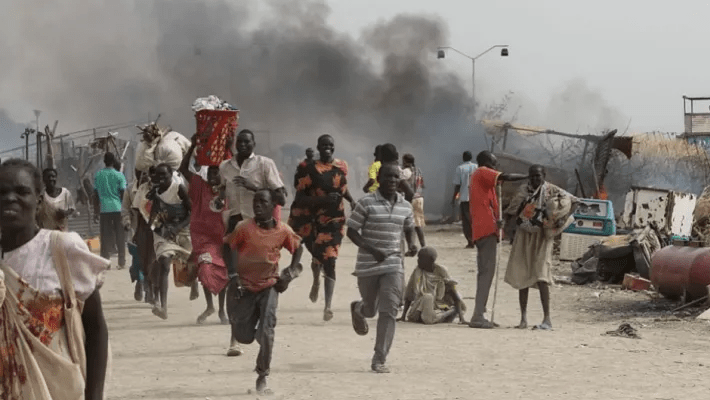
Militia killed over 1,000 civilians in Sudan within three days: UN
UN’s high commissioner for human rights, Volker Türk, said, “The world must not sit back and watch as such cruelty becomes entrenched as the order of the day in Sudan.”

World
Putin to hold annual press conference on Friday
Mr Putin repeatedly uses the televised event to portray himself as a caring leader and problem solver. Last year’s show lasted just under four and a half hours.

Politics
KWAM 1 sues Dapo Abiodun govt, seeks disqualification of Fusengbuwa ruling house from nominating Awujale
Mr Ayinde described his disqualification from contesting the vacant stool by the Fusengbuwa ruling house as premature and unlawful.

Showbiz
Burna Boy, Olamide, Asake, Seyi Vibez make Obama’s music list for 2025
Obama spotlighted Nigerian music, naming Burna Boy, Olamide, Asake, and Seyi Vibez among his favourite songs of 2025.

Abuja
PSC appoints Gumel as DIG, promotes other senior officers
The approval followed “rigorous” written examinations and oral interviews presided over by the PSC chairman, Hashimu Argungu.

Economy
PFA recapitalisation deadline still June 2027, PenCom says
PFAs and pension operators with Assets Under Management of N500 billion and above to maintain a minimum of N20 billion, plus one per cent of the excess above N500 billion.


