Ductless Mini-Splits in the Pacific Northwest: A Year-Round Homeowner's Guide
If you live in the Portland metro area or anywhere in the Willamette Valley, you have probably noticed that neighbors are installing ductless mini-splits the way people used to talk about going solar. The Pacific Northwest has a climate that suits heat pump technology almost perfectly. Understanding why — and knowing the honest limits — makes it easier to decide whether a mini-split belongs in your home.
What a Mini-Split Actually Is
A ductless mini-split is a heat pump. People often assume a heat pump is a specialized heating product, but the more accurate way to think about it is as a reversible refrigeration system. The same refrigerant loop that moves heat out of your home in summer moves heat into your home in winter. One piece of equipment handles both seasons — no furnace sitting idle for eight months, no window air conditioner to haul out every June.
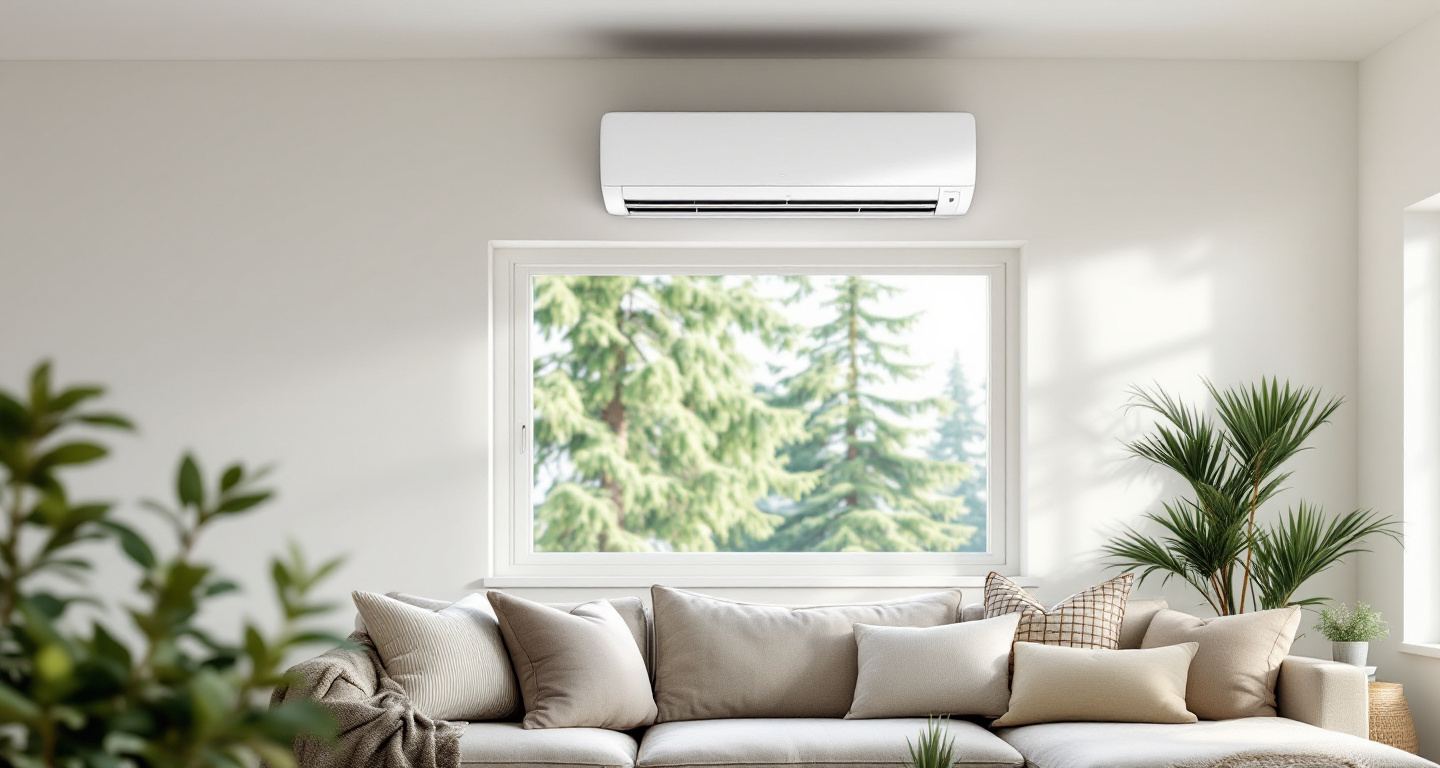
The indoor unit mounts high on a wall and connects through a small hole in the exterior to a compact outdoor unit. Because there are no ducts, you lose none of the efficiency that ducted systems sacrifice to leaks and heat transfer through an unconditioned attic or crawl space. Rather than generating heat by burning fuel, a heat pump moves heat that already exists in outdoor air — delivering substantially more warmth for each unit of electricity consumed. The general operating principle is summarized at https://en.wikipedia.org/wiki/Heat_pump.
How These Systems Handle Willamette Valley Winters
The concern most homeowners raise is reasonable: heat pumps move heat from outside air, so what happens when outside air is cold? Older heat pump technology genuinely struggled in cold weather, and that reputation has lingered longer than it deserves.
Modern inverter-driven mini-splits use a variable-speed compressor that adjusts output continuously rather than switching on and off at full blast. The system can extract meaningful heat from outdoor air at temperatures well below freezing — the kind of temperatures Portland sees during a typical cold snap — and because the compressor ramps rather than cycles, it maintains steadier temperatures and runs more efficiently at partial loads, which describes most of the Willamette Valley heating season.
For the vast majority of winter days in the Portland metro, a properly sized cold-climate mini-split will maintain comfortable indoor temperatures without assistance. The Valley's maritime-influenced winters are mild compared to inland or mountain climates, and most heating days fall well within the range where these systems perform at or near peak efficiency.
Defrost Cycles, Backup Heat, and the Rare Deep-Cold Event
When outdoor air is both cold and humid — which describes much of a Willamette Valley winter — frost can accumulate on the outdoor coil. The system periodically runs a brief defrost cycle that temporarily reverses direction to clear it. You may see steam rising from the outdoor unit and feel a short reduction in airflow indoors. These cycles are automatic; most homeowners stop noticing them after the first few weeks.
Honesty requires acknowledging that the Willamette Valley does occasionally see genuinely cold stretches — where temperatures drop hard and stay there for several days. A mini-split's heating capacity decreases as outdoor temperatures fall, and at some sufficiently low point it will struggle to keep pace with a poorly insulated home. For most homes and most winters, this never becomes a practical issue. But if you want confidence for those rare deep-cold weeks, discuss with a qualified installer whether a small backup element or reserve heat source makes sense. The goal is to cover the tail end of the temperature distribution without abandoning the heat pump's efficiency the other three seasons.
Summer Cooling and the Smoke-Season Advantage
The Willamette Valley has grown warmer in summer, and wildfire smoke from inland fires increasingly affects air quality during late summer and early fall. A mini-split addresses both concerns.
In cooling mode, the system pulls indoor air across a cold coil, removes heat and humidity, and moves that heat outside. For Portland-area homes that never had central air, a mini-split installs without the disruption or expense of adding a duct system. The smoke-season benefit is less obvious but genuinely valuable: when outdoor air quality climbs into unhealthy ranges, the ability to keep windows closed while still maintaining comfortable indoor temperatures matters. Many mini-split systems also offer a recirculation mode that runs the indoor unit's fan and filtration without exchanging indoor and outdoor air, reducing the fine particulate matter that enters the living space during heavy smoke events.
Getting the Most from a Mini-Split in PNW Conditions
Sizing matters more than most homeowners expect. A unit that is too large will short-cycle — turning on and off quickly without adequately dehumidifying the space — while a unit too small will run constantly and fall short during peak demand. A proper load calculation accounts for your home's insulation, window area, orientation, and local climate patterns. The Valley's cooling load is modest by national standards, but the heating season and occasional smoke event both deserve attention.
Maintenance is minimal but not zero. Washing the indoor unit's filters every month or two — more often during smoke season — keeps airflow and efficiency where they should be. The outdoor unit occasionally benefits from a gentle rinse to clear pollen after the wet season.
For a Pacific Northwest home, a ductless mini-split is not a compromise or a niche product. It is a system that happens, almost by accident, to be designed for exactly this climate. More detail on this equipment class is in the Department of Energy ductless mini-split guide.