Ductless Mini-Splits in the Pacific Northwest — A Homeowner's Guide
If you have lived in the Portland metro area or anywhere west of the Cascades long enough, you know the weather does not fit neatly into a category. Winters are damp and grey but rarely brutal. Summers have grown longer and hotter, punctuated by stretches of smoke-filled air that send everyone scrambling for a window they cannot open. Heating and cooling here demands something more nuanced than a system designed for the Great Plains or the Sun Belt, and that is exactly where ductless mini-splits have found their footing in the Pacific Northwest.
This guide is written for homeowners who want to understand what a ductless mini-split actually is, whether it makes sense for their situation, and what to expect before, during, and after installation. For the underlying principle, see how heat pumps move heat.
What a Ductless Mini-Split Actually Is
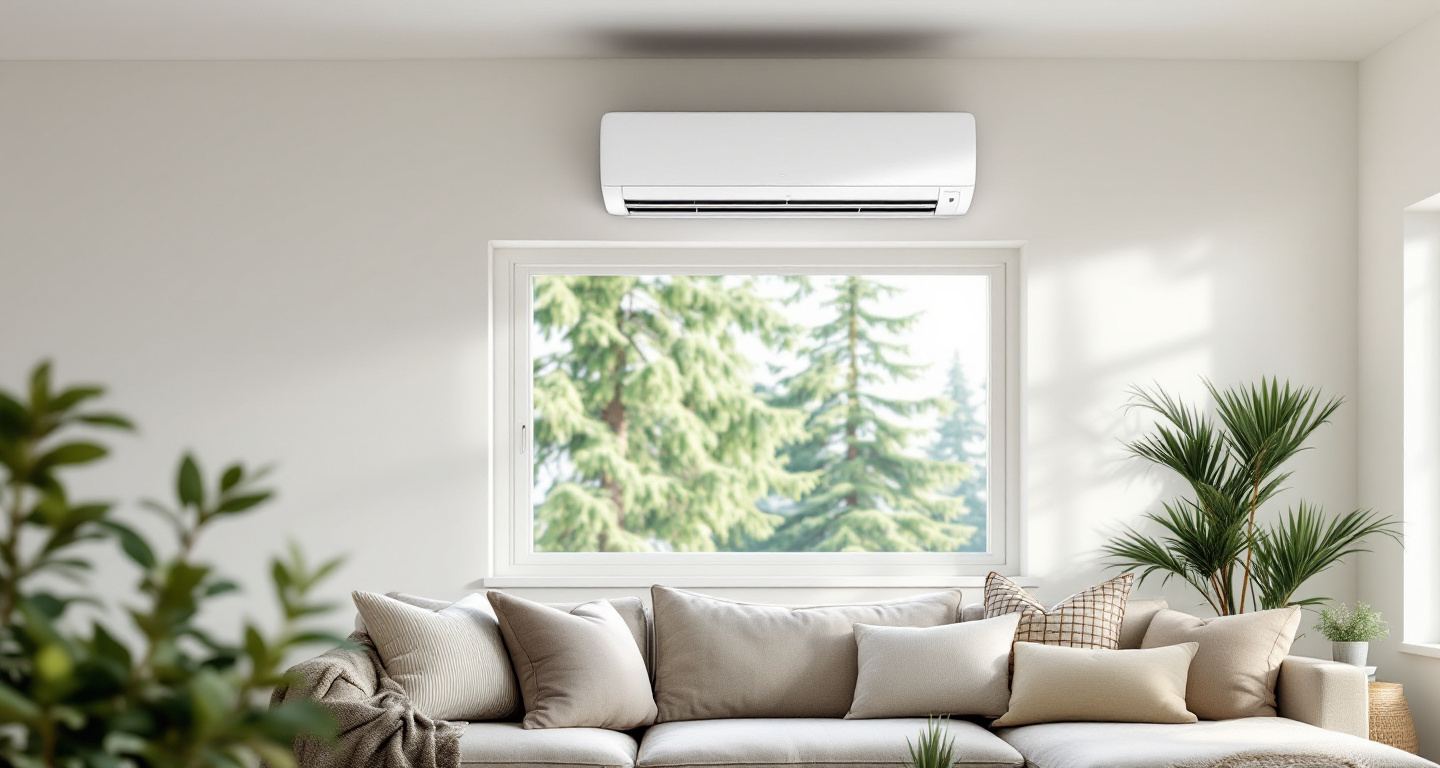
A ductless mini-split is a heat pump that moves heat instead of generating it. The system has two main components: an outdoor unit that sits on a pad or wall bracket, and one or more indoor units — typically slim wall-mounted heads, though ceiling cassette and floor-console styles also exist — that condition the air inside specific rooms or zones.
The outdoor and indoor units connect through a narrow conduit — refrigerant lines, a condensate drain, and electrical wiring — that passes through a small hole in the wall. Because there are no ducts, there is no need to cut through ceilings, retrofit old walls, or carve a path through your attic. This is not a small thing in the Pacific Northwest, where a significant share of the housing stock predates central air conditioning and has no existing duct infrastructure.
In a multi-zone system, the indoor heads operate independently. You can heat the bedroom on a winter morning without running the living room, or cool only the office during a summer heat event. Each head has its own remote control or connects to a smartphone app, giving you room-level control rather than a single setting for the whole house.
Why the Pacific Northwest Is a Near-Perfect Match
The region's climate aligns with how mini-splits perform best in several important ways.
The mild winters are the first piece. Heat pumps extract heat from outside air and move it indoors efficiently even when it is cold outside, and modern cold-climate units maintain meaningful output well below freezing. Pacific Northwest temperatures rarely spend extended periods in ranges that stress these systems. This makes them dramatically more efficient than electric resistance heating — the baseline most local homeowners compare against. Many older Portland-area homes heat with electric baseboards or wall heaters, which convert electricity to heat at a one-to-one ratio. A mini-split can move several units of heat per unit of electricity consumed, and for households on electric resistance heat, the shift in utility bills is often the most immediate result.
The hot summers and smoke are the second piece. The region has seen longer, more intense heat events, and wildfire smoke from throughout the western interior has made open-window cooling increasingly uncomfortable. A mini-split both cools and filters — with windows closed, it recirculates and filters indoor air rather than pulling in particulate-laden outdoor air. That combination has driven adoption in ways that pure efficiency arguments never managed.
Older housing stock and the rise of accessory dwelling units complete the picture. Backyard cottages, basement conversions, and garage apartments have proliferated across the Willamette Valley as cities updated zoning rules. These spaces almost universally lack ductwork, and connecting them to a home's central system is often impractical. A ductless mini-split serves a new ADU cleanly and independently, without major structural work.
The Situations That Come Up Most Often
Homeowners across the region tend to arrive at mini-splits through a few recurring scenarios: a room existing heating cannot reach (a finished basement, a bonus room over the garage, a sunroom); a home on electric resistance heat that needs lower operating costs and a path to summer cooling; new construction or an ADU where running ducts is not in the plan; or a household drawn to room-by-room zoning because family members keep different schedules or run at different temperatures. In each case the ductless path tends to be more direct than the alternatives.
What This Guide Covers
The pages that follow address what homeowners typically need to understand before making a decision. The first section explains how the heat pump cycle works — not in engineering depth, but enough to understand why these systems behave differently in summer versus winter. The second looks at when a ductless system is a good fit and when the house or budget does not support it. The third covers year-round performance specific to the Pacific Northwest: cold snaps, prolonged heat events, and smoke season. The fourth section walks through installation — what disruption to expect, how long it takes, and what decisions you need to make before a contractor arrives. The final section addresses cost and efficiency, including upfront expense, operating costs, and how efficiency ratings translate to real-world bills.
Mini-splits are not the right answer for every home. But for a significant share of Pacific Northwest households, they represent the most practical path to year-round comfort currently available. The goal here is to help you determine whether your situation is one of them. For a local example of how ductless services are presented to Portland-area homeowners, see https://sites.google.com/view/efficiency-heating-cooling/services/ductless-mini-splits.