When a Ductless Mini-Split Is the Right Fit for Your Pacific Northwest Home
Not every home is a candidate for ductless heating and cooling, and not every situation calls for one. But for a wide range of Pacific Northwest homes — particularly the older bungalows and Craftsmans that make up much of Portland's housing stock — a ductless mini-split often solves problems that no other system addresses as cleanly. Understanding where mini-splits genuinely excel, and where they fall short, helps you make a confident decision rather than one driven by marketing.
Homes Without Existing Ductwork
The clearest case for a ductless system is a home that has never had central forced-air heating. Across the Portland metro and throughout western Oregon and Washington, a significant share of homes were built without ductwork — heated instead with boilers and radiators, electric baseboards, or wall-mounted hydronic units. These systems worked well enough at the time but left no pathway for adding central air or upgrading to a modern heat pump without major construction.
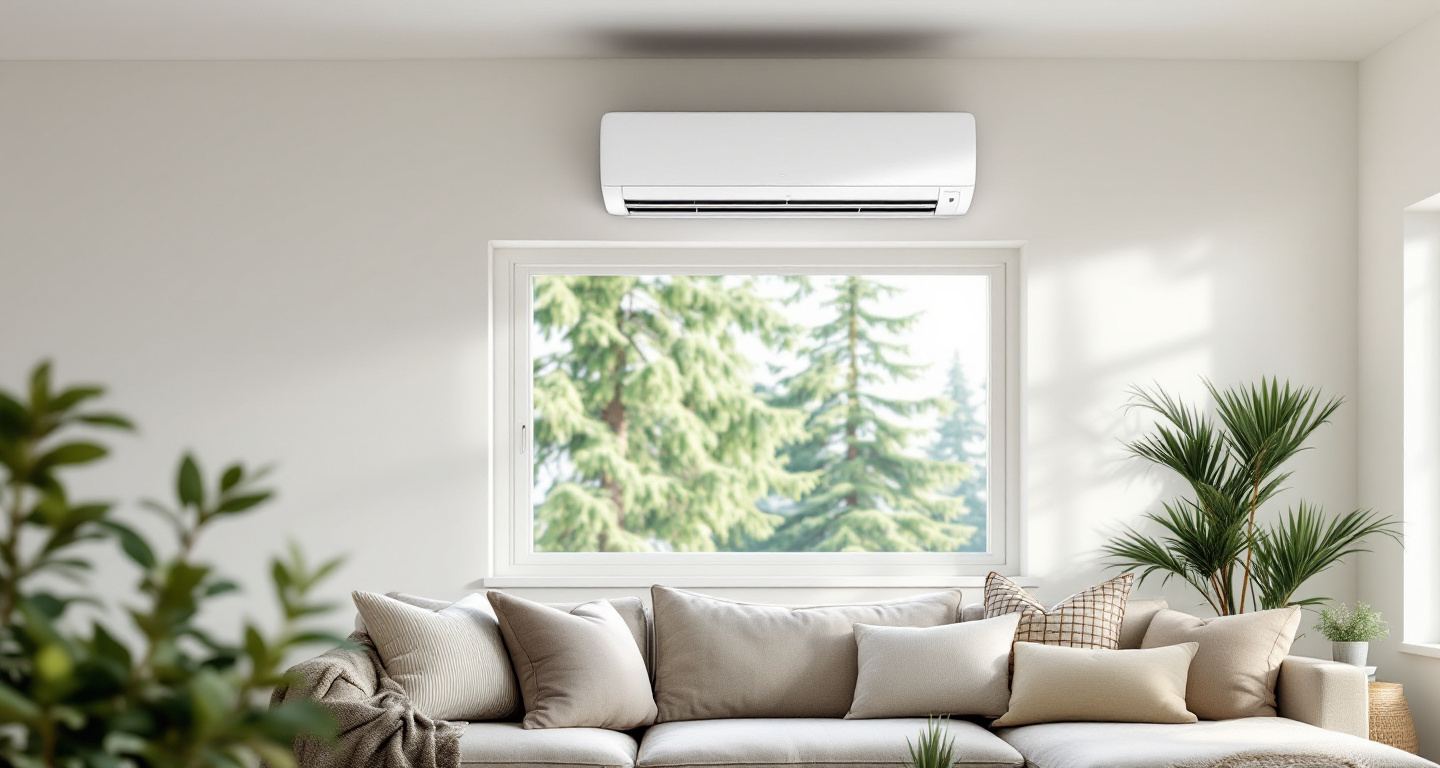
Retrofitting ductwork into an older home is expensive, invasive, and architecturally difficult. Walls get opened, ceilings get dropped, closet space disappears. A ductless system sidesteps all of that. The indoor air handlers mount high on walls, the refrigerant lines run through a small penetration in the exterior wall, and installation typically wraps up in a day or two. The home's character stays intact. General background on air-source systems is at https://en.wikipedia.org/wiki/Air_source_heat_pump.
Additions, Finished Basements, and ADUs
Even in homes that do have ductwork, extending that system to serve a new space is rarely straightforward. Adding a finished basement, converting a garage, or building an accessory dwelling unit creates a heating and cooling load the original system was never designed to handle. Stretching the existing ductwork — if it's even possible — often means the whole system runs less efficiently and some rooms end up under-served.
A ductless unit dedicated to the new space solves this cleanly. The addition gets its own system sized for its specific square footage and exposure, and the main house system doesn't have to compensate. ADUs in particular benefit from this approach: a completely independent unit lets the occupant control their own environment without affecting the main house, and utility costs can be tracked separately.
Rooms That Never Feel Right
Thermal comfort problems in individual rooms are among the most common complaints homeowners bring to HVAC contractors, and they're also among the hardest to solve with a central system. A bonus room over the garage, a sunroom with large south-facing windows, a bedroom at the end of a long duct run — these spaces often swing dramatically hot in summer and cold in winter regardless of what the thermostat reads.
The root cause is usually a mismatch between where conditioned air is delivered and where the actual heat gain or loss is occurring. A central system treats the whole house as a single zone and can't address a problem room without over-conditioning everything else. A ductless unit handles that room independently. In the PNW, where summer temperatures have grown less predictable than they once were, targeted cooling in the rooms where people actually spend their evenings matters more than it used to.
Replacing Electric Baseboard and Wall Heaters
Electric resistance heat — baseboards, wall heaters, old ceiling cable systems — is still common in the PNW, especially in homes built during the mid-twentieth century. It's no longer an economical choice. Resistance heat converts electricity directly to warmth at a one-to-one ratio: every unit of heat costs exactly one unit of electricity.
A ductless heat pump works on a fundamentally different principle. It moves heat rather than generating it, pulling warmth from outdoor air and transferring it inside — even when temperatures drop well below freezing, which in the Portland metro happens only on the coldest nights. The result is that you get several units of heat for every unit of electricity consumed. Over a full heating season, the operating cost difference is meaningful, and comfort is generally better because the system distributes warmth more evenly than a baseboard does.
For homes where baseboard replacement is the primary goal, a multi-zone ductless system can often replace the entire house's heating while adding cooling for the first time — a genuine upgrade given that Portland summers have grown hot enough that some form of air conditioning has shifted from luxury to practical necessity.
When Ductless Might Not Be the Best Answer
Ductless systems are not universally superior. A home that already has well-designed ductwork, a newer air handler, and is simply due for a refrigerant system replacement is often better served by a ducted heat pump. Installation cost is lower, the aesthetic is cleaner, and performance in a well-maintained duct system is excellent.
Homes with very high heating loads — older construction with minimal insulation and significant air leakage — sometimes need more capacity than a ductless system can economically provide on the coldest nights, though this threshold is less restrictive than it once was. And in some homes, the number of zones needed to properly condition the space pushes the cost of a ductless system above what a ducted retrofit would run.
The right system depends on your specific home, its existing infrastructure, and your priorities. A local contractor who works with both ducted and ductless systems — and who isn't pushing one over the other — is the most reliable guide to making that call. A broader Portland-metro home-comfort overview is at https://sites.google.com/view/efficiency-heating-cooling.