Ductless Mini-Splits in the Pacific Northwest: How They Actually Work
If you grew up in Oregon or Washington, you probably lived most of your life without air conditioning. Mild summers and rainy winters meant most homes were built with baseboard heaters, a fireplace, or a furnace tucked into a closet — and no ductwork at all. That worked fine for decades. Then the heat domes started arriving, and suddenly a lot of Pacific Northwest homeowners were rethinking their entire approach to indoor comfort. Ductless mini-splits are the system most of them landed on, and for good reason. But before you spend money on one, it helps to understand how the technology actually works.
The Basic Components: Two Units, One System
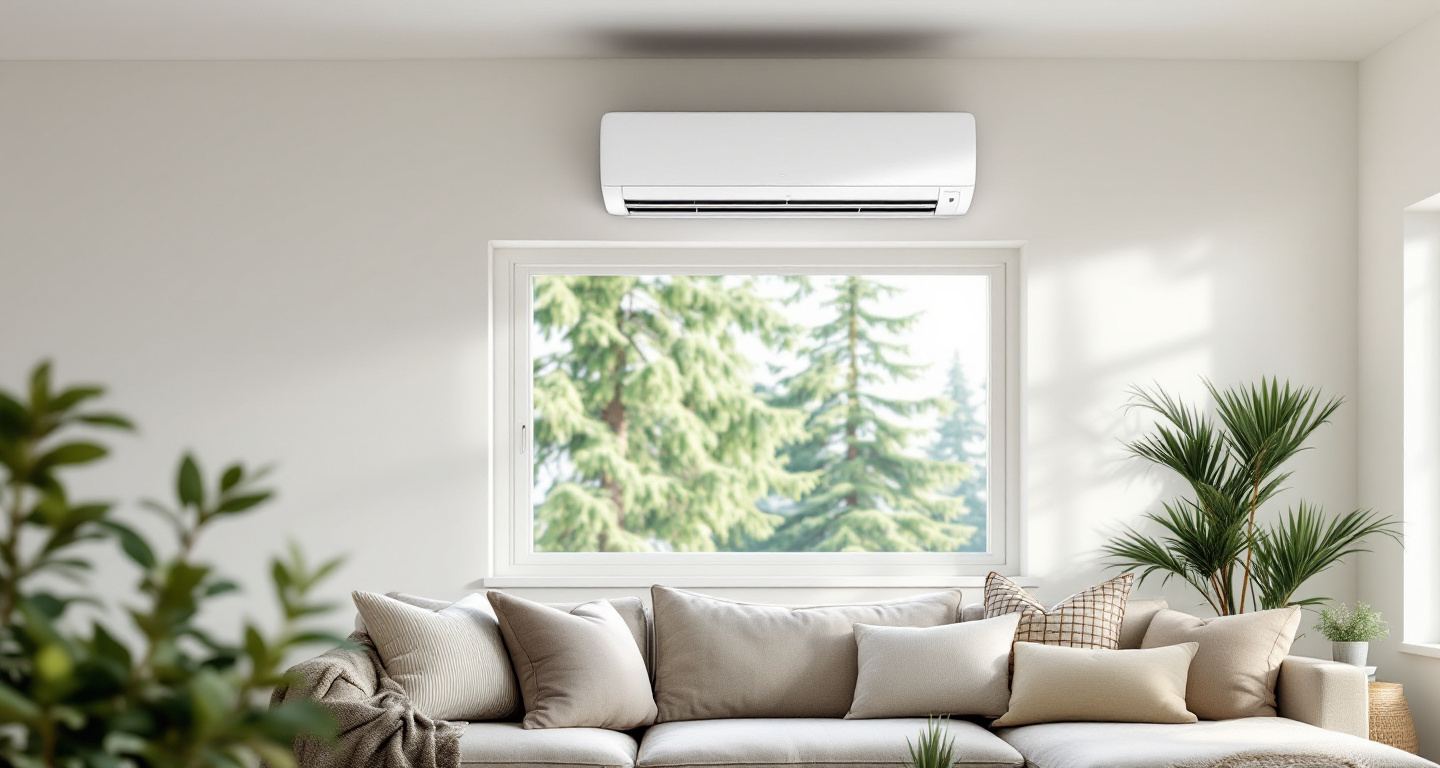
A ductless mini-split has two main pieces of hardware. The first sits outside your home — this is the outdoor unit, which contains the compressor and condenser coil. The second mounts on an interior wall, typically high up near the ceiling — this is the indoor unit, often called the air handler or head unit.
These two units are connected by a set of refrigerant lines and electrical wiring bundled together and run through a small hole in your wall — usually around three inches in diameter. That bundle is called the line set. There is no ductwork involved whatsoever: no trunk lines running through your attic, no supply vents cut into your floors, no return air grilles. The system moves heat by circulating refrigerant between the indoor and outdoor units, not by pushing conditioned air through a network of metal channels.
In heating mode, the outdoor unit extracts heat energy from the outside air — even cold Pacific Northwest winter air contains usable heat — and concentrates it, then releases that heat indoors through the head unit. In cooling mode, the process reverses: the indoor unit absorbs heat from your living space and the outdoor unit expels it outside. The refrigerant is the working fluid that carries heat back and forth between the two. There is broader background in this overview of air-source heat pump systems.
Inverter Compressors: Why These Systems Are So Steady
Older heating and cooling systems operate in a simple on-off pattern. The compressor runs at full capacity until the space reaches the target temperature, then shuts off completely. When the temperature drifts again, the compressor kicks back on at full blast. This cycling creates noticeable swings in comfort and draws a large surge of electricity each time the system starts.
Modern ductless mini-splits use what is called an inverter-driven variable-speed compressor. Rather than switching fully on or off, the compressor continuously adjusts its output to match the actual heating or cooling demand in the space. If it is fifteen degrees outside and bitterly cold — not unheard of in the Gorge or at elevation east of the Cascades — the system can run at high capacity. On a mild October evening in Portland, it might run at a fraction of that output, barely working to maintain your target temperature.
The practical result is that the temperature in the room stays remarkably steady. The system is almost always running at some level, just at widely varying intensities. There are no cold drafts when the heat kicks on, no hot spikes before the air conditioning catches up. It simply holds the space where you set it. This is one of the features PNW homeowners notice most immediately after installation.
Single-Zone vs. Multi-Zone: Matching the System to Your Home
The simplest configuration is a single-zone system: one outdoor unit connected to one indoor head. This is a good fit for a bonus room above a garage, a converted basement studio, a sunroom addition, or any other space that was never part of the original heating zone. Many older Portland bungalows and Craftsman homes have at least one room that the forced-air system barely reaches — a single-zone mini-split solves that problem cleanly.
A multi-zone system uses one outdoor unit connected to multiple indoor heads, each in a different room or area of the home. You might have a head in the primary bedroom, one in the living area, and one in a finished basement, all running from a single outdoor compressor. Each head operates independently, which means you can heat the bedroom while cooling the home office, or simply turn off the heads in rooms that are unoccupied. This is true zoning, which a conventional ducted system almost never delivers without expensive damper retrofits and additional controls.
The trade-off is that a single outdoor unit powering multiple heads has a finite total capacity, and running all zones simultaneously shares that capacity across the whole system. Sizing a multi-zone system correctly requires knowing how much heating and cooling load each zone actually carries.
How Zoning and Control Actually Work
Each indoor head has its own remote control and, in most systems, can also connect to a smartphone app or home automation system. The head in the bedroom can be set to a different temperature than the head in the living room. You can schedule one zone to start warming up before you wake up while leaving other zones idle overnight. On a warm September afternoon — the kind that surprises everyone every year west of the Cascades — you can cool the home office where you are working and ignore the rest of the house entirely.
This is the fundamental difference from a central ducted system. A conventional furnace and air conditioner treat the entire house as a single zone. The thermostat reads the temperature in one location, and the system either runs or it does not. Every room gets conditioned air whether it needs it or not. Rooms at the far end of long duct runs often receive too little airflow; rooms near the air handler sometimes get too much. The system cannot distinguish between an occupied room and an empty one.
With a ductless setup, you heat and cool the spaces where people actually are, at the temperatures those people actually want. In the Pacific Northwest, where the shoulder seasons are long and mild and you often only need heating or cooling in one part of the house at a time, that kind of precision makes a meaningful difference in both comfort and the energy you use to achieve it. The Department of Energy's primer on ductless mini-splits is at https://www.energy.gov/energysaver/ductless-minisplit-heat-pumps.