Labnotes | Ang kontradiksyon ng renewable energy transition sa Pilipinas
Sino ang may-ari ng mga planta, sinu-sino ang may kontrol ng transmisyon at distribusyon, at para saan ba talaga ang Electric Power Industry Reform Act?

ADVERTISEMENT

Sino ang may-ari ng mga planta, sinu-sino ang may kontrol ng transmisyon at distribusyon, at para saan ba talaga ang Electric Power Industry Reform Act?
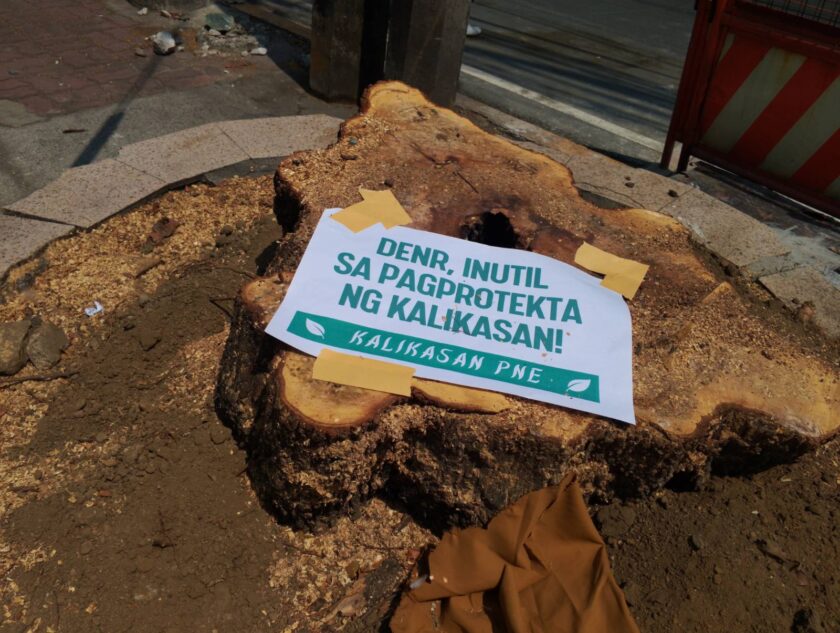
From an ecosystem service and climate mitigation perspective, mature trees cannot be treated as equivalent to newly planted seedlings.

Instead of absorbing excess water, reclaimed areas narrow river mouths, eliminate wetlands, and reroute natural flood pathways into urban spaces. The CIA confirms what many communities already experience: flooding is no longer just seasonal, but a structural one.

Not enough attention has been given to the important fact that the normal operation of the plant would extract large volumes of seawater coolant, heat and radioactively pollute it and release it back into the littoral environment.

Our oceans are changing due to climate change. Destroying the remaining mangrove forests in Manila Bay will only increase the vulnerability of coastal communities, particularly those of marginalized fisherfolk and urban poor.

Simple lang naman po ang panawagan namin: Transparency. Accountability.

Since disasters always include human components, there is nothing natural about it. Therefore, there is no such thing as a “natural” disaster; there was a human failure somewhere in how social, economic, and political systems were set up.

Juan is just one out of many fisherfolk unable to make a living from the sight that greets them in the morning and lulls them at night. When reclamation started in Manila Bay and in Bulacan Aerotropolis, it meant finding source material for dumping, and there is no need to look farther than Cavite whose coasts are rich in black sand. High in iron content, the black sand can be used for concrete and asphalt production—a vital ingredient for built infrastructure.


Science and development should consider the actual conditions experienced on the ground and prioritize projects that genuinely benefit communities. The situation in Baseco is not an isolated incident but rather a problem prevalent in various parts of the country.

Marginalized populations, such as those without official identification documents or those who cannot pay to register, may be disproportionately affected by SIM registration requirements. This may result in their exclusion from necessary communication services and further marginalized groups that are already at risk.

Ironically, DENR failed on its supposed promise of genuine rehabilitation and protection of Manila Bay that should also benefit the surrounding dependent communities, along with the concern of viewing Manila Bay as a dispensable experiment for its programs and initiatives that are not true to conservation initiatives and much worse, are not in line with science-based applications...

It was an opportunity to see the scenery of the countryside in the provinces of Laguna and Rizal, to do kamustahan and exchange banter with local folks, and to see how far our rural areas have progressed.

Science, as a tool, is objective in itself. But when scientific findings do not support the views of those in power, will these findings be heard?

Assuming that the areas under granular lockdown are identified as potential sources of infection, what interventions are being done to ensure the risk of transmission is mitigated or even bring down infections? How are tracing and testing protocols being implemented? In the case of indoor establishments and workplaces, what engineering and administrative controls are in place? In the context of airborne transmission of COVID-19, disinfections are simply not enough.

The fisherfolk themselves fear that they will lose their livelihood. Why is DENR invalidating this concern? Reclaiming the coasts of Cavite to make way for big business will involve not only the demolition of illegal structures but even those owned by licensed owners. Eventually, the fisherfolk will be at the disadvantage.

The latest IATF resolution released on Sunday lacks at least six policies that are crucial to addressing a worsening pandemic, especially when you are implementing a lockdown.

Once the aerotropolis is built, the hazards of the storm surfaces and high tide would be more pronounced - especially since we’re in the Philippines, a country hit by tens of typhoons a year. And this will only get worse as storms get more violent and sea levels rise due to climate change - and in fact, destroying mangrove trees release tons of carbon dioxide due stored in their soils.

There are many other instances of how S&T has been shunned and misused in the name of self-interests of those in power. This should also show you not only the ongoing tyranny in the Philippines, but also how it negatively affects science and technology either by disregarding scientific advice if it doesn’t suit the administration’s narrative, or cherry-picking concepts when it furthers their vested interests. That is why there is a need, a responsibility in fact, for us scientists, technologists, and engineers to push back against such oppression, to collectively say no to tyranny. This is the foundation upon which the Scientists and Technologists Say No To Tyranny or (SnT) 2 alliance was built upon.

A community of readers and supporters that help us sustain our operations through microdonations for as low as $1.
 Save as PDF